INS Mahendragiri commissioned: Navy chief Swaminathan flags 75% indigenous content, Made in India tech
Synopsis
At the commissioning of INS Mahendragiri in Visakhapatnam, Naval Chief Admiral Swaminathan revealed a 75% jump in indigenous ship components and declared that all technologies the Navy needs are now Made in India — a pointed signal that India's maritime self-reliance drive has moved from ambition to operational reality.
Key Takeaways
INS Mahendragiri was commissioned into the Indian Navy at Visakhapatnam on 11 July .
The vessel was built in 50% less time than the stipulated construction period.
Indigenous components in the ship have increased by 75% compared to earlier vessels.
Naval Chief Admiral Krishna Swaminathan stated that all modern technologies required by the Navy are now manufactured in India.
The Navy is coordinating with DRDO , Ministry of Defence , and the Department of Defence Production to deepen indigenisation.
Swaminathan confirmed Indian Navy is actively escorting merchant ships through the Strait of Hormuz on government directions.
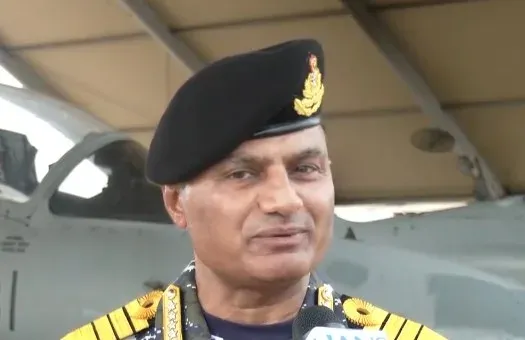
Chief of the Naval Staff Admiral Krishna Swaminathan on Saturday, 11 July declared the Indian Navy a fully 'Aatmanirbhar' (self-reliant) force, stating that the bulk of modern technologies the Navy requires are today manufactured domestically. His remarks came during the commissioning ceremony of INS Mahendragiri into the Indian Navy at Visakhapatnam, Andhra Pradesh — a milestone he described as a 'potent and highly significant' addition to the fleet.
INS Mahendragiri: A Milestone in Indian Shipbuilding
Admiral Swaminathan highlighted that INS Mahendragiri was built in 50 per cent less time than the stipulated construction period, underscoring the growing efficiency of India's shipbuilding ecosystem. He noted that the vessel carries a 75 per cent increase in indigenous components compared to earlier vessels in its class. 'The Indian shipbuilding industry, including both domestic and private sectors, has grown in a mature and integrated manner over the past few years,' he said.
The Aatmanirbharta Push in Naval Capability
The Naval Chief stressed that indigenisation is a foundational principle — not merely a policy directive. 'We want to source weapons, sensor systems and steel that are indigenous,' Swaminathan said, adding that the Navy is continuously working to embed domestic solutions across every dimension of shipbuilding. He noted that the Navy collaborates closely with the Ministry of Defence, the Defence Research and Development Organisation (DRDO), and the Department of Defence Production (DDP), alongside both public and private sector industries, to set capability challenges and drive innovation.
Adapting to Evolving Warfare Technologies
On the question of rapidly changing warfare technologies, Admiral Swaminathan acknowledged that 'the character of warfare and the nature of war are always changing based on the technologies available.' He maintained, however, that the Indian Navy actively tracks global technology trends — including emerging and future capabilities — and calibrates its own development plans accordingly. 'If we have to be a step ahead, then we have to adapt the required technologies,' he said. Crucially, he added: 'All those kinds of technologies are being made in India today.'
Indian Navy's Role in the Strait of Hormuz
Admiral Swaminathan also addressed the Strait of Hormuz, dismissing suggestions that the region poses a novel challenge for the Navy. 'It is not a new or big issue for the Indian Navy. It is a part of our role — we are made for this,' he said. Describing the Strait as a war zone requiring active merchant ship protection, he confirmed that the Navy has been escorting Indian merchant vessels safely through the corridor on government directions. 'Before it became a national crisis... we have been able to do it,' he added. This comes amid heightened regional tensions that have periodically threatened commercial shipping lanes in the Persian Gulf.
What This Signals for India's Naval Ambitions
The commissioning of INS Mahendragiri and the Naval Chief's remarks collectively signal a deliberate acceleration of India's maritime self-sufficiency drive. With the Navy targeting indigenous sourcing for weapons, sensors, and structural materials, and with private sector shipyards increasingly integrated into the supply chain, India's defence industrial base is being reshaped — ship by ship. The next phase of capability expansion, according to Swaminathan, will be governed by the same principle: build at home, build ahead.
Point of View
Indigenisation targets in Indian defence have been announced without verifiable milestones; a ship-level metric is harder to obscure. The Strait of Hormuz remarks are equally telling: Swaminathan is signalling operational readiness in a contested waterway without waiting to be asked, which reflects a quiet but meaningful shift in how the Indian Navy is projecting its own role in regional security. The real test will be whether the private sector shipyards now integrated into this ecosystem can sustain delivery timelines and quality as order books grow.
NationPress
10 Oct 2026
Frequently Asked Questions
What is INS Mahendragiri and why was it commissioned?
INS Mahendragiri is a warship commissioned into the Indian Navy on 11 July at Visakhapatnam, Andhra Pradesh. It represents a significant addition to the fleet and was built with 75% indigenous components, making it a flagship example of India's naval Aatmanirbharta drive.
What did Naval Chief Admiral Swaminathan say about indigenous technology?
Admiral Swaminathan stated that the Indian Navy is fully self-reliant and that all modern technologies required by the force are now manufactured in India. He also noted a 75% increase in the indigenous constituents of INS Mahendragiri compared to earlier vessels.
How quickly was INS Mahendragiri built?
INS Mahendragiri was built in 50% less time than the originally stipulated construction period, according to Admiral Swaminathan. This reflects the growing efficiency and maturity of India's domestic shipbuilding industry.
What is the Indian Navy's role in the Strait of Hormuz?
The Indian Navy has been escorting Indian merchant ships safely through the Strait of Hormuz on government directions. Admiral Swaminathan described the Strait as a war zone and said the Navy's presence there is a routine part of its operational mandate, not a new challenge.
Which agencies is the Indian Navy working with to boost indigenisation?
The Navy is collaborating with the Ministry of Defence, the Defence Research and Development Organisation (DRDO), and the Department of Defence Production (DDP), along with public and private sector industries, to advance indigenous shipbuilding and technology development.