Samserganj encounter: Inspector fired to protect DSP as accused grabbed gun
Synopsis
Two murder accused were killed in separate West Bengal police encounters within hours on 28 October 2026 — one at Samserganj in Murshidabad, another at Gaighata in North 24 Parganas. In both cases, the accused allegedly seized police firearms before being shot. The BJP state government has publicly backed the actions, while human rights groups are calling them extra-judicial executions — setting up a sharp accountability battle.
Key Takeaways
Murder accused Samiul Sheikh was killed in a police encounter at Samserganj, Murshidabad , on 28 October 2026 after allegedly snatching a cop's firearm during a crime-scene reconstruction.
An Inspector-rank officer opened counter-fire specifically to protect a DSP whom Sheikh was targeting, according to police insiders.
A second encounter the same day at Gaighata, North 24 Parganas killed rape-and-murder accused Prahlad Das under similar circumstances.
Chief Minister Suvendu Adhikari said he had given police a 'free hand' against crimes against women and drug trafficking; ministers Dilip Ghosh and Agnimitra Paul also backed the operations.
Human rights groups have condemned both encounters as 'extra-judicial executions' and are expected to seek an independent probe.
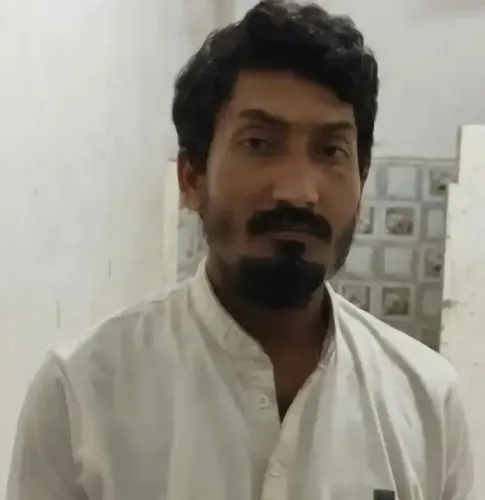
An Inspector-rank police officer opened counter-fire to save a Deputy Superintendent of Police (DSP) after murder accused Samiul Sheikh snatched a firearm from an escorting constable and specifically targeted the senior officer during a crime-scene reconstruction at Samserganj in Murshidabad district, West Bengal, on Tuesday, 28 October 2026, state police insiders confirmed on Wednesday. Sheikh, who was accused in the murder of a local Bharatiya Janata Party (BJP) leader in Samserganj, died after being struck by a bullet to the head.
How the encounter unfolded
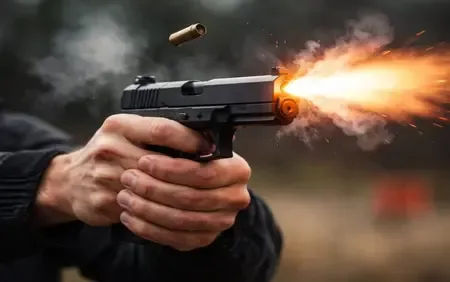
According to police insiders, Sheikh was being escorted to the crime scene to recreate the sequence of events in the murder case when he suddenly snatched the weapon of an escorting officer and fired two rounds at police personnel. Both shots reportedly missed their targets. The accused then singled out the DSP for attack, at which point the Inspector resorted to counter-firing. Sheikh was struck on the head and was rushed to Jangipur Sub-Divisional Hospital, where he was declared dead on arrival.
A second encounter on the same day
The Samserganj incident was the second such encounter in West Bengal on Tuesday. Earlier, in the intervening night of Monday and Tuesday, one Prahlad Das — accused in the rape and murder of a minor girl in his locality — was killed in a police encounter at Gaighata in North 24 Parganas district. Authorities said Das also allegedly snatched a firearm from an escorting officer and opened fire at on-duty personnel before being shot dead. The two encounters within hours of each other have drawn intense scrutiny across the state.
Government justifies police action
Senior members of the West Bengal Cabinet rallied behind the police in both incidents. Chief Minister Suvendu Adhikari reportedly justified the encounters, claiming he had given a 'free hand' to the police to combat what he described as the twin social evils of crimes against women and narcotics trafficking. Panchayat Affairs and Rural Development Minister Dilip Ghosh stated that officers sometimes must carry out 'unpleasant work for the sake of larger public interest.' Municipal Affairs and Urban Development Minister Agnimitra Paul reportedly posted a poem on her social media handle that was widely interpreted as indirectly endorsing both the Gaighata and Samserganj operations.
Human rights groups raise alarm
Several human rights organisations have condemned the twin encounters, describing them as 'extra-judicial executions.' Critics argue that the circumstances — in both cases, the accused allegedly seizing a police weapon during a crime-scene visit — follow a pattern that warrants independent scrutiny. This comes amid a broader national debate on police accountability and the legal limits of counter-firing during custody operations. The National Human Rights Commission (NHRC) has in the past taken suo motu cognisance of similar incidents; it was not immediately known whether it would intervene in these cases.
What happens next
Standard procedure requires the state police to file a First Information Report (FIR) in both encounter deaths and conduct a mandatory magisterial inquiry. Whether the West Bengal government will order an independent investigation — or whether the judiciary will take note — remains to be seen. Rights bodies are expected to formally press for a probe into both the Samserganj and Gaighata incidents in the coming days.
Point of View
With near-identical narratives — accused snatch a weapon, fire at police, get shot — is a pattern that demands independent verification rather than ministerial poetry. The BJP state government's public endorsement, including a Chief Minister who claims to have issued a 'free hand' directive, raises serious questions about command accountability: if an instruction to use lethal force exists, it must be tested against Article 21 and established Supreme Court guidelines on encounter deaths. Human rights bodies have flagged this pattern before; the courts, not the Cabinet, are the appropriate forum to settle whether these were genuine acts of self-defence or something else.
NationPress
28 Oct 2026
Frequently Asked Questions
What happened in the Samserganj police encounter on 28 October 2026?
Murder accused Samiul Sheikh was killed when an Inspector-rank officer opened counter-fire to protect a DSP during a crime-scene reconstruction in Samserganj, Murshidabad. Sheikh had allegedly snatched a firearm from an escorting constable and fired two rounds before specifically targeting the senior officer.
Who was Samiul Sheikh and what was he accused of?
Samiul Sheikh was a murder accused linked to the killing of a local BJP leader in Samserganj, Murshidabad district, West Bengal. He was being taken to recreate the sequence of events at the crime scene when the encounter occurred.
What was the second encounter in West Bengal on the same day?
Prahlad Das, accused in the rape and murder of a minor girl in his locality, was killed in a police encounter at Gaighata in North 24 Parganas during the intervening night of Monday and Tuesday. Authorities say he too allegedly seized a police firearm and fired at officers before being shot.
How has the West Bengal government responded to the twin encounters?
Chief Minister Suvendu Adhikari justified both encounters, saying he had given police a 'free hand' to address crimes against women and drug trafficking. Ministers Dilip Ghosh and Agnimitra Paul also publicly backed the police actions.
Why are human rights groups calling these encounters extra-judicial executions?
Several human rights organisations argue that killing accused persons in custody — especially when the circumstances follow a near-identical pattern — amounts to extra-judicial execution rather than lawful self-defence. They are calling for an independent probe and note that such encounters bypass due judicial process.