Iran envoy: Tehran ready for US talks, but mutual respect non-negotiable
Synopsis
Iran's Ambassador to India isn't slamming the door on US talks — but he's setting a very specific price for entry. Speaking from New Delhi, Mohammad Fathali made clear that Tehran's ‘serious dialogue’ offer comes with hard conditions: no unilateral demands, simultaneous verifiable commitments, and no threats. He also rejected US-backed claims that Persian Gulf oil flows have recovered, pointing to still-elevated fuel prices as proof the Hormuz disruption is far from over.
Key Takeaways
Iran's Ambassador Mohammad Fathali said on 6 October 2026 that Tehran is ready for ‘serious dialogue’ with the US , but only on the basis of mutual respect and reciprocal commitments.
He criticised the US approach, saying Washington's version of ‘negotiation’ often amounts to demanding Tehran accept unilateral conditions.
Foreign Minister Abbas Araghchi has separately stated there is ‘no military solution’ to the Iran-US conflict.
An IRGC commander claimed US forces retreated 1,000 km from Iran's borders; Iranian lawmaker Abdolhossein Rouholamini called for a full US military withdrawal from the region.
Fathali rejected claims that crude flows through the Strait of Hormuz have returned to pre-war levels, citing still-high US fuel prices as counter-evidence.
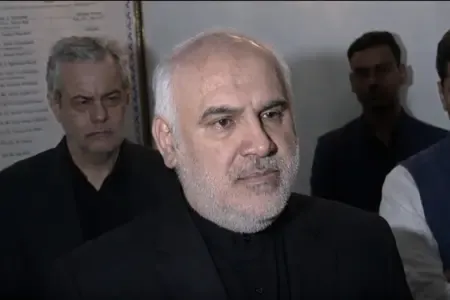
Iran's Ambassador to India, Mohammad Fathali, on Tuesday, 6 October 2026, said that Tehran is prepared for a “serious dialogue” with the United States to resolve the ongoing conflict, but cautioned that a lasting agreement cannot be achieved through pressure, threats, or military action. Speaking in an exclusive interview in New Delhi, Fathali made clear that diplomacy must rest on equal footing and reciprocal commitments — not unilateral demands.
Iran's Conditions for Dialogue
Ambassador Fathali stated that the Iranian government has consistently held that disputes with Washington must be resolved through dialogue and diplomacy. However, he drew a sharp distinction between genuine negotiations and what he described as the current US approach.
“To produce a result, dialogue must rest on mutual respect, reciprocal commitments and a reliable path for diplomacy. At present, the two sides differ on some fundamental issues, including how to end the conflict and the lifting of restrictions and sanctions. Iran is ready for serious dialogue and for a balanced, implementable agreement. But a lasting agreement cannot be reached through pressure, threats or military action,” Fathali said, responding to reports that US President Donald Trump was expecting further talks with Iran that week.
He added: “If the US genuinely seeks a diplomatic solution, it must create conditions in which both sides' commitments are implemented simultaneously and verifiably. Within such a framework, progress is possible.”
Tehran's Critique of US Negotiating Stance
The ambassador was pointed in his assessment of how Washington has framed past engagement. “The problem, unfortunately, is that what the US side presents as ‘negotiation’ often amounts, in practice, to accepting unilateral demands. That approach is not acceptable to us,” he said.
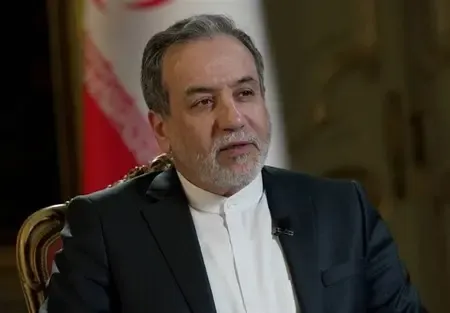
He insisted Iran does not reject “genuine, balanced negotiations based on mutual respect,” but argued that talks “cannot mean imposing one side's demands on the other.” Iran's Foreign Minister Abbas Araghchi has separately stated that “there is no military solution” to the conflict, a position that Fathali reiterated during the interview.
Regional Security and US Military Presence
Commenting on recent statements by an Islamic Revolutionary Guard Corps (IRGC) commander claiming that US forces had been “forced” to retreat approximately 1,000 km from Iran's borders, Fathali said the remarks reflect “changes” underway in the US military footprint in the region. An Iranian lawmaker, Abdolhossein Rouholamini, had also called for a full US military withdrawal from the broader region.
“The principled position of the Islamic Republic of Iran on foreign forces in the region is clear. We believe regional security should be ensured by the countries of the region, through cooperation among themselves, and not through the presence of extra-regional forces,” the ambassador said. He argued that decades of foreign military intervention had “not created lasting security” and had itself been “among the factors increasing tension and insecurity.”
Strait of Hormuz and Oil Flow Claims
Fathali pushed back firmly against reports — attributed primarily to the American side and some shipping-monitoring institutions — suggesting that crude flows from the Persian Gulf have recovered to near pre-war levels. He acknowledged that some supply shortfalls have been partially offset through strategic oil reserve releases and alternative routing, but maintained this does not signal a genuine normalisation.
“These alternative routes can make up part of the shortfall in the short term. But their capacity and efficiency cannot be compared with those of the Strait of Hormuz, and they cannot replace this vital route in the long term,” he said. He pointed to persistently elevated oil prices and rising fuel costs in the United States as evidence that “what we are witnessing is a form of temporary management and compensation for the shortfall, not a genuine return of the energy market to pre-war conditions.”
What to Watch Next
With both sides publicly signalling openness to talks while sharpening their conditions, the gap between Tehran and Washington remains wide on core issues — sanctions relief, verification mechanisms, and the pace of any mutual commitments. Whether the next round of reported contact produces a structured framework or another round of preliminary positioning will be closely watched by energy markets, regional governments, and India, which maintains significant trade and diplomatic ties with both Tehran and Washington.
Point of View
Not an olive branch. Tehran is keeping the diplomatic window open just wide enough to avoid being blamed for a breakdown, while refusing the asymmetric bargaining frame that Washington has favoured in past Iran talks. The Hormuz rebuttal is the sharper message: Iran is contesting the US-led narrative that energy markets have normalised, implying the leverage is still live. For India — balancing its Iran oil interests against US sanctions pressure — the ambassador's choice of New Delhi as the venue for this statement is itself a piece of geopolitical communication.
NationPress
6 Oct 2026
Frequently Asked Questions
What are Iran's conditions for dialogue with the United States?
Iran says dialogue must be based on mutual respect, reciprocal commitments, and simultaneous verifiable implementation — not unilateral US demands. Ambassador Fathali stated that pressure, threats, or military action cannot produce a lasting agreement, and that both sides' commitments must be implemented at the same time.
What did Iran's ambassador say about US military presence in the region?
Ambassador Fathali said Iran's principled position is that regional security should be ensured by countries of the region themselves, not by extra-regional military forces. He cited an IRGC commander's claim that US forces had retreated roughly 1,000 km from Iran's borders, saying it reflects ongoing changes in the US military footprint.
Why did Iran reject claims that Persian Gulf oil flows have recovered?
Fathali dismissed US and shipping-monitor claims that crude flows from the Persian Gulf have returned to pre-war levels, arguing that partial offsets through strategic reserve releases and alternative routes do not equal a genuine restoration of Strait of Hormuz flows. He pointed to persistently high oil prices and rising US fuel costs as evidence the disruption continues.
What has Iran's Foreign Minister said about a military solution?
Foreign Minister Abbas Araghchi has publicly stated that there is no military solution to the conflict with the United States. This position aligns with Ambassador Fathali's interview remarks, in which he also ruled out any agreement emerging from pressure or military action.
Why is Iran's ambassador making this statement from New Delhi?
Ambassador Mohammad Fathali gave this interview in New Delhi, where he is posted as Iran's envoy to India. India maintains significant diplomatic and trade ties with both Iran and the United States, making it a strategically chosen venue for Iran to publicly articulate its negotiating position to an internationally attentive audience.