Smriti Irani hails Tamil Nadu students' ₹40 lakh drive for soldiers
Synopsis
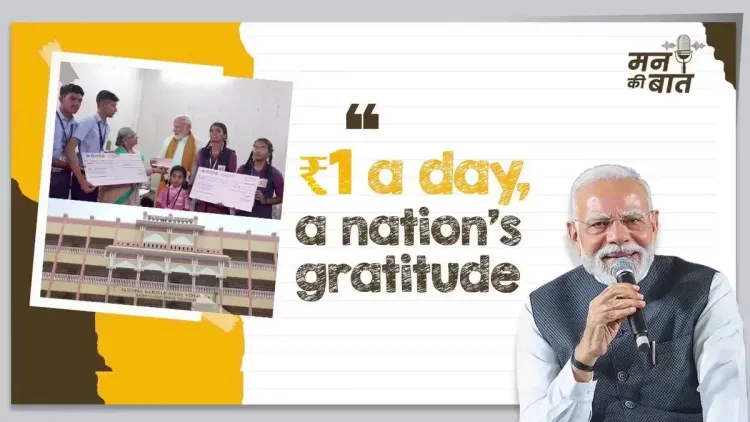
BJP leader Smriti Irani lauded Tamil Nadu teacher Girija Amma and her students for raising ₹40 lakh for Indian soldiers through daily ₹1 contributions, calling it a remarkable example of patriotism and public participation inspired by Prime Minister Modi's Mann Ki Baat programme.
Key Takeaways
BJP leader Smriti Irani praised the initiative on 31 May 2026 via a post on X.
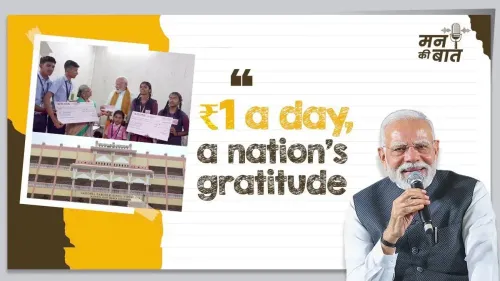
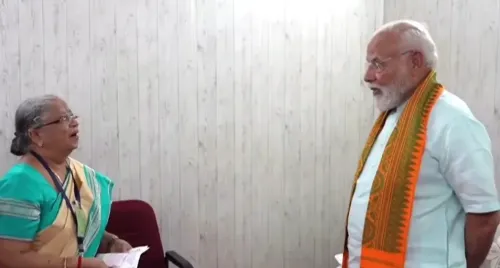
Tamil Nadu teacher Girija Amma and her students collected ₹40 lakh for Indian soldiers.
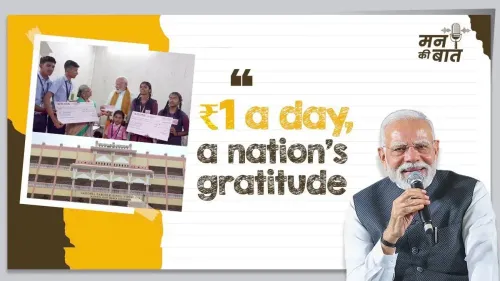
Students contributed just ₹1 per day each, demonstrating the power of small, sustained contributions.
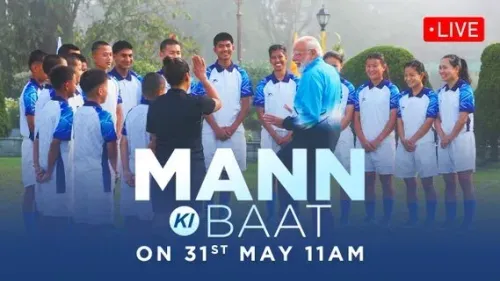
The drive was inspired by Mann Ki Baat , Prime Minister Narendra Modi 's monthly radio address launched in October 2014 .
Irani described such teachers and students as 'India's greatest strength.' The initiative reflects a broader national pattern of school-level fundraising for Indian Armed Forces welfare.
BJP leader Smriti Irani on Sunday, 31 May 2026, praised a student-led fundraising initiative from Tamil Nadu, where a teacher named Girija Amma and her students reportedly collected ₹40 lakh for the welfare of Indian soldiers by contributing just ₹1 per student per day. Irani described the effort as an inspiring example of patriotism and public participation, citing it as proof that small, consistent actions can make a significant contribution to national service.
Context
In her post, Irani wrote in Hindi: 'तमिलनाडु की गिरिजा अम्मा जी और उनके विद्यार्थियों की प्रेरणादायी पहल राष्ट्रभक्ति और जनभागीदारी का अद्भुत उदाहरण है' ('The inspiring initiative of Tamil Nadu's Girija Amma and her students is a wonderful example of patriotism and public participation'). She noted that the drive was inspired by Mann Ki Baat, Prime Minister Narendra Modi's monthly radio programme, and that students contributed ₹1 daily until the collective fund reached ₹40 lakh — all directed towards India's brave soldiers. Irani concluded that 'such values, such teachers, and such students are India's greatest strength.'
Policy Backdrop
Mann Ki Baat, launched in October 2014, has over the years served as a platform for Prime Minister Modi to spotlight grassroots contributions to public causes, including welfare drives for active soldiers and ex-servicemen. The programme has repeatedly featured community-level fundraising as examples of jan bhagidari (public participation), reinforcing a policy emphasis on citizen-led national service. Small-donation drives by schools and local communities in support of the Indian Army have appeared periodically across multiple states, often receiving amplification through Mann Ki Baat.
The broader pattern reflects a sustained governmental push to integrate patriotic education and voluntary contributions within the school ecosystem. State education departments have periodically encouraged student-led activities that connect civic responsibility with national security awareness.
Stakeholders and Impact
The primary beneficiaries of such drives are Indian Armed Forces personnel and their families, who receive welfare support through public donations channelled via designated funds. For the students involved, participation in a structured, goal-oriented civic exercise is seen as an early lesson in collective responsibility and national service. Teachers like Girija Amma occupy a central role in this model — mobilising young contributors and sustaining the effort over time to reach a meaningful sum.
Irani's public endorsement on a national platform brings visibility to a state-level initiative that might otherwise remain localised. Such recognition from senior political figures frequently encourages replication of similar models in other schools and districts across India.
What's Next
Future episodes of Mann Ki Baat may reference this Tamil Nadu initiative as a case study in student-driven patriotic action, consistent with the programme's history of highlighting such efforts. State education departments, particularly in Tamil Nadu, may consider formalising or scaling similar ₹1-per-day contribution models as part of broader civic education frameworks. The initiative also adds to a growing body of examples that policymakers and educators cite when making the case for embedding voluntary national-service components within school curricula.
Point of View
The post also carries a subtle cross-regional outreach dimension for the BJP. The ₹1-per-day model, if institutionalised, could become a template for embedding defence-welfare consciousness in school culture at scale. Ultimately, the post blurs the line between civic education and political messaging in a way that is now a recognisable feature of India's contemporary patriotic-public-participation discourse.
NationPress
17 Sept 2026
Frequently Asked Questions
Who is Girija Amma and what did her students do?
Girija Amma is a teacher from Tamil Nadu whose students collectively raised ₹40 lakh for Indian soldiers by contributing ₹1 per student each day, inspired by Prime Minister Modi's Mann Ki Baat programme.
What is Mann Ki Baat and why is it relevant here?
Mann Ki Baat is Prime Minister Narendra Modi's monthly radio address, launched in October 2014, which regularly highlights grassroots citizen contributions to national causes including armed forces welfare. The Tamil Nadu student drive was reportedly inspired by the programme.
Why did Smriti Irani post about this initiative?
Smriti Irani, a senior BJP leader and former Union Minister, shared the story to praise the patriotism and public participation demonstrated by Girija Amma and her students, calling such teachers and students India's greatest strength.
How did students manage to collect ₹40 lakh with just ₹1 a day?
By pooling ₹1 daily contributions from a large number of students over a sustained period, the cumulative amount reached ₹40 lakh — illustrating how small, consistent individual efforts can aggregate into a significant collective sum.
Are there other similar student fundraising drives for Indian soldiers?
Yes, small-donation drives by schools and communities in support of Indian Armed Forces welfare have appeared periodically across multiple Indian states and are frequently highlighted on Mann Ki Baat as examples of jan bhagidari, or public participation.