ISI eyes Burhan Wani model to revive homegrown militancy in J&K: Intel
Synopsis
Indian intelligence agencies warn that a reshuffled, hardliner-led ISI is abandoning its failed proxy-outfit strategy and looking to manufacture a new 'Burhan Wani' — a charismatic, social-media-savvy local face — to rebuild a fully homegrown militant network in J&K, reducing Pakistani fingerprints and exploiting youth radicalisation online.
Key Takeaways
Indian intelligence agencies assess the ISI , following a leadership reshuffle bringing hardliners to key posts, is revisiting the Burhan Wani model for homegrown militancy in Jammu and Kashmir .
Post-Wani proxy outfits The Resistance Front (TRF) and People's Anti-Fascist Front (PAFF) — fronts for Lashkar-e-Taiba and Jaish-e-Mohammed — are assessed to have lost credibility, according to an Intelligence Bureau official.
The ISI reportedly wants to revive the Hizbul Mujahideen with an all-Kashmiri module to reduce the presence of Pakistani operatives and gain plausible deniability.
Abrogation of Article 370 in 2019 and a tourism-driven economic upturn in J&K are cited as factors that undercut the earlier proxy strategy.
India's doctrine of treating every terror act as an act of war is said to have made a homegrown, deniable module the ISI's preferred option.
Indian intelligence agencies are assessing that the Inter-Services Intelligence (ISI) — following a significant internal reshuffle in Islamabad that reportedly elevated hardliners to key positions — is weighing a revival of the so-called 'Burhan Wani model' to reignite homegrown militancy in Jammu and Kashmir. According to intelligence inputs, the ISI's primary concern is rebuilding a recruitment pipeline that is entirely local in origin, reducing its dependence on Pakistani operatives.
Background: What Was the Burhan Wani Model?
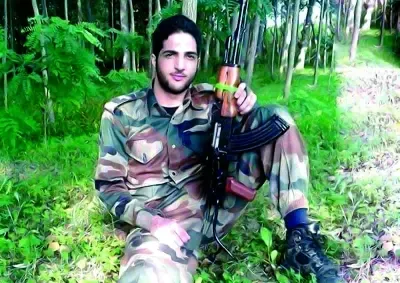
Burhan Wani, a commander of Hizbul Mujahideen, emerged as a social media phenomenon whose images and online messaging reportedly drew a significant number of Kashmiri youth into militancy without extensive scouting or formal radicalisation sessions. His elimination by Indian security forces in 2016 triggered widespread unrest across the Valley. According to officials, the recruitment surge his persona generated — including coordinated protests and stone-pelting — was described as a 'nightmare' for security agencies at the time.
Post-Wani Strategy and Its Failures
In the aftermath of Wani's death, the ISI reportedly created proxy outfits — notably The Resistance Front (TRF) and the People's Anti-Fascist Front (PAFF) — as fronts for Lashkar-e-Taiba and Jaish-e-Mohammed respectively. A key feature of this approach was rebranding: Arabic and religious names for terror groups were abandoned in favour of secular-sounding identities, and militants were referred to as 'freedom fighters' while Indian security forces were labelled 'occupational forces.'
On 7 October 2021, TRF released a statement claiming responsibility for the killing of two teachers at a government school in Srinagar, alleging the victims had coerced students into participating in Independence Day celebrations. However, according to an Intelligence Bureau (IB) official, this strategy has since run its course. 'Everyone realised that, be it The Resistance Front or the PAFF, they were Pakistani by origin and proxies of the Islamabad-funded Lashkar-e-Taiba and Jaish-e-Mohammed,' the official said.
Why the ISI Is Pivoting Now
Officials attribute the ISI's strategic rethink to several converging factors. The abrogation of Article 370 in 2019 substantially altered ground conditions — Indian security forces dismantled large terror networks, and improved economic conditions, particularly a tourism boom that raised household incomes in J&K, reduced public sympathy for militant outfits. Additionally, India's stated doctrine of treating every act of cross-border terror as an act of war has, according to officials, forced the ISI to seek a fully homegrown module that provides it plausible deniability.
Notably, reviving the Hizbul Mujahideen — historically a 'thoroughbred homegrown outfit' — is said to be central to the new strategy. The ISI reportedly wants to 'drastically reduce' the presence of Pakistani nationals in active operations and instead cultivate a charismatic local figure capable of replicating Wani's influence on Kashmiri youth through social media.
Security Assessment and Implications
Officials caution that the ISI's homegrown recruitment model, if successfully executed, would present a qualitatively different challenge for Indian security agencies compared to infiltrations by foreign militants. A locally embedded network is harder to detect, prosecute, and counter narratively. The IB and other agencies are said to be monitoring social media platforms and local networks closely for early signals of such an effort. The new ISI leadership is expected to formalise its revised J&K strategy in the months ahead, making continued vigilance critical.
Point of View
Freedom-fighter framing, social-media legitimisation — failed because Kashmiris saw through the Pakistani hand. The harder question is whether conditions on the ground in 2026 are as fertile for such a figure to emerge as they were in 2015–16; a decade of Article 370's abrogation, sustained counter-terror operations, and economic integration suggests they are not. But the warning itself is significant: if Indian security agencies are publicly flagging this threat assessment, it also signals they may be watching specific individuals, and the disclosure could itself be a pre-emptive counter-narrative move — shaping public opinion before a new face is 'launched' online.
NationPress
26 Sept 2026
Frequently Asked Questions
What is the Burhan Wani model that the ISI is reportedly trying to revive?
The Burhan Wani model refers to the strategy through which Hizbul Mujahideen commander Burhan Wani used social media to attract Kashmiri youth into militancy without extensive scouting or radicalisation sessions, effectively building a homegrown recruitment pipeline before his death in 2016. Indian intelligence agencies assess the ISI now wants to cultivate a similar charismatic local figure to replicate that effect.
Why did the ISI's post-Wani proxy strategy fail?
According to an Intelligence Bureau official, outfits like The Resistance Front and PAFF were ultimately identified as Pakistani-origin proxies of Lashkar-e-Taiba and Jaish-e-Mohammed, eroding their credibility. The abrogation of Article 370 in 2019 and improved economic conditions — particularly a tourism boom — also reduced local sympathy for militant narratives.
What role did The Resistance Front play in the ISI's strategy?
The Resistance Front (TRF) was created by the ISI as a front for Lashkar-e-Taiba, designed to give Pakistani-backed terror operations a local, secular-sounding identity. On 7 October 2021, TRF claimed responsibility for the killing of two teachers at a government school in Srinagar, framing the attack around local grievances to legitimise the violence.
Why does the ISI want a fully homegrown militant module in J&K?
India's current doctrine of treating cross-border terror as an act of war has reportedly made deniability critical for Pakistan. A wholly Kashmiri outfit insulates the ISI from direct attribution, making a homegrown module — with reduced Pakistani operatives on the ground — the preferred strategy, according to Indian officials.
What are Indian security agencies doing in response to this threat assessment?
Indian intelligence agencies, including the Intelligence Bureau, are said to be closely monitoring social media platforms and local networks for early signs of the ISI cultivating a new charismatic figure. Security officials note that the landscape has changed significantly since the Article 370 abrogation, with dismantled terror networks and improved economic conditions making large-scale homegrown recruitment harder to execute.