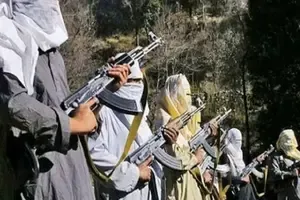
ISKP launches digital propaganda war on India to derail Kabul ties

Synopsis
The ISKP is waging a coordinated digital campaign against India — not with bombs, but with blogs, social media accounts, and its magazine Al Azaim. The target is twofold: Indian media narratives on Ram Mandir and Kashmir, and the quietly thawing ties between New Delhi and Kabul. Intelligence agencies say the operation is deliberate, monitored, and designed to reach global audiences.
Key Takeaways
ISKP has launched a coordinated anti-India propaganda campaign through its magazine Al Azaim , targeting Indian media narratives.
The outfit is urging supporters to launch blogs, build social media networks, and challenge Indian judicial and media institutions.
The Ram Mandir verdict and Jammu and Kashmir are key focal points of the campaign, according to intelligence officials.
ISKP is spreading false narratives claiming India seeks to dominate Afghanistan , aiming to derail improving New Delhi-Kabul diplomatic ties.
The Intelligence Bureau is monitoring blogs, YouTube channels, and social media platforms linked to ISKP propaganda.
Officials allege Pakistan has been attempting to use ISKP against the TTP and BLA , adding a regional dimension to the group's anti-India posture.
The Islamic State Khorasan Province (ISKP) has launched an aggressive anti-India propaganda campaign, targeting Indian media narratives and seeking to sabotage the recently reset diplomatic ties between New Delhi and Kabul, according to intelligence officials. The campaign, channelled primarily through the outfit's magazine Al Azaim, marks a sharp escalation in the terror group's information warfare against India.
What the Propaganda Campaign Involves
Through recent editions of Al Azaim, the ISKP has zeroed in on Indian media coverage of sensitive issues, including the Ram Mandir verdict and the situation in Jammu and Kashmir. The outfit has urged its sympathisers to become active on social media platforms, launch blogs, and build a network of alternative accounts designed to counter narratives promoted by Indian media.
According to intelligence officials, the ISKP has also been encouraging supporters to criticise India's judiciary, portraying it as biased against Islam — particularly in relation to the Ram Mandir judgment. 'The group questions why Indian Muslims have remained silent and claims that it is still not too late to act against the Indian State. Its sympathisers have also been urged to target the judiciary over the Ram Mandir verdict,' an official alleged.
A second official noted that despite the judgment being delivered years ago, the ISKP has deliberately chosen to revive it. 'It speaks about how the media covered the judgment and the inauguration of the temple. The outfit wants a different narrative and hence has been urging its followers to take it up on multiple platforms,' the official said.
Building an Alternative Media Network
The ISKP's propaganda blueprint goes beyond individual posts. The outfit has outlined plans to build an interconnected network of social media accounts and blogs, with instructions to expand reach through word-of-mouth promotion. According to its propaganda material, such platforms have the potential to gain traction not only within India but also internationally.
'The objective is to create alternative narratives to those presented by the Indian media and ensure they reach a wider audience, including the global community,' officials said, quoting the outfit's stated goals.
An Intelligence Bureau official confirmed that agencies are maintaining close surveillance on blogs, YouTube channels, and social media platforms allegedly being used at the behest of the terror outfit to spread anti-India content.
Targeting India-Afghanistan Relations
A key thrust of the campaign is the ISKP's effort to poison the improving relationship between India and Afghanistan. The outfit has been pushing a false narrative claiming that the Indian government intends to bully and eventually take control of Afghanistan — a charge officials describe as fabricated and designed to stoke anti-India sentiment among the Afghan public.
'The ISKP is seeking to turn public opinion in Afghanistan against the ruling Afghan Taliban and its engagement with New Delhi. By pushing such narratives, the outfit hopes to build pressure on the regime to distance itself from ties with India,' officials alleged.
ISKP-Taliban Rivalry and Pakistan's Role
This campaign unfolds against the backdrop of a deepening conflict between the ISKP and the Afghan Taliban. The Taliban has recently launched drone strikes targeting Islamic State camps in Khyber Pakhtunkhwa (KP), asserting these centres were being used to plan attacks on Afghan soil. The two groups have been in open conflict for over a decade, dating to the ISKP's founding in Afghanistan and its subsequent refusal to align with Taliban policies.
Notably, the fallout with the Taliban has reportedly pushed the ISKP closer to Pakistan. Officials allege that Islamabad has been attempting to leverage the outfit against groups such as the Tehreek-e-Taliban Pakistan (TTP) and the Balochistan Liberation Army (BLA) — a dynamic that adds a further layer of regional complexity to the ISKP's anti-India posture.
What Intelligence Agencies Are Watching
Indian intelligence agencies are treating the campaign as a coordinated information warfare operation rather than isolated online activity. The surveillance net has been cast wide, covering blogs, video platforms, and social media channels flagged for ISKP-linked content. Officials say the campaign is a clear attempt to derail improving India-Afghanistan ties at a moment when both sides have been signalling a willingness to re-engage diplomatically.
Point of View
You strike narratively. But dismissing this as mere propaganda would be a mistake. Coordinated digital campaigns that exploit real grievances around the Ram Mandir verdict or Kashmir can gain traction in vulnerable online communities, both within India and in the diaspora. The more significant strategic play, however, is the attempt to wedge India and Afghanistan apart at a moment when New Delhi is quietly rebuilding influence in Kabul — influence that neither Pakistan nor the Islamic State can afford to let consolidate. Indian agencies are right to monitor this closely, but monitoring alone is not a counter-narrative strategy.
NationPress
19 Sept 2026
Frequently Asked Questions
What is the ISKP's anti-India propaganda campaign?
The Islamic State Khorasan Province (ISKP) has launched a coordinated digital propaganda drive targeting Indian media narratives, the Ram Mandir verdict, and India-Afghanistan diplomatic ties, channelled through its magazine Al Azaim. The outfit is urging supporters to build blogs, social media accounts, and alternative media networks to spread anti-India content globally.
Why is ISKP targeting India-Afghanistan relations?
The ISKP is pushing false narratives claiming India seeks to control Afghanistan in order to turn Afghan public opinion against the Taliban's engagement with New Delhi. Officials say the goal is to pressure the Afghan Taliban regime into distancing itself from India at a time when bilateral ties are improving.
What role is the Ram Mandir verdict playing in ISKP propaganda?
Despite the Ram Mandir judgment being delivered years ago, the ISKP has revived it as a propaganda tool, questioning why Indian Muslims have remained silent and urging followers to target the judiciary on multiple platforms. Officials say the outfit is deliberately re-stoking the issue to fuel grievance narratives.
How are Indian agencies responding to the ISKP digital campaign?
The Intelligence Bureau has confirmed that agencies are maintaining close surveillance on blogs, YouTube channels, and social media platforms allegedly being used to spread ISKP propaganda. Several platforms are under active monitoring for anti-India content linked to the terror outfit.
What is the relationship between ISKP, the Afghan Taliban, and Pakistan?
The ISKP and the Afghan Taliban have been in open conflict for over a decade after the Islamic State refused to align with Taliban policies. The Taliban has recently launched drone strikes on ISKP camps in Khyber Pakhtunkhwa. Officials allege that Pakistan has been attempting to use ISKP against groups like the TTP and BLA, complicating the regional security picture.