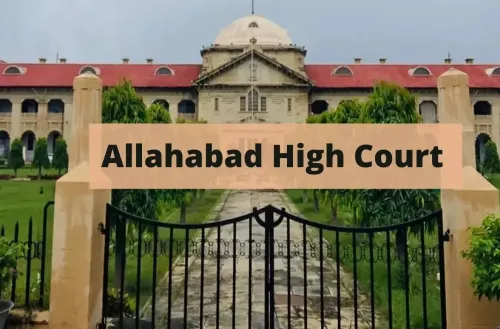
Allahabad HC stays Sambhal teacher's suspension over Islamic prayers row
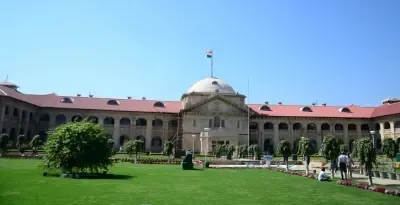
Synopsis
The Allahabad High Court has halted the suspension of a Sambhal schoolteacher accused of allowing Islamic prayers and community-specific uniforms in a government school — but stopped short of clearing him, instead ordering a departmental enquiry to wrap up within 15 days. The teacher's central defence: he was hospitalised on medical leave when the alleged activities occurred.
Key Takeaways
The Allahabad High Court kept in abeyance the suspension of a Sambhal government schoolteacher accused of permitting Islamic prayers and community-specific uniforms.
A single-judge bench of Justice Manju Rani Chauhan disposed of the writ petition challenging the suspension order dated 10 May 2026 .
The court directed the departmental enquiry to conclude preferably within 15 days , with all relevant documents to be supplied to the petitioner within three days .
The teacher claimed he was on sanctioned medical leave and was hospitalised during the period when the alleged activities took place.
The court declined to examine the merits of the charges at the writ stage, holding that the teacher's defence must be raised in the departmental enquiry.
The suspension order will remain in abeyance until the enquiry concludes and will abide by its final outcome.
The Allahabad High Court has kept in abeyance the suspension of a government schoolteacher in Sambhal, Uttar Pradesh, who was accused of permitting students to perform Islamic prayers and wear uniforms allegedly indicating affiliation to a particular religious community. The court directed that the departmental enquiry against the teacher be concluded preferably within 15 days.
Background of the Case
A single-judge bench of Justice Manju Rani Chauhan disposed of the writ petition filed by the teacher, who had challenged his suspension order dated 10 May 2026, passed by the District Basic Education Officer, Sambhal. The petitioner had been placed under suspension on allegations that, during his tenure as Incharge Headmaster, students at the school were found performing Islamic prayers and wearing uniforms suggesting religious community affiliation.
The teacher, however, contended that he was on sanctioned medical leave during the relevant period and therefore could not be held responsible for the alleged activities. He further argued that even if he were treated as the Incharge Headmaster at the time in question, the allegations did not justify a major penalty.
Court Proceedings and Charge Sheet
The matter had a prior hearing on 19 August, when the court granted a week's time to the Basic Shiksha Adhikari (BSA) to obtain instructions. When the case was listed on 7 September, the court was informed that a charge sheet dated 3 September had been served upon the petitioner that same day.
Counsel for the BSA submitted that certain records accompanying the charge sheet indicated that, prior to 14 November 2025, the petitioner was allegedly visible at prayer services where students were participating in Islamic prayers and wearing community-specific uniforms. The petitioner's counsel, however, countered that the same records confirmed he had been admitted to hospital and that medical leave had been duly sanctioned during the relevant period, arguing the teacher was never present at the alleged prayer services.
What the Court Ruled
The court declined to adjudicate on the merits of the charges at the writ petition stage. Justice Chauhan observed that the petitioner's explanation and the documents he relied upon were properly matters for the departmental enquiry, not for writ proceedings.
'This Court is of the considered opinion that the charges levelled against the petitioner cannot be examined at this stage, inasmuch as the explanation and the documents relied upon by the petitioner can be raised as a defence in the departmental enquiry,' Justice Chauhan stated.
The court added that the petitioner would have 'ample opportunity to prove his innocence' during the departmental proceedings.
Key Directions Issued
While disposing of the petition, the Allahabad High Court issued the following directives: the departmental enquiry must be brought to its logical conclusion strictly in accordance with law, preferably within 15 days from the date of the order; all relevant documents must be supplied to the petitioner within three days; and the impugned suspension order shall remain in abeyance until the enquiry concludes, with its continuation contingent on the final outcome.
This comes amid a broader national conversation about religious practices in government-run schools. The case also touches on the legal safeguards available to public servants facing departmental action — particularly the principle that writ courts do not typically substitute their judgment for that of departmental enquiry authorities at an early stage. The outcome of the enquiry will determine whether the teacher's suspension is reinstated or quashed.
Point of View
Leaving individual teachers — whether complicit or absent — vulnerable to punitive action in a charged atmosphere. The teacher's medical leave defence, if corroborated by hospital records already on file, raises questions about why the suspension was issued in the first place. Accountability, if any, must follow evidence — not optics.
NationPress
14 Sept 2026
Frequently Asked Questions
Why was the Sambhal schoolteacher suspended?
The teacher was suspended on 10 May 2026 by the District Basic Education Officer, Sambhal, on allegations that, during his tenure as Incharge Headmaster, students were performing Islamic prayers and wearing uniforms allegedly indicating affiliation to a particular religious community. The teacher has denied the charges, claiming he was on sanctioned medical leave during the relevant period.
What did the Allahabad High Court order?
The Allahabad High Court, through a bench of Justice Manju Rani Chauhan, kept the suspension in abeyance and directed that the departmental enquiry be concluded preferably within 15 days. All relevant documents must be supplied to the teacher within three days, and the suspension's continuation depends on the enquiry's final outcome.
Why did the court decline to rule on the merits of the charges?
The court held that examining the merits of the charges at the writ petition stage was not appropriate, as the teacher's explanations and supporting documents — including hospital records — are properly matters for the departmental enquiry. The court noted the petitioner would have 'ample opportunity to prove his innocence' in those proceedings.
What is the teacher's defence?
The teacher contended that he was on sanctioned medical leave and hospitalised during the period when the alleged prayer services and uniform violations reportedly occurred. His counsel argued that the same records accompanying the charge sheet confirmed his hospitalisation, and therefore he could not have been present at or responsible for the alleged activities.
What happens after the departmental enquiry concludes?
Once the enquiry concludes — within the court's preferred 15-day timeline — the impugned suspension order will abide by its final outcome. If the charges are upheld, the suspension or a major penalty may be reinstated; if the teacher's defence is accepted, the suspension could be quashed.