Jaipur hosts 52 Commonwealth nations for CPMC-2026 peace mediation summit
Synopsis
For the first time, India is leading the Commonwealth's global conversation on peace mediation — and it is doing so from Jaipur. With 52 nations gathering for CPMC-2026 and a landmark Jaipur Peace Mediation Declaration due on 2 August, this is more than a legal conference: it is India's most visible bid yet to shape the future of international judicial cooperation.
Key Takeaways
52 Commonwealth nations are participating in the CPMC-2026 conference in Jaipur , running from 31 July to 2 August 2026 .
The 'Jaipur Peace Mediation Declaration 2026' is set to be adopted on 2 August , establishing shared principles for mediation and rule of law across Commonwealth nations.
This is the first time India has led the Commonwealth's global dialogue on peace mediation, marking a milestone in judicial diplomacy.
The conference covers eight themes including environmental justice, family mediation, restorative criminal justice, and the role of AI in legal systems.
The summit was inaugurated by Justice Surya Kant of the Supreme Court of India, with Union Law Minister Arjun Ram Meghwal and Rajasthan CM Bhajan Lal Sharma in attendance.
The conference is jointly organised by RSLSA , SCBA , CLA , and Nivaaran .
Jaipur is set to become the global centre of judicial dialogue as representatives from 52 Commonwealth nations convene for the three-day Commonwealth Peace Mediation and Rule of Law Conference (CPMC-2026), running from 31 July to 2 August 2026. The summit, inaugurated at The Lalit Hotel, Jaipur, marks the first time India has led the Commonwealth's global conversation on peace mediation and alternative dispute resolution.
The Jaipur Peace Mediation Declaration
The conference's defining moment is expected on 2 August 2026, when delegates are set to formally adopt the 'Jaipur Peace Mediation Declaration 2026' — a landmark document aimed at establishing shared principles for peace mediation, conflict resolution, the rule of law, and timely access to justice across all Commonwealth member nations. According to officials, the declaration is anticipated to serve as a key reference framework for future international judicial cooperation and mediation efforts.
The declaration goes beyond conventional dispute resolution: it seeks to address entrenched bitterness, mistrust, and long-standing conflict between parties — not merely to end litigation, but to build lasting peace. Legal experts believe that if widely adopted, this model could enable disputes that languish in courts for years to be resolved in significantly shorter timeframes.
Key Dignitaries and Organisers
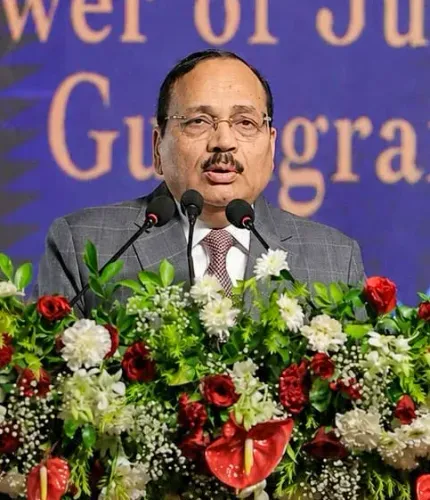
The inaugural session on Friday evening at 6 pm IST was presided over by Justice Surya Kant, Judge of the Supreme Court of India. Senior figures in attendance included Union Law and Justice Minister Arjun Ram Meghwal, Rajasthan Chief Minister Bhajan Lal Sharma, Acting Chief Justice of the Rajasthan High Court Justice Sanjeev Prakash Sharma, Attorney General for India R. Venkataramani, Commonwealth Lawyers Association President Steven Thiru, and Supreme Court Bar Association President Vikas Singh.
The conference has been jointly organised by the Rajasthan State Legal Services Authority (RSLSA), the Supreme Court Bar Association (SCBA), the Commonwealth Lawyers Association (CLA), and Nivaaran.
Eight Themes on the Agenda
Over three days, delegates will deliberate on eight major themes: environmental justice, family mediation, restorative criminal justice, commercial disputes, workplace conflicts, infrastructure and public project disputes, community justice, and the role of peace mediation in promoting global peace. Discussions will also examine how emerging technologies — including artificial intelligence — can improve access to justice while ensuring transparency and efficiency in legal systems.
Why Jaipur and Why Now
Jaipur's selection as host city reflects Rajasthan's growing standing in alternative dispute resolution. The state has reportedly facilitated the settlement of thousands of disputes through mediation mechanisms in recent years, positioning itself as a model for the broader Commonwealth. This conference is India's first leadership role in the Commonwealth's global mediation dialogue — a signal of the country's ambitions in judicial diplomacy. Notably, the concept of 'Peace Mediation' being promoted here is distinct from conventional dispute resolution: it prioritises healing fractured relationships and reducing hostility, not just closing case files.
What Comes Next
If the recommendations emerging from CPMC-2026 and the Jaipur Declaration are implemented across member nations, legal experts argue the initiative could fundamentally reorient how justice systems address disputes — shifting emphasis from prolonged litigation toward dialogue, reconciliation, and sustainable peace. The adoption of the declaration on 2 August will be closely watched as a measure of Commonwealth consensus on this new mediation framework.
Point of View
Many of which face overburdened judiciaries and political resistance to alternative dispute resolution. The 'Peace Mediation' framing — going beyond case closure to heal relationships — is conceptually ambitious, but its operationalisation across 52 jurisdictions with vastly different legal traditions will require more than a shared document. Rajasthan's own mediation track record offers a credible domestic proof of concept; whether that model can scale globally is the question CPMC-2026 leaves unanswered.
NationPress
31 Jul 2026
Frequently Asked Questions
What is CPMC-2026 and where is it being held?
CPMC-2026 is the Commonwealth Peace Mediation and Rule of Law Conference, a three-day summit held in Jaipur from 31 July to 2 August 2026. It brings together judges, attorneys general, legal experts, and policymakers from 52 Commonwealth nations to discuss peace-based justice and mediation frameworks.
What is the Jaipur Peace Mediation Declaration 2026?
It is a landmark document expected to be adopted on 2 August 2026 by representatives of the participating Commonwealth nations. The declaration aims to establish shared principles for peace mediation, conflict resolution, rule of law, and timely access to justice across Commonwealth member states.
Why is CPMC-2026 significant for India?
This is the first time India has led the Commonwealth's global conversation on peace mediation, positioning the country at the forefront of judicial diplomacy and alternative dispute resolution. Jaipur's selection also highlights Rajasthan's established reputation in facilitating mediation-based dispute settlements.
What themes will be discussed at the conference?
Delegates will deliberate on eight major themes: environmental justice, family mediation, restorative criminal justice, commercial disputes, workplace conflicts, infrastructure and public project disputes, community justice, and the role of peace mediation in global peace. The role of artificial intelligence in improving access to justice will also be examined.
Who inaugurated CPMC-2026 and who are the key attendees?
The conference was inaugurated by Justice Surya Kant, Judge of the Supreme Court of India. Key attendees include Union Law and Justice Minister Arjun Ram Meghwal, Rajasthan Chief Minister Bhajan Lal Sharma, Attorney General for India R. Venkataramani, Commonwealth Lawyers Association President Steven Thiru, and Supreme Court Bar Association President Vikas Singh.