CM Sai Pushes for Bastar Road Boost Under PMGSY-IV
Synopsis
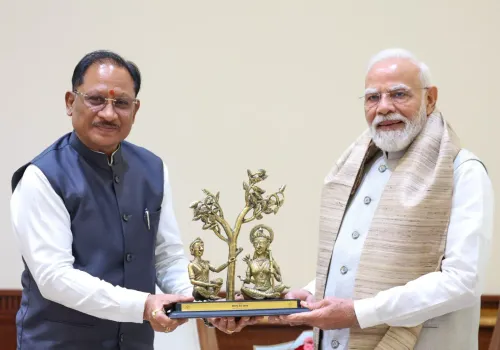
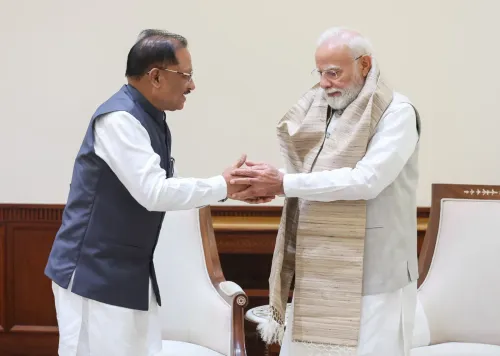
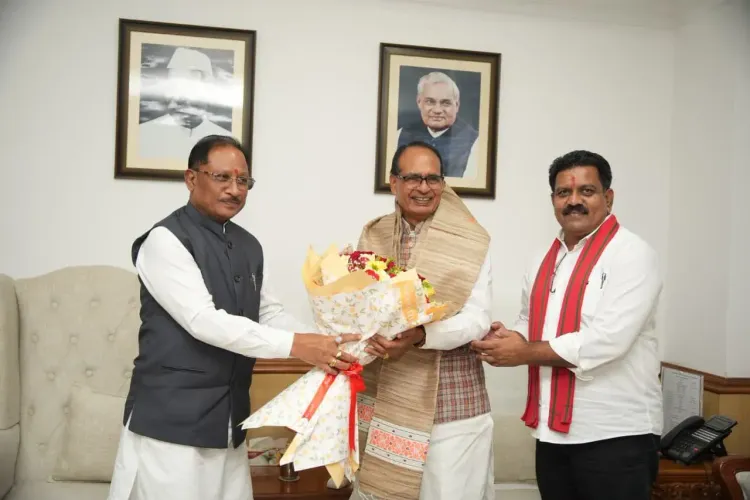
Chief Minister Vishnu Deo Sai met Union Minister Shivraj Singh Chouhan in New Delhi on 31 July 2026, proposing a special 10-km cluster norm under PMGSY-IV for Bastar's remote tribal villages — modelled on Arunachal Pradesh's existing arrangement.
Key Takeaways
CM Vishnu Deo Sai met Union Minister Shivraj Singh Chouhan in New Delhi on 31 July 2026 to discuss road connectivity for Bastar division .
Sai proposed a special 10-kilometre cluster norm under PMGSY-IV , mirroring an arrangement already operational in Arunachal Pradesh .
The cluster model enables geographically dispersed villages below standard population thresholds to be grouped and connected as a single project.
Bastar is a historically left-wing extremism-affected tribal belt in southern Chhattisgarh where poor connectivity limits access to education, health, and markets.
Minister Chouhan gave a positive assurance and praised Chhattisgarh's rural development work; formal inclusion in PMGSY-IV guidelines remains pending.
Deep in southern Chhattisgarh, entire villages remain cut off from schools, hospitals, and markets — not by choice, but by the absence of a single paved road. On Friday, 31 July 2026, Chief Minister Vishnu Deo Sai took that reality straight to New Delhi, meeting Union Minister for Rural Development and Agriculture Shivraj Singh Chouhan to press for a structural fix under the country's flagship rural roads programme.
The Arunachal Blueprint Sai Wants for Bastar
At the heart of the meeting was a specific, actionable proposal. CM Sai urged that Bastar division be granted a special 10-kilometre cluster norm under Pradhan Mantri Gram Sadak Yojana Phase IV (PMGSY-IV) — mirroring an arrangement already in place for the remote, hilly terrain of Arunachal Pradesh. The cluster model allows geographically dispersed habitations to be grouped and connected as a single project unit, making it viable to build roads to villages that individually fall below the population threshold required for standard PMGSY eligibility. Sai framed the ask in human terms: 'सड़कें केवल आवागमन का माध्यम नहीं' — 'roads are not merely a means of transit' — but the foundation for education, healthcare, employment, security, and prosperity.Why Bastar Is a Special Case
Bastar is not a routine administrative challenge. The division — spanning several tribal districts in southern Chhattisgarh — has historically been one of India's most left-wing extremism-affected regions, where poor road connectivity has compounded isolation for tribal communities for decades. Security forces, health workers, and supply chains all move on roads; where roads don't exist, the state's reach thins to almost nothing. Central and state governments have, over successive PMGSY phases since the scheme's launch in 2000, recognised that standard population-based eligibility criteria can inadvertently exclude the most remote habitations — precisely the ones that need connectivity most. Relaxed or cluster-based norms in geographically difficult states have been the policy workaround. Sai's proposal seeks to formally extend that logic to Bastar.Chouhan's Assurance and What Comes Next
Union Minister Chouhan responded positively, assuring CM Sai that the proposal would receive 'favourable consideration' and commending the Chhattisgarh government's rural development efforts. Whether that assurance translates into a formal revision of PMGSY-IV guidelines — and subsequent project sanctions from the Ministry of Rural Development — is the critical next step to watch. For Bastar's tribal villages, the difference between a guideline change and the status quo is not administrative; it is whether a child walks to school on a paved road or doesn't go at all.Point of View
Lowering the bar for ministerial approval. If the 10-km cluster norm is formally adopted, it would mark a meaningful shift in how PMGSY eligibility is applied in LWE-affected terrain — with implications for similarly isolated districts across central India. The proposal's real test is whether Chouhan's 'positive assurance' survives the Ministry's guideline revision process.
NationPress
31 Jul 2026
Frequently Asked Questions
What is PMGSY-IV and how does it apply to Bastar?
PMGSY-IV is the fourth phase of the Pradhan Mantri Gram Sadak Yojana, India's central scheme for all-weather rural road connectivity launched in 2000. CM Sai has proposed that Bastar's remote tribal habitations be covered under a special 10-km cluster norm within PMGSY-IV, similar to the arrangement used in Arunachal Pradesh.
What is the 10-km cluster norm CM Sai proposed for Bastar?
The 10-km cluster norm allows geographically dispersed villages — which individually may fall below the population threshold for standard PMGSY eligibility — to be grouped within a 10-km radius and treated as a single project unit, making road construction viable for the most remote habitations.
Why does Bastar need special road connectivity provisions?
Bastar division in southern Chhattisgarh is one of India's most remote and historically left-wing extremism-affected regions. Poor road connectivity has long limited tribal communities' access to schools, hospitals, and markets, and standard PMGSY eligibility criteria can exclude the most isolated villages.
What did Union Minister Shivraj Singh Chouhan say about the Bastar road proposal?
Minister Chouhan gave a positive assurance that the proposal would receive favourable consideration and commended the Chhattisgarh government's rural development efforts. A formal decision on revising PMGSY-IV guidelines is yet to be announced.
Which state's model is being proposed for Bastar's road connectivity?
CM Sai cited Arunachal Pradesh, where a cluster-based road connectivity arrangement under PMGSY already operates for remote hilly areas, as the model he wants replicated for Bastar's geographically difficult terrain.