Jaishankar Concludes Productive Visit to Bahrain's Manama

Synopsis
External Affairs Minister Dr. S. Jaishankar wrapped up a bilateral visit to Manama on 7 July 2026, calling the engagement productive and affirming that India-Bahrain cooperation continues to deepen, as New Delhi sustains its high-level Gulf outreach.
Key Takeaways
Jaishankar concluded a bilateral visit to Manama, Bahrain on 7 July 2026 , describing it as 'productive'.
India and Bahrain have maintained formal diplomatic relations since 1973 , institutionalised through a periodic Joint Commission .
The visit is part of India's sustained 'Look West' strategy of high-level engagement with GCC member states.
Key stakeholders include the large Indian diaspora in Bahrain, energy and trade sectors, and defence establishments.
Any joint statements, MoUs or follow-up mechanisms from the visit will be closely tracked by diplomatic observers.
The last landmark bilateral moment was King Hamad bin Isa Al Khalifa's state visit to India in February 2014 .
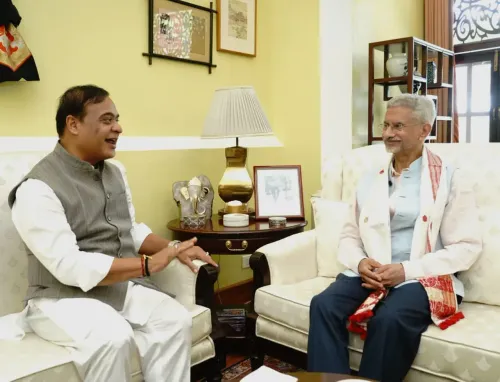
Union External Affairs Minister Dr. S. Jaishankar on Tuesday, 7 July 2026 concluded a bilateral visit to Manama, the capital of Bahrain, describing the engagement as productive and reaffirming the deepening of India-Bahrain cooperation.
Context
Posting on X after wrapping up his stay in Manama, Dr. Jaishankar stated: 'The India-Bahrain cooperation continues to deepen. Concluded a productive visit to Manama.' The brief but pointed post, accompanied by the Indian and Bahraini flags, signals a positive diplomatic outcome from the visit without detailing specific agreements — a pattern consistent with ministerial-level outreach to Gulf Cooperation Council (GCC) states.
Bahrain and India have maintained formal diplomatic relations since 1973, with cooperation spanning trade, energy, cultural exchanges and the welfare of a substantial Indian expatriate community resident in the island nation.
Policy Backdrop
India's engagement with Bahrain is part of a broader, calibrated 'Look West' strategy that successive governments have pursued to anchor New Delhi's presence across the Gulf. The two countries institutionalised their ties through a Joint Commission that has met periodically since the 1990s, providing a structured channel for reviewing bilateral progress.
A landmark moment in recent diplomatic history came in February 2014, when King Hamad bin Isa Al Khalifa of Bahrain paid a state visit to India, yielding agreements on trade, investment and cultural cooperation. High-level ministerial visits since then have built incrementally on that foundation, reinforcing the relationship's breadth.
Dr. Jaishankar, who has served as India's Foreign Secretary and as Ambassador to the United States, China and Singapore, has been a consistent architect of India's Gulf diplomacy since assuming charge of the External Affairs Ministry in May 2019.
Stakeholders and Impact
The visit carries direct significance for the large Indian diaspora in Bahrain, whose remittances and welfare concerns remain a standing item on the bilateral agenda. Energy security is another pillar: Bahrain, as a GCC member state, is part of a region that supplies a substantial share of India's crude oil and liquefied natural gas requirements.
Trade and investment linkages, maritime security cooperation, and people-to-people ties — including labour mobility frameworks — are among the areas that benefit from sustained high-level political attention of the kind this visit represents. Indian businesses with exposure to the Gulf market will watch for any follow-up announcements on investment facilitation or bilateral economic frameworks.
What's Next
Observers will look for the release of any joint statements, memoranda of understanding or follow-up mechanisms that may emerge in the days following the Manama visit. The scheduling of the next India-Bahrain Joint Commission meeting, or any indication of a possible summit-level engagement between the two governments, will be the clearest signal of how the momentum generated by this visit is to be sustained.
India's broader Gulf outreach is unlikely to slow: with energy diversification, trade expansion and maritime security high on New Delhi's foreign-policy agenda, Manama will remain a key node in that strategic calculus.
Point of View
High-frequency Gulf diplomacy — a pattern designed to keep India's relationships with GCC states warm, multidimensional and insulated from regional volatility. The choice of language — 'continues to deepen' rather than a specific deliverable — suggests the visit was consolidatory in nature, reinforcing institutional trust rather than marking a step-change. For India, Bahrain punches above its geographic weight: it hosts a significant diaspora, sits astride critical maritime lanes, and serves as a financial hub for Gulf-India capital flows. Sustained ministerial attention to Manama signals that New Delhi views the relationship as a long-term strategic asset, not merely a transactional one.
NationPress
7 Jul 2026
Frequently Asked Questions
Why did Jaishankar visit Bahrain in July 2026?
Dr. S. Jaishankar visited Manama, Bahrain in July 2026 to advance bilateral cooperation, continuing India's sustained high-level diplomatic engagement with Gulf Cooperation Council member states.
What is the current state of India-Bahrain relations?
India and Bahrain share diplomatic relations dating to 1973, with cooperation spanning trade, energy, diaspora welfare and security. A Joint Commission meets periodically to review and advance bilateral ties.
How many Indians live in Bahrain?
Bahrain hosts one of the Gulf's significant Indian expatriate communities; their welfare, remittances and labour rights are a standing priority in India-Bahrain diplomatic discussions.
What is India's Gulf diplomacy strategy?
India pursues a 'Look West' strategy of calibrated, high-level engagement with GCC states to diversify energy sources, expand trade and investment, and strengthen maritime security cooperation.
What should we watch after Jaishankar's Bahrain visit?
Observers will track any joint statements, memoranda of understanding or follow-up mechanisms, as well as the scheduling of the next India-Bahrain Joint Commission meeting or a possible summit-level engagement.