Jaishankar Marks 59th ASEAN Day, Flags India's Act East Ambitions
Synopsis
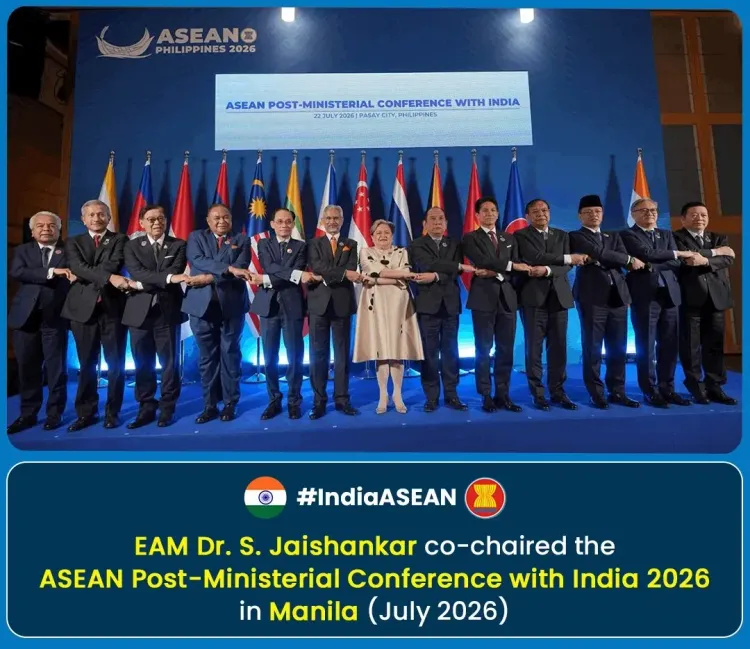
On ASEAN's 59th founding day, External Affairs Minister Dr. S. Jaishankar reaffirmed India's deepening ties with the bloc under the Act East Policy, citing the Comprehensive Strategic Partnership and shared goals across trade, defence, digital links, and Indo-Pacific stability.
Key Takeaways
Jaishankar greeted ASEAN partners on the bloc's 59th founding day, August 8, 2026 .
India's engagement is anchored in the Act East Policy , launched by PM Modi at the 2014 India-ASEAN Summit in Nay Pyi Taw .
India-ASEAN ties were upgraded to a Comprehensive Strategic Partnership at the November 2022 Summit , marking 30 years of dialogue partnership.
Jaishankar highlighted six pillars: connectivity, trade, digital linkages, resilient supply chains, defence, and education and cultural exchanges.
The ASEAN-India Free Trade Agreement (signed 2009 ) is currently under review for expansion.
India frames its ASEAN engagement as integral to a free and stable Indo-Pacific region.
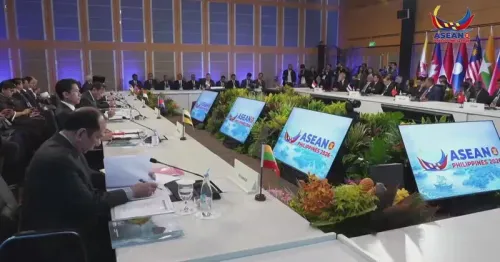
Fifty-nine years after five Southeast Asian nations signed a declaration in Bangkok that would eventually bind ten economies into one of the world's most consequential regional blocs, Union External Affairs Minister Dr. S. Jaishankar on Saturday, August 8, 2026 used the occasion to signal how far — and how purposefully — India has walked toward that neighbourhood.
Posting on X, the minister extended greetings to India's ASEAN partners and pointed to the full breadth of the relationship: 'Guided by our #ActEast Policy, our Comprehensive Strategic Partnership continues to deepen through connectivity, trade, digital linkages, resilient supply chains, defence, education and cultural exchanges.' The message was not ceremonial small-talk. It was a status report.
From 'Look East' to 'Act East': a policy that changed gear
The shift in vocabulary matters. When Prime Minister Narendra Modi stood at the India-ASEAN Summit in Nay Pyi Taw in 2014 and rechristened the older 'Look East Policy' as the Act East Policy, the word choice was deliberate — less spectating, more doing. The policy committed India to economic integration, strategic depth and people-to-people ties with Southeast Asia, treating the region not as a distant neighbourhood but as a core theatre of Indian foreign policy.
India had become a full dialogue partner of ASEAN in 1995 and joined the ASEAN Regional Forum in 1996. The relationship took another leap at the virtual ASEAN-India Summit in November 2022, when both sides upgraded their ties to a Comprehensive Strategic Partnership — the highest tier in ASEAN's diplomatic architecture — marking 30 years of dialogue partnership.
Supply chains, digital links, and the Indo-Pacific logic
Jaishankar's enumeration of pillars — connectivity, trade, digital linkages, resilient supply chains, defence, education, cultural exchanges — tracks precisely with the post-pandemic recalibration of regional priorities. Disrupted supply chains during the pandemic years pushed both India and ASEAN economies to seek more diversified, trusted partners. India's push on digital linkages aligns with its own domestic digital infrastructure story, and defence ties have quietly deepened as several ASEAN members navigate an increasingly contested maritime environment.
The minister's reference to the Indo-Pacific is also pointed. India's eastward engagement does not exist in isolation — it interlocks with the Quad framework and bilateral partnerships with individual ASEAN states, all oriented around the same strategic logic: a free, open and rules-based Indo-Pacific where no single power writes the rules alone.
The ASEAN-India Free Trade Agreement, originally signed in 2009, is currently under review for expansion — a live negotiation that will test whether the 'substance and ambition' Jaishankar invokes translates into binding economic commitments at the next ASEAN-India Summit.
Twelve summits in, three decades of dialogue, and one upgraded partnership later, India's bet on Southeast Asia is no longer a directional aspiration. It is an operating framework — and the minister's message on ASEAN Day is a reminder that New Delhi intends to keep building on it.
Point of View
Not just political goodwill. The Indo-Pacific framing places the bilateral relationship within a broader competitive architecture, subtly signalling alignment without provocation. With the ASEAN-India Free Trade Agreement under review, the real test of 'substance and ambition' will come at the negotiating table, not the podium.
NationPress
8 Aug 2026
Frequently Asked Questions
What is ASEAN Day and why is it celebrated?
ASEAN Day, observed on August 8 each year, marks the founding of the Association of Southeast Asian Nations in Bangkok in 1967 by five countries. It now has ten member states and is one of the world's major regional blocs focused on economic and political cooperation.
What is India's Act East Policy?
The Act East Policy is India's foreign policy framework launched by PM Narendra Modi at the 2014 India-ASEAN Summit in Nay Pyi Taw, upgrading the earlier 'Look East Policy' to emphasise active economic integration, strategic engagement, and people-to-people ties with Southeast Asia.
What is the India-ASEAN Comprehensive Strategic Partnership?
The Comprehensive Strategic Partnership is the highest tier of diplomatic engagement in ASEAN's framework. India and ASEAN elevated their relationship to this level at the virtual summit in November 2022 , marking 30 years of dialogue partnership.
When did India become a dialogue partner of ASEAN?
India became a full dialogue partner of ASEAN in 1995 and joined the ASEAN Regional Forum in 1996 , beginning a relationship that has since been upgraded to a Comprehensive Strategic Partnership.
What is the India-ASEAN Free Trade Agreement?
The ASEAN-India Free Trade Agreement was originally signed in 2009 and covers goods trade between India and ASEAN member states. It is currently under review for expansion to deepen economic integration between the two sides.