Jaishankar Meets Arab League Diplomats at SSIFS
Synopsis
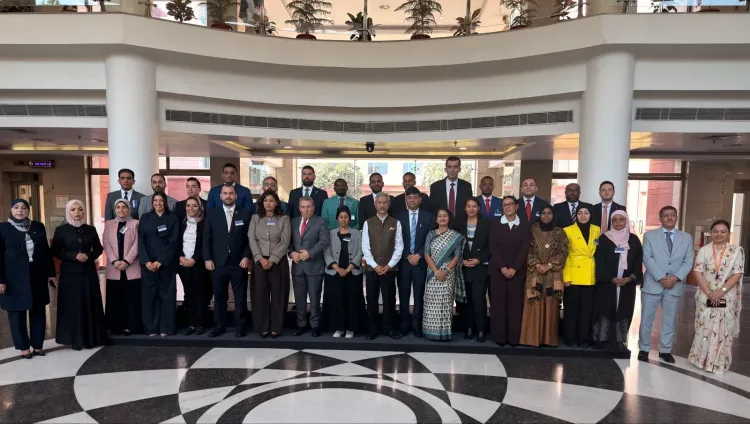
External Affairs Minister Dr. S. Jaishankar met Arab League diplomats training at SSIFS on October 26, discussing conflict impacts, technology's transformative role, and the need for closer India-Arab economic cooperation as Global South partners.
Key Takeaways
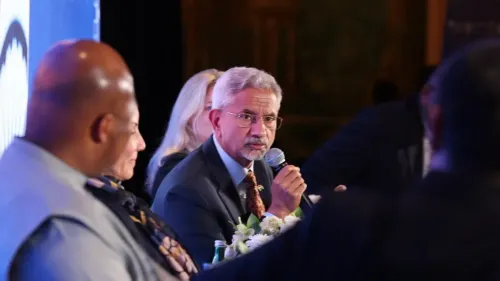
Jaishankar met a group of League of Arab States diplomats undergoing training at the Sushma Swaraj Institute of Foreign Service (SSIFS) on October 26, 2026 .
Discussions covered the far-reaching impact of ongoing global conflicts and the transformative role of technology in shaping the contemporary world.
The minister underlined the need for close economic cooperation between India and Arab states as 'neighbours and Global South partners' to overcome chokepoints and counter unfair leverages.
He encouraged the diplomats to use their India posting to deepen personal and institutional understanding of the country and its people.
The League of Arab States , founded in 1945 , is the Arab world's principal regional intergovernmental body covering political, economic, cultural and scientific cooperation.
SSIFS regularly hosts mid-career diplomats from Arab and Global South countries as part of India's broader soft-power and foreign-policy outreach strategy.
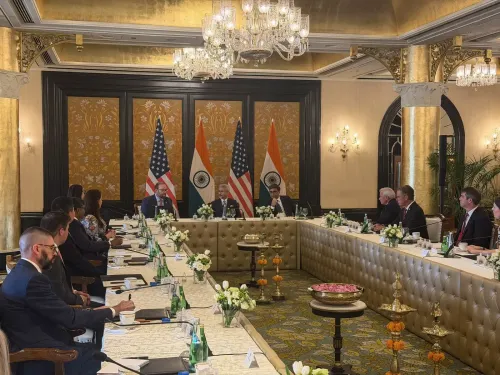
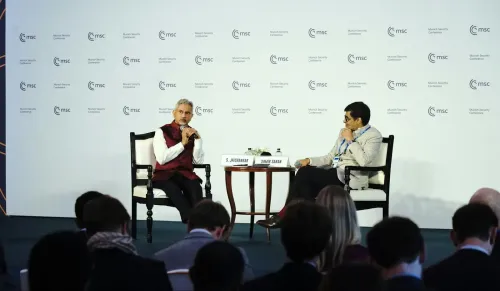
Framed by the urgency of ongoing global conflicts and the accelerating pace of technological change, Union External Affairs Minister Dr. S. Jaishankar on Monday, October 26 met a group of diplomats from the League of Arab States currently undergoing training at the Sushma Swaraj Institute of Foreign Service (SSIFS) in New Delhi — signalling India's sustained investment in building bridges with the Arab world at the practitioner level.
Conflicts, technology, and the ties that bind
The conversation was anything but ceremonial. Dr. Jaishankar described the discussion as covering 'the far-reaching impact of ongoing conflicts and the transformative role of technology in shaping today's world' — two themes that sit at the intersection of every major foreign-policy challenge facing both India and the Arab region right now. Disrupted supply chains, energy volatility, and digital divides are reshaping leverage across the Global South, and that reality framed the room.
He pressed a clear economic message: as 'neighbours and Global South partners,' there is a pressing need for 'close economic cooperation to overcome chokepoints and neutralize unfair leverages.' The language is pointed — chokepoints and leverages are the vocabulary of a world where geography and technology are being weaponised, and India wants partners who understand that calculus.
Why SSIFS matters as a diplomatic bridge
The Sushma Swaraj Institute of Foreign Service, the Ministry of External Affairs' dedicated diplomatic training academy, regularly hosts mid-career diplomats from Arab and Global South countries — giving them direct exposure to Indian foreign-policy doctrine, administrative practice, and strategic culture. It is soft power with a very specific purpose: ensuring that the next generation of Arab decision-makers arrives at their postings having spent real time in India, not just reading about it.
The League of Arab States, founded in 1945, represents the Arab world's principal multilateral architecture — spanning political, economic, cultural, and scientific cooperation across its member states. A cohort of its diplomats sitting in a classroom in New Delhi is, in its own way, a statement about where those countries see value in building institutional relationships.
India's Global South voice, sharpened one cohort at a time
Dr. Jaishankar encouraged the visiting diplomats to use their time in India to 'deepen their understanding of the country and its people' — a line that carries strategic weight. India has made positioning itself as a credible, independent voice for the Global South a central plank of its foreign policy, and SSIFS training programmes are one of the quieter, more durable tools in that effort. Successive Indian governments have framed the Arab relationship around energy security, trade corridors, and diaspora ties; this meeting layers on the technology and conflict dimensions that have sharpened since 2022.
The minister wished the group 'a rewarding and enriching experience' — but the real takeaway is structural. India is betting that personal familiarity, built diplomatically and early, pays dividends for decades.
Point of View
One that implicitly pushes back against dependency on major-power supply chains. The conflict and technology framing also reflects India's effort to present itself as a stabilising analytical voice amid regional turbulence — not merely an economic partner. Over time, cohorts trained at SSIFS become a structural asset in India's diplomatic network across the Arab League's member states.
NationPress
26 Oct 2026
Frequently Asked Questions
What is the Sushma Swaraj Institute of Foreign Service (SSIFS)?
SSIFS is the Ministry of External Affairs' official diplomatic training academy in India. It conducts programmes for both Indian and foreign diplomats, regularly hosting mid-career officials from Arab and Global South countries to give them exposure to Indian foreign policy and governance.
Why did Jaishankar meet Arab League diplomats?
The Arab League diplomats were undergoing training at SSIFS and Dr. Jaishankar met them to discuss global conflicts, the role of technology in international affairs, and the importance of India-Arab economic cooperation as Global South partners.
What is the League of Arab States?
The League of Arab States is a regional intergovernmental organisation of Arab countries founded in 1945 to promote political, economic, cultural and scientific cooperation among its member states.
What did Jaishankar mean by 'chokepoints and unfair leverages'?
The phrase refers to structural vulnerabilities in supply chains and economic dependencies that can be exploited for political pressure. Jaishankar urged closer India-Arab cooperation to collectively overcome such vulnerabilities in a fragmented global economy.
Does India regularly train Arab diplomats in New Delhi?
Yes. India regularly hosts mid-career diplomats from Arab and Global South countries at SSIFS, framing it as part of a broader effort to position India as a leading voice for the Global South and to build durable institutional ties.