Jaishankar meets Brunei FM Prince Mateen, eyes AI and Act East ties
Synopsis
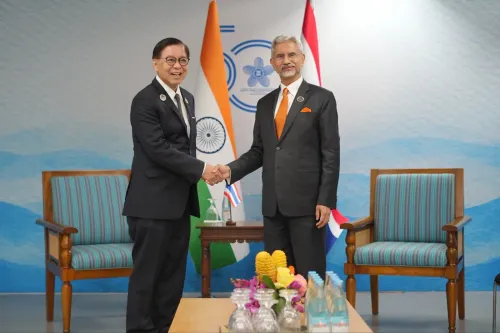
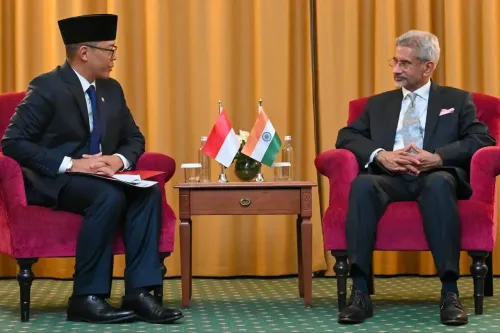
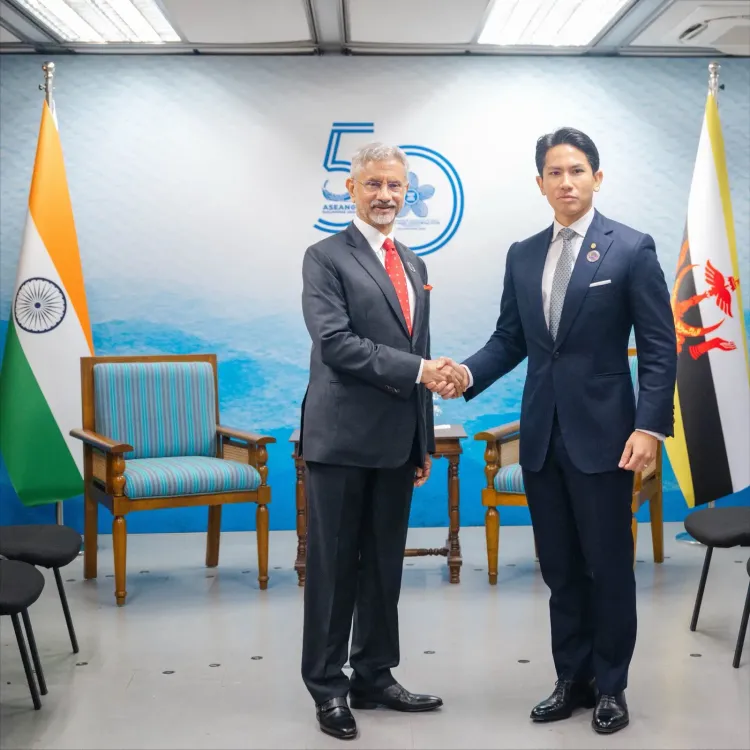
External Affairs Minister Dr. S. Jaishankar met Brunei FM Prince Abdul Mateen on 23 July 2026, congratulating him on his new role and agreeing to deepen ties in AI, drones and digital technology under India's Act East Policy and ASEAN frameworks.
Key Takeaways
Jaishankar held a bilateral meeting with Brunei FM Prince Abdul Mateen on 23 July 2026 .
Jaishankar congratulated Prince Mateen on assuming his current responsibilities as Foreign Minister.
Both sides agreed to expand engagement in AI, drones, and digital technology , identified as new vistas of bilateral cooperation.
The meeting reaffirmed commitment to advancing the bilateral agenda under India's Act East Policy , launched in 2014 .
Both countries agreed to strengthen multilateral cooperation through ASEAN , of which Brunei is a member state.
The two nations share a defence cooperation agreement signed in 2016 and decades of foreign office consultations.
Union External Affairs Minister Dr. S. Jaishankar held a bilateral meeting with Brunei's Foreign Minister Prince Abdul Mateen on Thursday, 23 July 2026, congratulating him on assuming his current responsibilities and discussing a broad agenda spanning emerging technology and regional multilateral cooperation.
Context
Dr. Jaishankar described the meeting as 'warm' and said he conveyed to Prince Abdul Mateen that 'rapidly changing technology, including AI, drones, digital, has opened new vistas of engagement' between the two countries. The minister also confirmed agreement to advance the bilateral agenda in line with India's Act East Policy and to further strengthen multilateral engagements under ASEAN.
Prince Abdul Mateen is a senior member of Brunei's royal family who has taken on foreign ministerial responsibilities, making this meeting part of India's early diplomatic outreach to the new leadership. The encounter underscores New Delhi's practice of engaging counterparts promptly after transitions in partner governments.
Policy Backdrop
India's Act East Policy, launched in 2014 as an upgrade to the earlier Look East Policy, is the strategic framework through which New Delhi deepens economic, connectivity, and security ties with ASEAN member states. Brunei, as a long-standing ASEAN member, sits within this architecture of engagement.
The two countries signed a defence cooperation agreement in 2016 and have maintained regular foreign office consultations since the 1990s. The explicit mention of artificial intelligence, drones, and digital technology in Thursday's readout signals an intent to modernise the bilateral relationship beyond its traditional trade and defence pillars.
This emphasis on technology mirrors India's broader Indo-Pacific outreach, where digital and defence-tech cooperation has become a consistent instrument for expanding strategic influence with smaller ASEAN partners, complementing larger-format engagements at the annual ASEAN-India Summit and the East Asia Summit.
Stakeholders and Impact
The meeting carries implications for ASEAN defence-technology firms and Indian companies operating in the digital and drone sectors, as any follow-on working groups could open procurement or co-development pathways. For Brunei, deepening ties with India offers diversification of its diplomatic and economic partnerships within the region.
Broader ASEAN partners will also be watching: India's consistent bilateral outreach to individual member states — including smaller economies such as Brunei — reinforces New Delhi's commitment to the bloc as a whole, lending credibility to its multilateral posture ahead of the next ASEAN-India Summit.
What's Next
Diplomatic observers will watch for any joint statements or memoranda of understanding that may emerge from this meeting, particularly in the technology and defence domains. The next ASEAN-India Summit is expected to be a key venue where the bilateral momentum generated through meetings such as this one is translated into formal cooperation frameworks.
With AI and drone technology now explicitly on the India-Brunei agenda, follow-up working groups at the foreign-office level could define the contours of a modernised partnership — one that positions both countries to leverage the Indo-Pacific's shifting technological landscape.
Point of View
Drones, and digital technology is not incidental — it reflects a deliberate shift in India's regional engagement template, where technology diplomacy now sits alongside the traditional pillars of trade and defence. By congratulating Prince Abdul Mateen early in his tenure, New Delhi is also investing in relationship capital with an emerging generation of Bruneian leadership. Taken together, the signals point to India positioning itself as a preferred technology and security partner for smaller ASEAN economies ahead of the next major multilateral summit.
NationPress
23 Jul 2026
Frequently Asked Questions
Why did Jaishankar meet Brunei's Foreign Minister Prince Abdul Mateen?
Dr. Jaishankar met Prince Abdul Mateen to congratulate him on assuming his responsibilities as Brunei's Foreign Minister and to discuss advancing bilateral ties in technology, including AI and drones, as well as cooperation under India's Act East Policy and ASEAN frameworks.
What is India's Act East Policy and how does it relate to Brunei?
India's Act East Policy, launched in 2014 as an upgrade to the Look East Policy, is the strategic framework for deepening economic, connectivity, and security ties with ASEAN member states. Brunei, as an ASEAN member, is part of this engagement architecture.
What technology areas did India and Brunei discuss?
Dr. Jaishankar conveyed that rapidly changing technology — specifically artificial intelligence, drones, and digital platforms — has opened new areas of engagement between India and Brunei.
What is the history of India-Brunei diplomatic relations?
India and Brunei have maintained diplomatic and foreign office consultations since the 1990s and signed a defence cooperation agreement in 2016. Brunei is also a fellow member of ASEAN, which serves as a key multilateral platform for India-Brunei engagement.
What could come next after the Jaishankar-Prince Mateen meeting?
Diplomatic observers are watching for possible joint statements, memoranda of understanding, or bilateral working groups on technology and defence, with the next ASEAN-India Summit expected to be a key venue for formalising any commitments made.