Jaishankar meets ROK National Security Director Wi Sung-lac
Synopsis
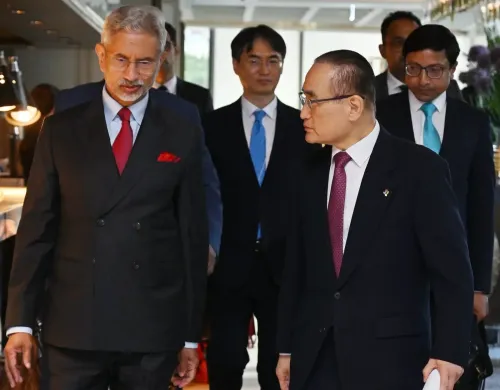
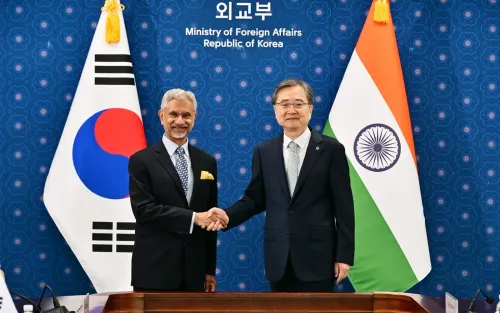
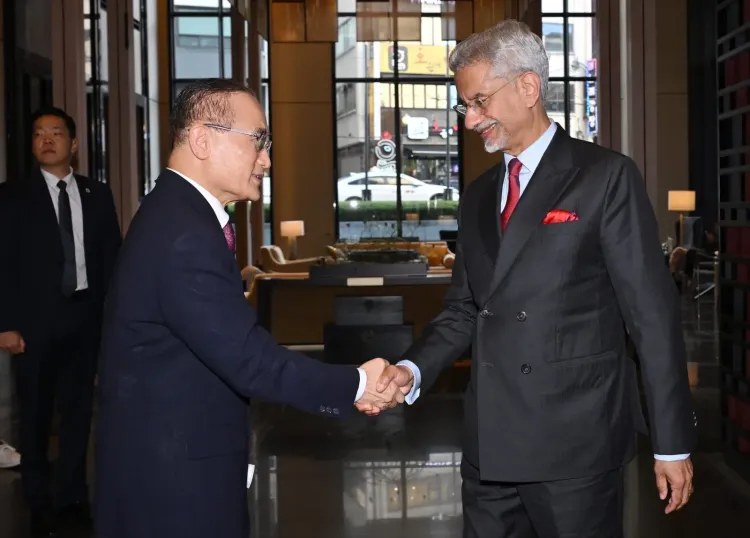
External Affairs Minister Dr. S. Jaishankar met Republic of Korea National Security Director Wi Sung-lac on 24 June 2026, exchanging strategic assessments on global developments and the Indo-Pacific, reinforcing the India-ROK Special Strategic Partnership.
Key Takeaways
Jaishankar met Wi Sung-lac , Director of National Security of the Republic of Korea , on 24 June 2026 .
The two officials held a 'useful exchange of strategic assessments' on global developments and the Indo-Pacific .
India and the ROK have maintained a Special Strategic Partnership since 2015 , covering defence, trade and technology.
The meeting aligns with India's Act East Policy , which identifies Seoul as a key Indo-Pacific partner.
A follow-up 2+2 dialogue or summit-level engagement between the two countries is anticipated in the 2026-2027 period.
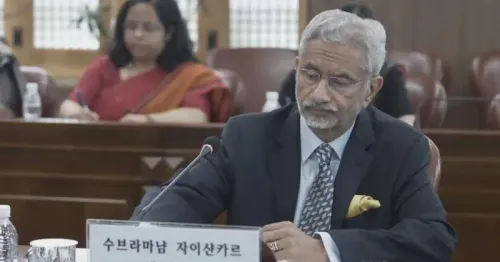
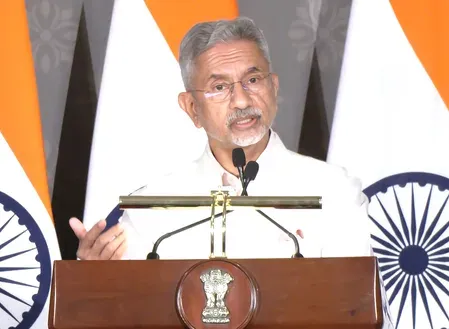
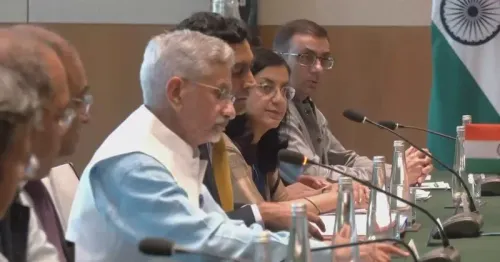
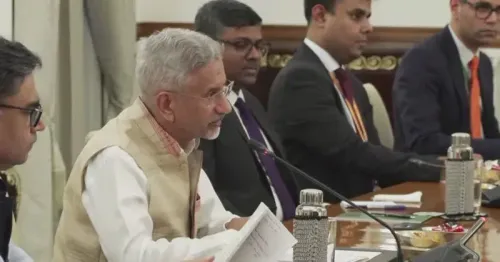
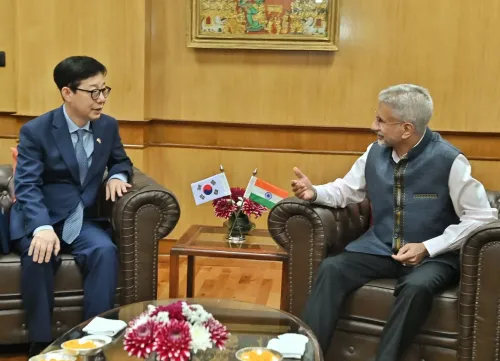
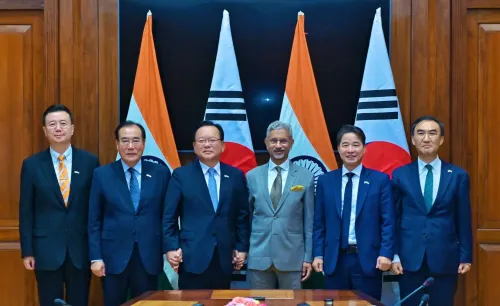
Union External Affairs Minister Dr. S. Jaishankar met Wi Sung-lac, Director of National Security of the Republic of Korea (ROK), on the evening of Wednesday, 24 June 2026, for a strategic exchange covering global developments and the Indo-Pacific.
Context
Dr. Jaishankar described the meeting as a 'useful exchange of strategic assessments on global developments and the Indo-Pacific,' signalling substantive engagement rather than a ceremonial courtesy call. The two officials represent the apex security establishments of their respective countries, making the dialogue a high-level channel for aligning positions on shared regional concerns.
The meeting comes at a moment when the Indo-Pacific architecture is under renewed attention, with major powers recalibrating their postures on maritime security, supply-chain resilience and regional stability.
Policy Backdrop
India and the Republic of Korea upgraded their bilateral relationship to a Special Strategic Partnership during Prime Minister Narendra Modi's visit to Seoul in 2015, embedding defence, trade and technology cooperation at the core of the relationship. The India-ROK Comprehensive Economic Partnership Agreement, which entered into force in 2010, laid the economic foundation upon which later strategic dialogues have been built.
New Delhi's Act East Policy has consistently identified Seoul as a key partner in its Indo-Pacific outreach, alongside allies such as the United States and Japan. High-level security consultations of this kind are a routine but significant instrument for translating that partnership into coordinated positions on regional flashpoints.
Stakeholders and Impact
The primary stakeholders are the foreign ministries and national security establishments of both countries, whose officials translate summit-level intent into operational policy. Broader beneficiaries include industries tied to defence manufacturing, semiconductor supply chains and maritime trade routes — sectors where India-ROK convergence has grown steadily.
For the wider Indo-Pacific community, the meeting reinforces a pattern of middle and major powers building dense bilateral security networks independent of, but complementary to, multilateral frameworks such as the Quad. It signals that New Delhi and Seoul see sufficient common ground on Indo-Pacific stability to warrant regular, senior-level strategic consultations.
What's Next
Analysts and officials will watch for a follow-up 2+2 dialogue — involving both foreign and defence ministers — or a summit-level engagement between India and the ROK in the 2026-2027 window. Such formats would institutionalise the strategic assessments exchanged in meetings like this one and translate them into concrete bilateral commitments.
As India deepens its Indo-Pacific security web, the cadence of engagements with Seoul is likely to intensify, with maritime domain awareness and technology cooperation emerging as the most probable areas for near-term deliverables.
Point of View
New Delhi is signalling that the India-ROK Special Strategic Partnership has matured beyond trade into genuine strategic coordination. This fits a broader arc in which India uses bilateral security dialogues to complement multilateral formats like the Quad, reducing dependence on any single framework. The regularity of such engagements will be the true measure of how deep the India-ROK convergence runs.
NationPress
24 Jun 2026
Frequently Asked Questions
Who is Wi Sung-lac and why did he meet Jaishankar?
Wi Sung-lac is the Director of National Security of the Republic of Korea . He met EAM Dr. S. Jaishankar on 24 June 2026 for a strategic exchange on global developments and the Indo-Pacific , reflecting the growing security partnership between India and South Korea .
What is the India-South Korea Special Strategic Partnership?
India and the Republic of Korea upgraded their ties to a Special Strategic Partnership in 2015 during PM Modi's visit to Seoul . The partnership covers defence cooperation, trade and technology, underpinned by the Comprehensive Economic Partnership Agreement in force since 2010 .
What is India's Act East Policy and how does South Korea fit in?
India's Act East Policy aims to deepen economic and strategic ties with East and Southeast Asian nations. South Korea is a key partner in this framework, with cooperation spanning defence manufacturing, semiconductor supply chains and maritime security in the Indo-Pacific .
What could follow from the Jaishankar-Wi Sung-lac meeting?
Officials and analysts expect a possible 2+2 dialogue involving both foreign and defence ministers, or a summit-level meeting between India and the ROK , in the 2026-2027 window to institutionalise the strategic assessments exchanged.
Why is the Indo-Pacific important to both India and South Korea?
Both India and South Korea have significant interests in a free and open Indo-Pacific , including maritime trade route security, supply-chain resilience and regional stability. Their strategic consultations help align positions amid evolving global power dynamics.