EAM Jaishankar Declares Attacks on Merchant Shipping Unacceptable at AZEC-Plus Summit
Synopsis
At the AZEC-Plus meeting, External Affairs Minister S. Jaishankar strongly condemned attacks on merchant shipping, emphasizing India's commitment to secure maritime transit and collaborate with global partners for supply chain resilience.
Key Takeaways
EAM Jaishankar condemned attacks on merchant shipping as unacceptable.
India is committed to safe and unrestricted maritime transit.
The AZEC-Plus summit included leaders from various nations discussing energy security.
Malaysia and the Philippines stressed their roles in regional energy cooperation.
Global supply chain resilience is essential for economic growth.
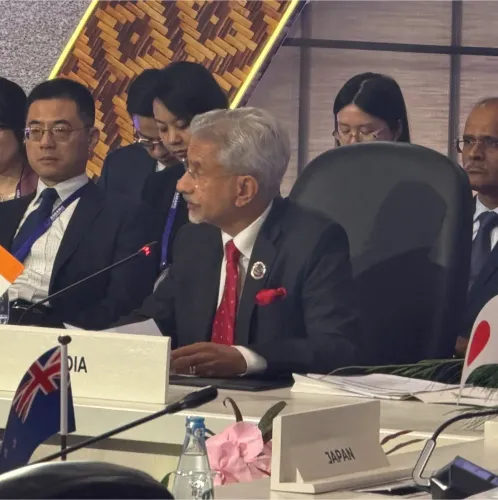
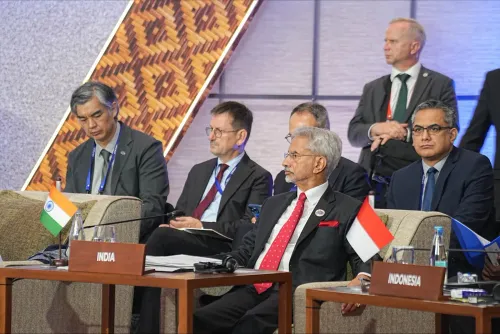
Tokyo/New Delhi, April 15 (NationPress) External Affairs Minister (EAM) S. Jaishankar emphasized India's unwavering commitment to ensuring safe and unrestricted maritime shipping during his address at the AZEC-Plus meeting. He reaffirmed that India will collaborate with like-minded nations to enhance resilience in supply chains.
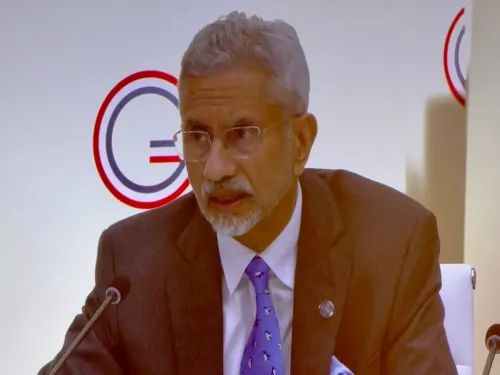
In his speech at the virtual AZEC-Plus summit organized by Japan to address challenges in energy supply chains, EAM Jaishankar reiterated that attacks on merchant shipping are utterly unacceptable. He stated, "I participated in the AZEC Plus meeting to discuss disruptions in energy supply chains. India firmly supports safe transit passage for maritime shipping," he shared on X following the meeting.
"Such attacks are intolerable. Global economic growth necessitates that energy markets remain open. As a significant energy consumer, India is committed to partnering with like-minded states to bolster supply chain resilience," he added.
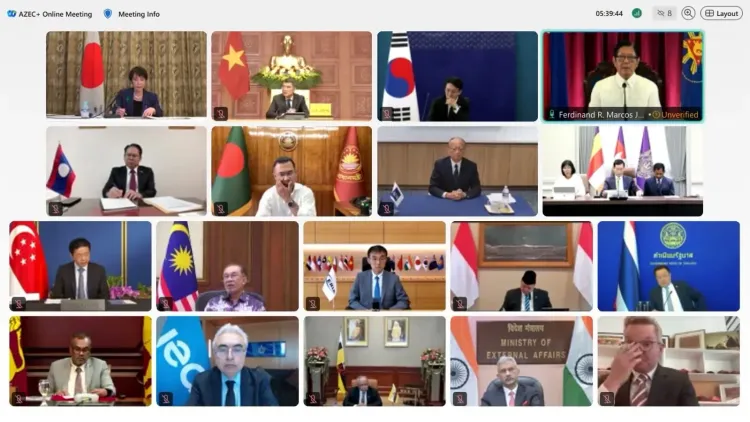
The online summit during the Asia Zero Emission Community (AZEC) Plus brought together numerous leaders, including Malaysian Prime Minister Anwar Ibrahim, Philippine President Ferdinand R. Marcos Jr., Thailand PM Anutin Charnvirakul, and Bangladesh Prime Minister Tarique Rahman.
Alongside leaders from Malaysia, the Philippines, Vietnam, Timor-Leste, Singapore, Bangladesh, and Thailand, the meeting included ministerial representatives from Australia, South Korea, Brunei, and Sri Lanka, as well as organizations like the International Energy Agency (IEA) and the Asian Development Bank (ADB).
Prime Minister Ibrahim of Malaysia expressed, "Malaysia is committed to enhancing regional cooperation through AZEC to guarantee a stable, sufficient, and resilient energy supply. As a producer of Liquefied Natural Gas (LNG), Malaysia will continue to play a proactive role in supporting regional energy security while diversifying energy sources to include renewable energy and fortifying our energy system in alignment with national development objectives."
In his remarks, President Marcos Jr. of the Philippines highlighted the country's susceptibility to global oil supply shocks, referencing the closure of the Strait of Hormuz in February as a significant disruption that led to increased fuel prices.
"As an archipelagic nation, we are primarily reliant on imported petroleum," he noted, indicating that global supply chain disruptions are profoundly felt in the Philippines, according to the Philippine News Agency.
Point of View
EAM Jaishankar's remarks at the AZEC-Plus summit signal India's proactive stance on maritime security and collaboration with global partners. This commitment is vital not only for India's energy needs but also for broader international stability in shipping and trade.
NationPress
20 Sept 2026
Frequently Asked Questions
What did EAM Jaishankar emphasize at the AZEC-Plus meeting?
EAM Jaishankar emphasized India's commitment to ensuring safe and unimpeded maritime shipping and condemned attacks on merchant shipping.
Who attended the AZEC-Plus summit?
Leaders from Malaysia, the Philippines, Thailand, Bangladesh, and ministerial representatives from Australia, South Korea, and other nations attended the summit.
What is the significance of the AZEC-Plus meeting?
The AZEC-Plus meeting aims to address supply chain disruptions in energy markets and promote regional cooperation for energy security.
How does India plan to enhance supply chain resilience?
India plans to enhance supply chain resilience by collaborating with like-minded partners to ensure stability and security in energy markets.
What challenges did the Philippines face regarding oil supplies?
The Philippines highlighted its vulnerability to global oil supply shocks, particularly referencing disruptions from the closure of the Strait of Hormuz.