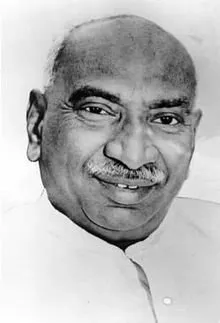
Jaishankar pays tribute to Bharat Ratna K. Kamaraj on birth anniversary
Synopsis
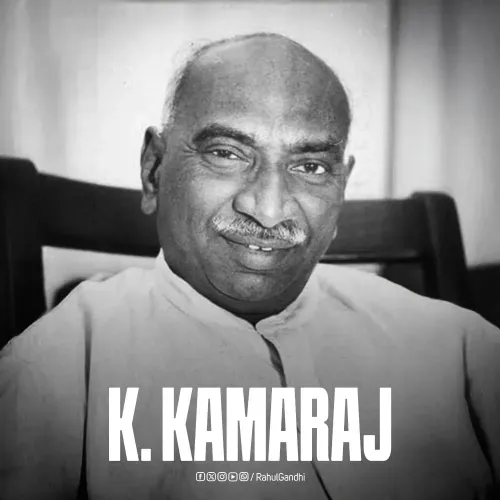
External Affairs Minister Dr. S. Jaishankar marked the birth anniversary of Bharat Ratna K. Kamaraj on 15 July 2026, honouring the former Madras Chief Minister's enduring contributions to education, welfare, and public service in India.
Key Takeaways
Jaishankar paid tribute to Bharat Ratna K.
Kamaraj on his birth anniversary on 15 July 2026 .
Kamaraj served as Chief Minister of Madras State from 1954 to 1963 and as Indian National Congress president from 1963 to 1967 .
He was posthumously awarded the Bharat Ratna in 1976 for his contributions to public life and education.
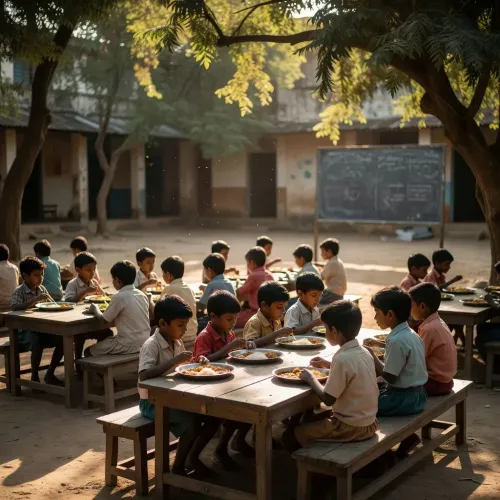
Kamaraj pioneered the mid-day meal scheme in Madras State schools, a model later adopted across India.
The Kamaraj Plan of 1963 saw senior Congress ministers resign from cabinet to strengthen the party's grassroots base.
His legacy remains especially significant in Tamil Nadu , where his welfare and education reforms continue to shape public policy discourse.
Union External Affairs Minister Dr. S. Jaishankar on Wednesday, 15 July 2026 paid tribute to Bharat Ratna Shri K. Kamaraj on his birth anniversary, honouring the late Congress stalwart's contributions to public life, education, and people's welfare.
Context
In his post, Dr. Jaishankar wrote: 'Tributes to Bharat Ratna Shri K. Kamaraj ji on his birth anniversary today. His distinguished public life, dedication to education, and commitment to the welfare of the people remain an enduring inspiration.' The message was brief but pointed, spotlighting three pillars — public service, education, and welfare — that defined Kamaraj's political legacy across decades of Indian public life.
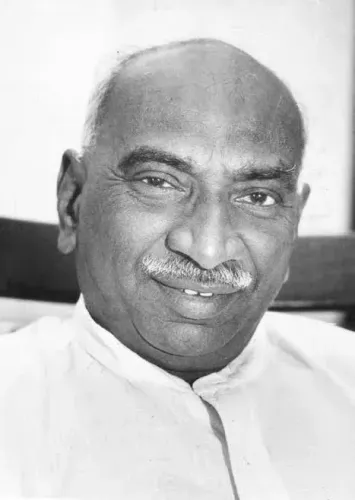
Kumaraswami Kamaraj, born in 1903 in Virudhunagar, Tamil Nadu, rose from grassroots activism during the independence movement to become one of the most powerful political figures in post-independence India. He served as Chief Minister of Madras State from 1954 to 1963 and later as president of the Indian National Congress from 1963 to 1967. He was posthumously awarded the Bharat Ratna — India's highest civilian honour — in 1976.
Policy Backdrop
Kamaraj's tenure as Chief Minister is most closely associated with the dramatic expansion of free primary education and the introduction of the mid-day meal scheme in Madras State schools during the 1950s and 1960s — a programme that became a model for school nutrition policy across India. His efforts brought millions of children, particularly from rural and economically marginalised communities, into the formal education system.
Equally consequential was the Kamaraj Plan of 1963, under which senior Congress ministers voluntarily resigned from their cabinet posts to focus on strengthening the party's grassroots organisational base. The plan reflected his conviction that political leaders must remain rooted in public service rather than the privileges of office — a principle that continues to be invoked across party lines.
Stakeholders and Impact
Kamaraj's legacy holds particular resonance in Tamil Nadu, where his administrative and educational reforms shaped a generation of students and educators. His emphasis on universal access to schooling and nutritional support for children from low-income families laid the groundwork for welfare frameworks that successive state governments have built upon.
Ministers from the ruling Bharatiya Janata Party regularly issue commemorative tributes to pre-independence and early post-independence Congress-era leaders, framing their contributions as part of a shared national heritage. Such messaging carries added political significance in southern states, where Kamaraj remains a revered figure and his name is synonymous with clean, people-centric governance.
What's Next
Commemorative events in Tamil Nadu around 15 July each year mark Kamaraj's birth anniversary, often drawing participation from political leaders across the spectrum. His legacy on school nutrition and universal education is likely to continue informing parliamentary and state-level debates on education policy and mid-day meal scheme funding in the months ahead. As India deepens its investment in education infrastructure, Kamaraj's model of combining administrative will with grassroots outreach remains a reference point for policymakers.
Point of View
A state where Kamaraj's stature transcends party affiliation and where the ruling party has been seeking to expand its footprint. Such commemorative diplomacy is low-risk but symbolically significant, reinforcing the government's claim to a pan-Indian, inclusive political identity.
NationPress
15 Jul 2026
Frequently Asked Questions
Who was K. Kamaraj and why is he remembered?
K. Kamaraj was a prominent Indian independence activist and Congress leader who served as Chief Minister of Madras State from 1954 to 1963. He is remembered for expanding free primary education, introducing the mid-day meal scheme in schools, and for the Kamaraj Plan of 1963, which sought to revitalise the Congress party's grassroots organisation. He was posthumously awarded the Bharat Ratna in 1976.
When is K. Kamaraj's birth anniversary?
K. Kamaraj was born on 15 July 1903, and his birth anniversary is observed on 15 July each year.
Why did Jaishankar pay tribute to K. Kamaraj?
Dr. S. Jaishankar paid tribute to K. Kamaraj on his birth anniversary on 15 July 2026, citing his distinguished public life, dedication to education, and commitment to people's welfare as an enduring inspiration.
What is the Kamaraj Plan?
The Kamaraj Plan was a 1963 initiative under which senior Congress ministers, at Kamaraj's urging, resigned from their cabinet positions to focus on strengthening the Indian National Congress at the grassroots level. It was seen as a move to reinvigorate the party's organisational base ahead of future elections.
What is the Bharat Ratna awarded to K. Kamaraj for?
K. Kamaraj was posthumously awarded the Bharat Ratna in 1976 in recognition of his significant contributions to public life, mass education, and rural welfare during his tenure as Chief Minister of Madras State and as Congress president.