EAM Jaishankar Engages with Iranian Counterpart Amid Rising Regional Tensions

Synopsis
Amid escalating tensions in West Asia, EAM S. Jaishankar engaged in a significant dialogue with Iranian Foreign Minister Abbas Araghchi. This interaction reflects India's proactive diplomatic efforts to address the precarious situation, crucial for its energy security and regional stability.
Key Takeaways
EAM Jaishankar communicates with Iranian Foreign Minister Abbas Araghchi.
The discussion focused on the prevailing tensions in West Asia.
Stability in the Strait of Hormuz is essential for India's energy security.
India's diplomatic efforts aim to ensure safety and maintain energy supply lines.
The recent transit of the Green Asha highlights India's reliance on this critical route.
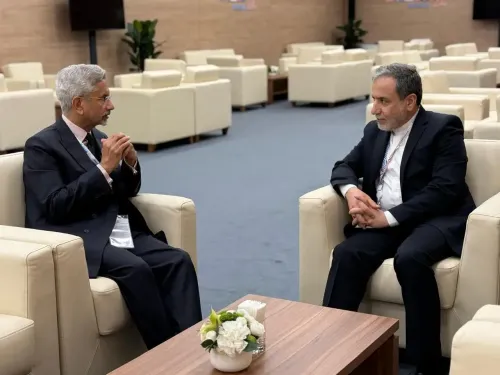
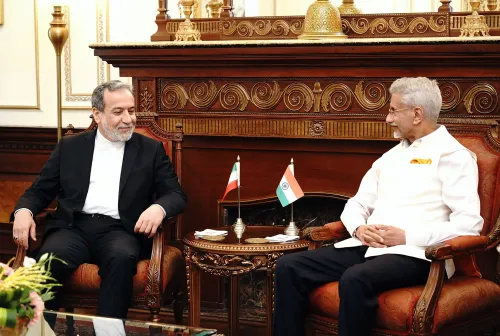
New Delhi, April 5 (NationPress) - On Sunday, External Affairs Minister (EAM) S. Jaishankar revealed that he had a conversation with his Iranian counterpart, Abbas Araghchi, to address the ongoing situation in the region.
EAM Jaishankar took to X to share: “Had a discussion with Foreign Minister @araghchi of Iran regarding the current circumstances.” However, he opted not to provide further details about their conversation.
This dialogue occurs in the backdrop of increasing tensions in West Asia, especially near the Strait of Hormuz, a vital oil transit route globally. The area has been experiencing escalated military activities and intense rhetoric from various factions, raising fears of a larger conflict.
India has been attentively monitoring these developments, given its significant strategic and economic interests in the region. A considerable share of India's crude oil imports traverses the Strait of Hormuz, making its stability essential for the nation’s energy security.
In recent days, diplomatic efforts with regional parties have intensified as New Delhi strives to ensure the safety of its citizens and secure energy supply lines. Additionally, India has a large diaspora residing in several West Asian nations, which amplifies concerns amid the fluid situation.
While the Ministry of External Affairs has not released a comprehensive summary of the call, such high-level discussions typically aim to evaluate the situation and explore options for de-escalation.
Iran is at the epicenter of the tensions, with reports of military incidents and retaliatory actions exacerbating the uncertainty. Global powers and regional actors have been advocating for restraint to avert further escalation.
The dialogue between EAM Jaishankar and Araghchi is viewed as part of India's ongoing diplomatic efforts as the situation unfolds.
Earlier, an Indian-flagged vessel, Green Asha, successfully navigated the Strait of Hormuz, marking the ninth Indian tanker to pass through this crucial maritime corridor since the beginning of the current West Asia conflict.
This significant event occurred despite elevated tensions and ongoing security concerns that continue to affect one of the world's most vital oil and energy supply routes.
Reports indicate that Green Asha, an LPG carrier, successfully traversing the strait underscores India's continued dependence on this route amid rising risks.
The transit follows a sequence of similar crossings by Indian vessels maneuvering through the conflict-affected area under increased surveillance.
The situation in the Strait of Hormuz has remained precarious since Iran intensified its control over the passage following US-Israeli strikes on February 28.
This escalation has influenced global fuel supplies and unsettled energy markets, with maritime data revealing that nearly 60% of commodity-carrying ships using the route are either originating from or destined for Iran.
Despite these challenges, Indian maritime activity through the strait has remained relatively strong.
Point of View
The dialogue between EAM Jaishankar and Iranian Foreign Minister Abbas Araghchi highlights India's diplomatic engagement strategy. It demonstrates India's commitment to safeguarding its interests while navigating a complex geopolitical landscape.
NationPress
13 Oct 2026
Frequently Asked Questions
What was discussed in the call between EAM Jaishankar and Abbas Araghchi?
EAM Jaishankar confirmed a discussion about the current situation in the region, although specifics were not disclosed.
Why is the Strait of Hormuz significant for India?
The Strait of Hormuz is crucial for India as a substantial portion of its crude oil imports passes through this route, making its stability vital for energy security.
What is the current situation in the Strait of Hormuz?
The Strait of Hormuz has witnessed increased military activity and heightened tensions, impacting global fuel supplies and energy markets.
How has India responded to the evolving situation in West Asia?
India has intensified diplomatic engagement with regional stakeholders to ensure the safety of its citizens and maintain energy supply lines.
What is the significance of the vessel Green Asha?
The Green Asha is significant as it successfully crossed the Strait of Hormuz, marking a crucial transit amid ongoing conflicts in the region.