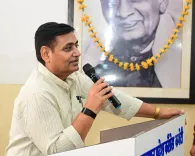
Jal Shakti Minister Paatil Champions Water Conservation in Farming
Synopsis
Union Jal Shakti Minister C. R. Paatil on 27 July 2026 shared a Hindi verse championing water conservation in agriculture, invoking the Jal Sanchay mission and the principle of growing more crops with less water — underscoring India's sustained push to address farm-level water stress.
Key Takeaways
Union Jal Shakti Minister C.
Paatil posted a Hindi verse on 27 July 2026 advocating water conservation in agriculture.
The post promotes Jal Sanchay (water harvesting) as a tool to reduce agricultural water use and repay the earth's resources.
Pradhan Mantri Krishi Sinchayee Yojana , launched in 2015 , is the flagship scheme promoting micro-irrigation and the 'more crop per drop' approach.
Jal Shakti Abhiyan (2019) and Atal Bhujal Yojana (2018) form the broader policy framework for groundwater recharge and conservation.
Farmers and rural communities across water-stressed states are the primary beneficiaries of these converging schemes.
The video-accompanied post signals a public outreach push that may precede a formal policy or campaign announcement.
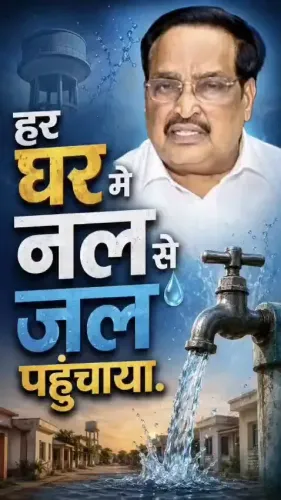
Union Jal Shakti Minister C. R. Paatil on Monday, 27 July 2026, shared a verse-styled message on X underscoring the government's resolve to conserve water in agriculture, grow crops with less water, and repay what he called humanity's debt to the earth — framing water harvesting as a national mission.
Context
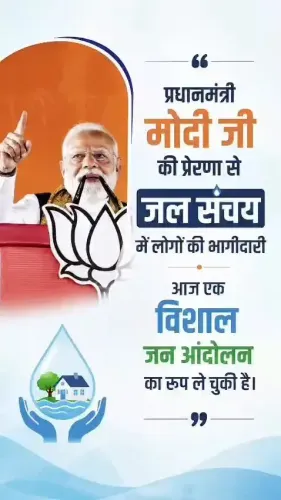
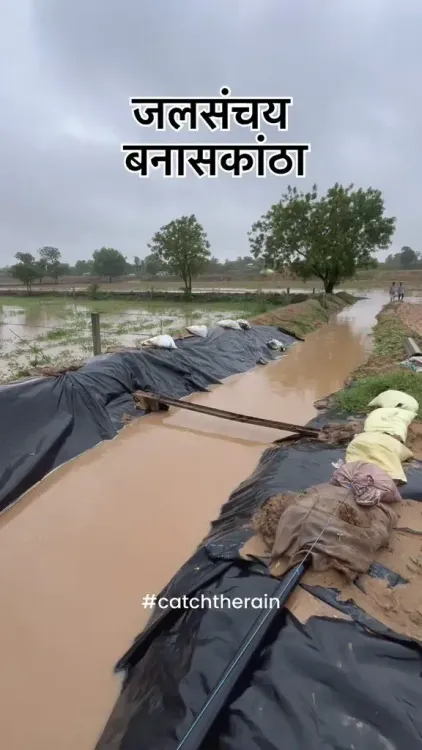
The post, composed in Hindi verse, reads: 'खेती में जल को बचाने… कम पानी में फसल उगाने… धरती का कर्ज चुकाने आए हैं… हम जल संचय लाए हैं…' — translated: 'We have come to save water in farming… to grow crops with less water… to repay the debt to the earth… we have brought water conservation.' The poetic framing is accompanied by a video, signalling an outreach push rather than a routine administrative update.
The message directly invokes the 'more crop per drop' philosophy that has anchored India's irrigation policy since the mid-2010s. Paatil, as the minister heading the Jal Shakti Ministry, is the principal political face of the country's water agenda spanning rural drinking water, irrigation efficiency, and groundwater recharge.
Policy Backdrop
The post aligns with a cluster of Central schemes designed to address agricultural water stress. Pradhan Mantri Krishi Sinchayee Yojana (PMKSY), launched in 2015, promotes micro-irrigation and watershed development to reduce wastage at the farm level. The scheme's 'Har Khet Ko Pani, Har Khet Mein Pani' component directly targets irrigation coverage gaps in water-scarce districts.
Jal Shakti Abhiyan, initiated in 2019, runs as an annual campaign targeting groundwater-stressed blocks for rainwater harvesting and aquifer recharge. Complementing it, Atal Bhujal Yojana — approved in 2018 — focuses on community-led groundwater management in priority states. Together, these programmes form the policy architecture that Paatil's post appears to champion.
The Jal Jeevan Mission, also launched in 2019, extended the ministry's mandate to rural drinking water, aiming to provide functional household tap connections to every rural home — reinforcing the broader institutional emphasis on water security.
Stakeholders and Impact
Farmers and rural communities are the primary audience of both the policy suite and the minister's communication. India's agricultural sector accounts for the largest share of freshwater withdrawal, making efficiency gains at the farm level critical to long-term water security. Groundwater depletion in states such as Punjab, Haryana, and parts of Rajasthan has made the 'less water, more crop' message increasingly urgent.
The verse-and-video format of the post suggests an intent to reach grassroots audiences beyond policy circles — a communication style that has been used in previous government outreach drives around water conservation weeks and monsoon-season campaigns.
What's Next
Attention will now turn to whether this messaging precedes a formal policy announcement — such as revised micro-irrigation targets, a new phase of Jal Shakti Abhiyan, or fresh allocations in forthcoming budget discussions. State governments, which are co-implementing partners for PMKSY and groundwater programmes, will be watched for corresponding rollout updates. The broader trajectory of India's water conservation push will also be shaped by parliamentary sessions and any inter-ministerial coordination between the Jal Shakti and Agriculture ministries on irrigation efficiency benchmarks.
Point of View
Grassroots-facing message ahead of what could be a campaign or budget-linked announcement. The 'debt to the earth' framing is notable: it positions water conservation not as a government directive but as a moral obligation, a rhetorical move that has historically broadened public buy-in for conservation drives. Coming from the minister directly responsible for both irrigation efficiency and rural drinking water, the post signals that water security will remain a high-visibility political priority for the BJP-led government. Analysts will watch whether this messaging translates into concrete new targets or funding announcements in the near term.
NationPress
28 Jul 2026
Frequently Asked Questions
What is C. R. Paatil's role in the Indian government?
C. R. Paatil is the Union Minister of Jal Shakti, responsible for water resources, river development, and the Ganga rejuvenation agenda, as well as rural drinking water supply through the Jal Jeevan Mission. He is also a senior BJP leader and former Gujarat state BJP president.
What is Jal Sanchay and why is it important for Indian farmers?
Jal Sanchay refers to water harvesting and storage practices aimed at conserving rainwater and recharging groundwater. For Indian farmers, it is critical because agriculture accounts for the largest share of freshwater use, and groundwater depletion threatens long-term crop productivity in many states.
What is Pradhan Mantri Krishi Sinchayee Yojana?
Pradhan Mantri Krishi Sinchayee Yojana (PMKSY) is a Central government scheme launched in 2015 to improve water use efficiency in agriculture through micro-irrigation, drip and sprinkler systems, and watershed development — guided by the principle of 'more crop per drop'.
What is Jal Shakti Abhiyan?
Jal Shakti Abhiyan is an annual water conservation campaign launched in 2019 by the Ministry of Jal Shakti. It targets groundwater-stressed districts and blocks for intensive rainwater harvesting, traditional water body restoration, and aquifer recharge activities.
Which states face the most severe groundwater stress in India?
States such as Punjab, Haryana, and parts of Rajasthan face the most acute groundwater depletion, driven largely by intensive agricultural practices and over-extraction for irrigation, making them priority targets for schemes like Atal Bhujal Yojana and Jal Shakti Abhiyan.