J&K Accession Day 2026: GCC economic ties, tourism and trade prospects outlined
Synopsis
Nearly 80 years after Maharaja Hari Singh signed the Instrument of Accession, a Gulf Today op-ed makes the case that Jammu and Kashmir's infrastructure push — railways, roads, cold chains — has quietly created an opening for GCC investors in tourism, food processing and agricultural exports. The Accession Day anniversary is less ceremony, more economic pitch.
Key Takeaways
Jammu and Kashmir marks the anniversary of its accession to India on 26 October , nearly 80 years after the historic event.
Author Rishi Suri , writing in UAE daily Gulf Today , outlined opportunities in tourism , hospitality , food processing , logistics , and agricultural exports for GCC investors.
Improved railway and road connectivity is helping J&K farmers and businesses access wider markets for exports such as apples , handicrafts , and saffron .
Assembly elections in 2024 recorded substantial voter participation, the first since the region's reorganisation under the 2019 Reorganisation Act .
The report links peace, stability and inclusive growth as interconnected prerequisites for realising J&K's long-term economic aspirations.
Jammu and Kashmir will commemorate the anniversary of its accession to India on 26 October, and an op-ed published in the UAE daily Gulf Today argues that nearly 80 years after the historic event, the occasion offers a timely lens through which to assess the region's economic trajectory — and its potential for deeper ties with the Gulf Cooperation Council (GCC).
J&K as a GCC Investment Destination
Writing in Gulf Today, author Rishi Suri contended that Jammu and Kashmir's ongoing development opens concrete avenues for economic cooperation with Gulf investors and businesses. 'For the Gulf region, Jammu and Kashmir's development presents opportunities for economic cooperation. Tourism, hospitality, food processing, logistics and agricultural exports could support partnerships with investors and businesses across the Gulf Cooperation Council (GCC). Tourism and educational exchanges can also strengthen people-to-people ties,' Suri wrote.
The argument centres on a cluster of sectors — tourism, hospitality, food processing, logistics, and agricultural exports — where J&K's natural and cultural endowments align with Gulf demand and capital. Educational exchanges are also flagged as a vehicle for deeper people-to-people linkages.
Historical Context: The 1947 Accession
The roots of the Accession Day observation stretch back to 1947, when armed tribal forces from Pakistan entered Jammu and Kashmir. Facing the incursion, Maharaja Hari Singh sought India's military assistance and signed the Instrument of Accession, formally integrating the territory with India. The anniversary has since been observed as a marker of that constitutional decision and its enduring significance.
Infrastructure and Connectivity Driving Economic Integration
In recent years, India has prioritised infrastructure development, economic integration, and public services in Jammu and Kashmir. Railway connectivity and improved road infrastructure are highlighted as among the most consequential gains, providing mobility, market access, and trade linkages between J&K and the rest of India.
According to the Gulf Today report, farmers, businesses, and tourism operators stand to benefit directly. Kashmir's signature exports — apples, handicrafts, and saffron — can now reach wider markets through better connectivity, cold storage facilities, and improved access to international buyers, including those in the Gulf.
Tourism, Employment and Democratic Participation
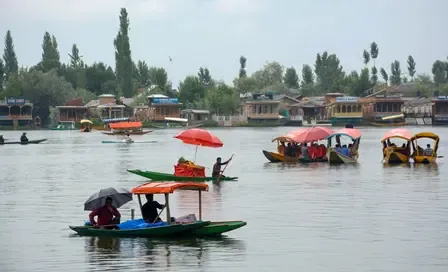
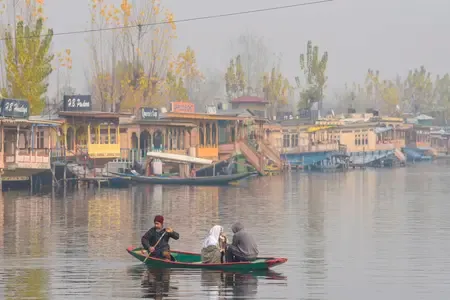
Tourism remains a central pillar of Jammu and Kashmir's economic identity. Visitors from across India and abroad are drawn by the region's lakes, mountains, gardens, and cultural heritage. Expanded infrastructure, the report notes, is expected to generate employment, support local artisans, and nurture entrepreneurship.
On the political front, the Assembly elections held in Jammu and Kashmir in 2024 recorded substantial voter turnout, cited as evidence of active public participation in shaping the region's political and economic direction. Notably, this was the first Assembly election in the region following the reorganisation under the Jammu and Kashmir Reorganisation Act of 2019.
Looking Ahead: Peace, Stability and Inclusive Growth
'Accession Day is therefore more than a remembrance of a historic constitutional decision. It is an occasion to consider how peace, stability and inclusive growth can advance the aspirations of ordinary people,' Suri wrote in closing. As J&K marks yet another anniversary, the coming years will test whether the infrastructure investments and governance reforms translate into measurable improvements in livelihoods — and whether Gulf capital finds its way into the region's growth story.
Point of View
Higher-return South Asian markets. The real test is not whether the opportunity exists on paper — it does — but whether governance, security perceptions, and ease of doing business in J&K have matured enough to convert interest into committed capital. Until that conversion is measurable, Accession Day commentaries risk reading more as advocacy than analysis.
NationPress
25 Oct 2026
Frequently Asked Questions
What is Jammu and Kashmir's Accession Day and when is it observed?
Accession Day marks the anniversary of Maharaja Hari Singh signing the Instrument of Accession on 26 October 1947, formally integrating Jammu and Kashmir with India after armed tribal forces from Pakistan entered the region. It is observed annually on 26 October.
What economic opportunities does J&K offer for GCC investors?
According to an op-ed in UAE daily Gulf Today, Jammu and Kashmir's development opens avenues in tourism, hospitality, food processing, logistics, and agricultural exports for Gulf Cooperation Council investors and businesses. Educational exchanges are also seen as a channel for strengthening people-to-people ties.
How has infrastructure development changed J&K's economic prospects?
Improved railway connectivity and road infrastructure now link J&K more effectively with the rest of India, enabling farmers and businesses to access wider markets. Products such as Kashmir's apples, handicrafts, and saffron can reach international buyers — including in the Gulf — through better logistics and cold storage facilities.
What was the significance of the 2024 Assembly elections in J&K?
The 2024 Assembly elections in Jammu and Kashmir recorded substantial voter turnout and were the first Assembly polls held after the region's reorganisation under the Jammu and Kashmir Reorganisation Act of 2019. The participation was cited as a demonstration of public engagement in shaping the region's political and economic future.
Who wrote the Gulf Today op-ed on J&K's economic prospects?
The op-ed was authored by Rishi Suri and published in Gulf Today, a UAE-based English daily. Suri argued that Accession Day should be viewed not just as a constitutional remembrance but as an occasion to assess how peace, stability, and inclusive growth can serve the aspirations of J&K's people.