JD-U's Sanjay Jha: 'Bihar politics will revolve around JD-U, Nishant is our future'

Synopsis
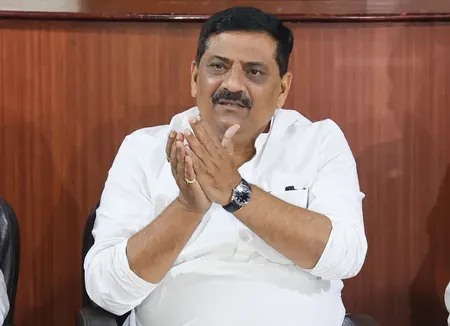
JD-U working president Sanjay Kumar Jha didn't just defend his party's dominance in Bihar — he named Nitish Kumar's son Nishant as the party's future leader. The declaration, made at a public forum in Hajipur, is the clearest succession signal the JD-U has sent yet, and reframes the party's political conversation from Nitish Kumar's legacy to what comes after it.
Key Takeaways
JD-U National Working President Sanjay Kumar Jha said anyone wanting to do politics in Bihar will have to align with the JD-U .
Jha cited the party's win of 12 out of 16 Lok Sabha seats and 85 out of 101 Assembly seats as proof of dominance.
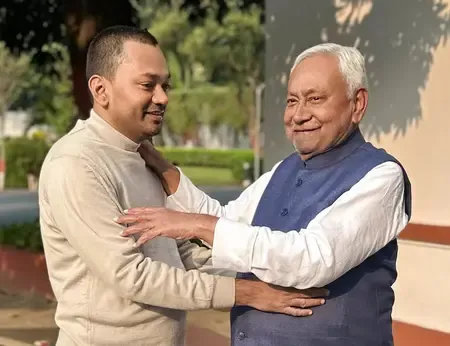
Nishant Kumar , son of Chief Minister Nitish Kumar , was publicly projected as a future JD-U leader.
Remarks were made on 7 October at a policy dialogue in Hajipur linked to protests over the Farakka water treaty .
The comments come amid wider discussions over the JD-U 's leadership direction ahead of upcoming Bihar elections.
Janata Dal-United (JD-U) National Working President Sanjay Kumar Jha on Wednesday, 7 October declared that his party will remain the dominant force in Bihar politics, asserting that anyone seeking a political future in the state will have no option but to align with the JD-U. Jha made the remarks at a policy dialogue in Hajipur, organised in connection with protests over the Farakka water treaty.
JD-U's Electoral Record as Evidence
Jha grounded his confidence in the party's recent electoral performance. He noted that the JD-U contested 16 Lok Sabha seats and won 12, while in the Assembly elections it contested 101 seats and secured victory in 85. He attributed these results directly to the leadership of Chief Minister Nitish Kumar, arguing that the numbers had settled earlier doubts about the party's long-term relevance. 'Questions once raised about the party's future after Nitish Kumar have been answered by its electoral performance,' Jha said.
Nishant Kumar Positioned as Future Leader
In a remark that drew significant attention, Jha publicly endorsed Nishant Kumar — son of Chief Minister Nitish Kumar — as a future pillar of the party. He praised Nishant's simplicity and his ability to connect with ordinary citizens, describing such qualities as increasingly rare in contemporary politics. 'Nishant is a leader of our party. In the times ahead, we will work under Nishant's leadership,' Jha said, signalling a succession narrative that the party appears ready to build.
Why the Remarks Matter
Jha's comments come amid ongoing discussions over the JD-U's leadership trajectory and its positioning within Bihar's coalition architecture. The party's alliance partnerships — notably with the Bharatiya Janata Party (BJP) — have historically defined the balance of power in the state. By asserting that rivals will have to orbit the JD-U, Jha is staking out a posture of dominance ahead of future electoral cycles. Notably, this is not the first time senior party leaders have sought to frame the JD-U as the indispensable centre of Bihar's political gravity — but the explicit projection of Nishant Kumar as a successor adds a new dimension to that narrative.
The Farakka Context
The dialogue in Hajipur was convened around protests over the Farakka Barrage water treaty — a longstanding bilateral issue with Bangladesh that has periodically stirred sentiment in Bihar and West Bengal over river water allocation. Jha's political remarks at the event underscored the JD-U's intent to remain visible and vocal on issues of regional concern.
What Comes Next
With Bihar Assembly elections due, the JD-U's succession signalling and its continued assertion of political primacy will be closely watched by alliance partners and opposition alike. Nishant Kumar's gradual public positioning marks a shift from behind-the-scenes presence to a more formal political profile — one that party leadership appears to be actively cultivating.
Point of View
' the party is attempting to construct an emotional successor narrative before an organisational one exists. That is a risky sequence — in Bihar's complex caste and coalition arithmetic, leadership transitions need structural backing, not just endorsements from platform speeches. The Farakka backdrop is also telling: the JD-U is framing its identity around regional grievances, a posture designed to keep the BJP from outflanking it on state-specific issues ahead of the next electoral cycle.
NationPress
8 Oct 2026
Frequently Asked Questions
What did Sanjay Kumar Jha say about JD-U's role in Bihar politics?
JD-U National Working President Sanjay Kumar Jha on 7 October declared that anyone wishing to do politics in Bihar will have to align with the JD-U. He cited the party's performance of winning 12 out of 16 Lok Sabha seats and 85 out of 101 Assembly seats as evidence of its dominance.
Who is Nishant Kumar and why is his name significant?
Nishant Kumar is the son of Bihar Chief Minister Nitish Kumar. Jha publicly described him as a JD-U leader and said the party would work under his leadership in the future, making it the most direct succession signal the JD-U has yet offered.
Where were these remarks made and why?
Jha spoke at a policy dialogue in Hajipur on 7 October 2026, organised in connection with protests over the Farakka water treaty. The political declarations were made alongside the event's stated regional focus.
What is the significance of the Farakka water treaty protests?
The Farakka Barrage treaty is a longstanding bilateral arrangement governing river water flows between India and Bangladesh, with Bihar and West Bengal periodically raising concerns about water allocation. The Hajipur dialogue was organised around these ongoing protests.
How does this affect Bihar's political landscape ahead of elections?
The JD-U's assertion of dominance and its open positioning of Nishant Kumar as a future leader signal that the party is actively planning its post-Nitish Kumar future. This will be watched closely by alliance partner BJP and opposition parties as Bihar moves closer to its next Assembly election cycle.