Jharkhand’s Legal Battle: ED vs Police Escalates to Supreme Court
Synopsis
The conflict between the Enforcement Directorate and Jharkhand Police has escalated to the Supreme Court, with the state challenging a High Court order for a CBI probe. This legal showdown highlights the complexities of jurisdiction between state and central authorities.
Key Takeaways
Conflict escalated: ED vs Jharkhand Police reaches Supreme Court.
High Court order challenged: Jharkhand government contests CBI investigation.
Allegations of misconduct: Santosh Kumar's claims spark legal disputes.
Jurisdictional implications: Case highlights tension between state and central authority.
Legal precedent: Potential impact on future investigatory conflicts.
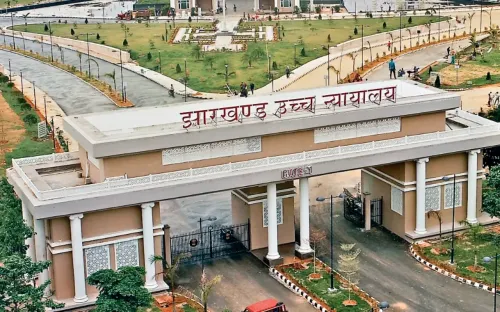
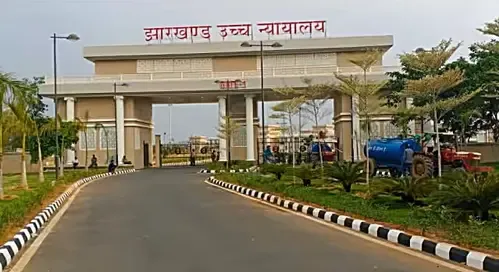
Ranchi, March 24 (NationPress) The escalating conflict between the Enforcement Directorate (ED) and the Jharkhand Police has now progressed to the Supreme Court of India. The state government has formally contested the order issued by the Jharkhand High Court, which mandated a CBI investigation into the matter.
The Jharkhand administration is challenging the High Court's order from March 11 that assigned the investigation of an FIR against ED officials to the CBI. As of now, the Supreme Court has yet to schedule a hearing on this case.
Justice Sanjay Kumar Dwivedi's ruling directed the FIR—filed at the Ranchi airport police station based on a complaint from Santosh Kumar, an accused in a money laundering case—to be transferred to the CBI for a thorough and independent inquiry.
The dispute ignited when Santosh Kumar, an employee of the Jharkhand Department of Drinking Water and Sanitation, alleged that he was subjected to physical assault and mental harassment by ED officials during interrogation at their Ranchi office on January 12.
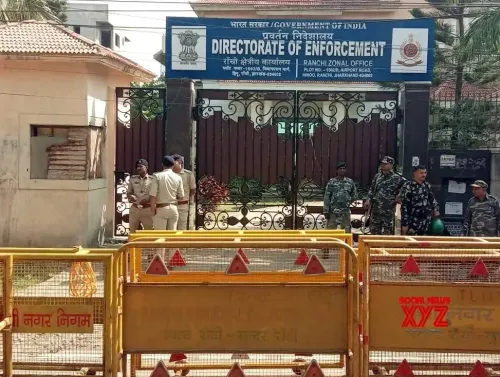
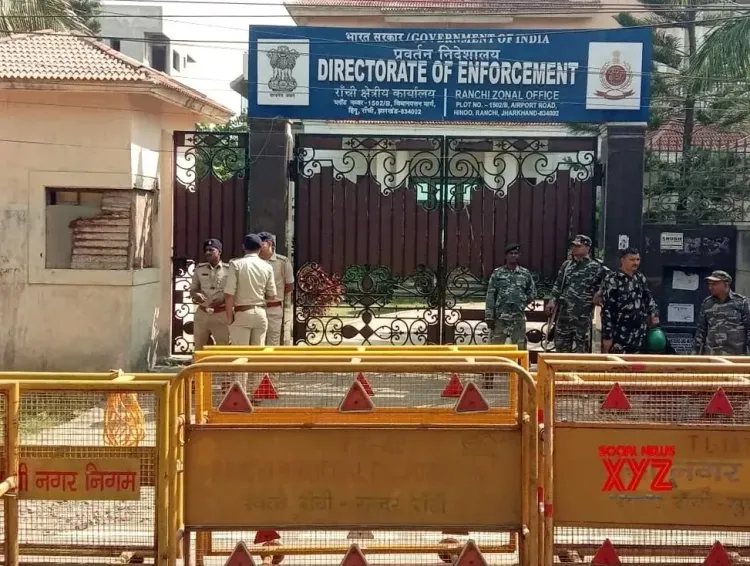
In response to his complaint, the Ranchi Police registered an FIR and later conducted an operation at the ED office, which the central agency described as akin to a “raid.” The ED condemned the police's actions as vindictive and an overreach that interfered with the operations of a central investigation body.
Consequently, the ED sought relief from the High Court, which acknowledged the sensitive nature of the conflict between the central agency and the state police. Initially, the court suspended the police investigation and subsequently ordered that security for the ED office be provided by paramilitary forces.
During the proceedings, the ED asserted that the FIR against its officials lacked merit and advocated for a CBI probe to ensure fairness—an assertion that resonated with the High Court.
With the state now contesting the ruling, a significant legal confrontation over jurisdiction and investigative authority between the state police and central agencies appears imminent.
Point of View
The current standoff between the Enforcement Directorate and Jharkhand Police presents a complex scenario. The Supreme Court's involvement underscores the significance of jurisdictional authority amid allegations of misconduct. This case will serve as a landmark exploration of the delicate balance between state and central investigative powers, reflecting on the broader implications for governance and accountability in India.
NationPress
26 Sept 2026
Frequently Asked Questions
What triggered the conflict between the ED and Jharkhand Police?
The conflict began when Santosh Kumar, an employee of the Jharkhand government, alleged he was assaulted by ED officials during questioning. His complaint led to police action against the ED, escalating tensions.
What is the role of the CBI in this case?
The Jharkhand High Court ordered that the investigation into the FIR against ED officials be handed over to the CBI for an independent probe, which the state government is now contesting.
How has the ED responded to the allegations?
The ED claims that the FIR against its officials is baseless and has sought a CBI investigation to ensure impartiality.
What are the legal implications of this case?
This case raises significant questions about jurisdiction and the authority of state versus central agencies in India, setting a precedent for future conflicts.
When is the Supreme Court expected to hear this case?
As of now, the matter has not been listed for a hearing in the Supreme Court.