Jihad is every Muslim's duty, says Jamiat chief Arshad Madani at Haridwar meet
Synopsis
Jamiat Ulema-e-Hind chief Arshad Madani declared jihad every Muslim's duty at a Haridwar gathering on 24 June — framing it as a colonial-era theological obligation — while also alleging mosque demolitions, mob lynching, and government hostility toward Muslims. The remarks are set to ignite fresh political controversy.
Key Takeaways
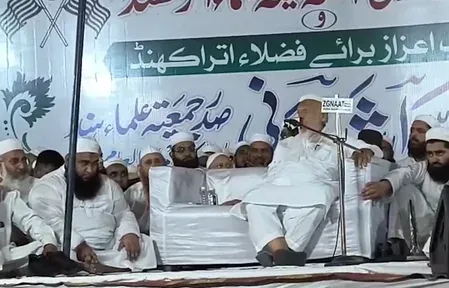
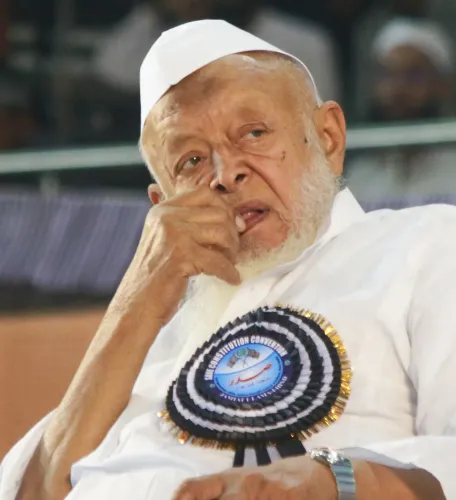
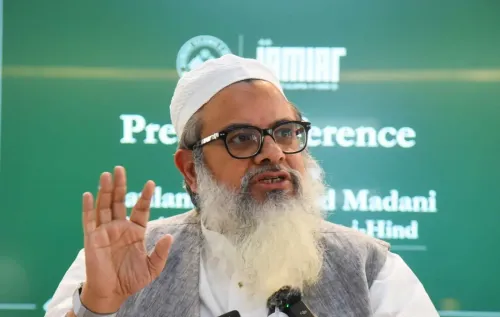
Maulana Syed Arshad Madani , president of Jamiat Ulema-e-Hind , addressed the organisation's Uttarakhand state executive meeting in Piran Kaliyar, Haridwar on 24 June .
He stated that jihad is 'every Muslim's duty,' contextualising it as a reference to the 1803 anti-colonial struggle for India's independence.
Madani alleged that mosques and madrasas are being demolished — including via bulldozers — and that mob lynching incidents against Muslims are occurring.
He claimed post-independence governments have 'caused harm to Muslims' and that the current government is 'against Muslims and Islam' — allegations the government has not yet responded to.
Jamiat Ulema-e-Hind cited its flood relief work in Bengal and assistance during Delhi violence as proof of Muslim contributions to national unity.
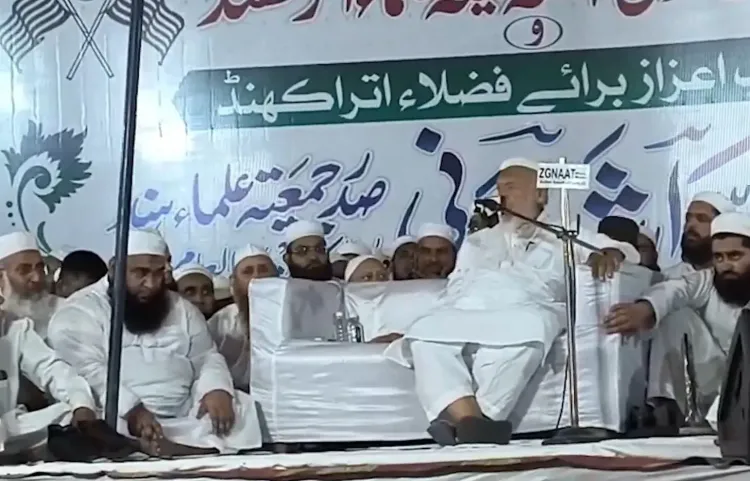
Jamiat Ulema-e-Hind national president Maulana Syed Arshad Madani sparked sharp debate on 24 June after asserting that jihad is every Muslim's duty, while addressing the organisation's Uttarakhand state executive meeting in the Piran Kaliyar area of Haridwar. His remarks, delivered before a large gathering of ulema, huffaz, and community members, covered social harmony, religious freedom, and what he described as the state's treatment of Muslims in contemporary India.
What Madani Said on Jihad
Contextualising his remarks within India's colonial past, Madani said: 'In 1803, when our country was under slavery, the message of jihad was given for the country's independence. To free the country, that is, to remove the chains of slavery from the neck, it is every Muslim's duty to do jihad. This is a teaching that has come from madrasas, and whoever does not know this is ignorant.'
He framed the statement as a historical and theological reference to the anti-colonial struggle, not a contemporary call to arms — a distinction that is likely to remain contested in the current political climate.
Allegations Against the Government
Madani went on to allege that post-independence governments have, in his words, 'caused harm to Muslims' and kept the community 'entangled in riots.' He further alleged that religious places — mosques and madrasas — are being demolished, including through the use of bulldozers, and that incidents of mob lynching against Muslims continue to occur. He claimed that the current government is 'not only against Muslims but also against Islam.'
These allegations were not independently verified, and the government has not yet responded to the remarks made at the Haridwar meeting.
Muslim Contributions to India's Freedom and Unity
Balancing his criticism with an appeal to national solidarity, Madani underscored what he described as significant Muslim contributions to India's independence movement, pointing specifically to the historical role of mosques and madrasas. He urged attendees to 'abandon the politics of hatred and strengthen the politics of love,' arguing that India can only function through harmony and compassion.
He cited Jamiat Ulema-e-Hind's humanitarian work as evidence of the community's commitment to the nation — including the organisation's relief efforts during floods in Bengal, where food was provided to both Hindus and Muslims, and assistance rendered during violence in Delhi without distinction of religion. 'Can such people be called traitors?' he asked.
Meeting Conclusions
The Uttarakhand state executive meeting concluded with broader discussions on community welfare, education, and social unity. Several religious leaders who addressed the gathering reiterated calls for peace and coexistence. The event reflects Jamiat Ulema-e-Hind's continued effort to position itself as a voice for both Muslim rights and inter-community reconciliation — a dual messaging that has long defined the organisation's public posture.
The remarks on jihad are likely to draw political reactions in the days ahead, given the sensitivity of the term in India's current discourse.
Point of View
And his remarks will almost certainly be stripped of context in the political crossfire that follows. The more substantive and verifiable thread in his speech — allegations of mosque demolitions and mob lynching — deserves scrutiny on its own merits, separate from the rhetorical storm the j-word will generate. What is consistently underreported in coverage of Jamiat events is the organisation's dual role: a religious body that simultaneously challenges state actions and actively participates in inter-community relief work. That tension, not the headline quote, is the real story.
NationPress
24 Jun 2026
Frequently Asked Questions
What did Arshad Madani say about jihad at the Haridwar meeting?
Maulana Syed Arshad Madani said that jihad is every Muslim's duty, framing it as a historical reference to India's anti-colonial struggle of 1803. He stated that the call for jihad was given to free the country from slavery, and described it as a teaching rooted in madrasa education.
Where and when did Arshad Madani make these remarks?
The remarks were made on 24 June at the Jamiat Ulema-e-Hind Uttarakhand state executive meeting held in the Piran Kaliyar area of Haridwar. The gathering was attended by ulema, huffaz, and members of the Muslim community.
What other allegations did Madani make at the meeting?
Madani alleged that mosques and madrasas are being demolished — including through the use of bulldozers — and that incidents of mob lynching against Muslims are taking place. He also claimed that post-independence governments have caused harm to Muslims and that the current government is against both Muslims and Islam. These allegations were not independently verified.
What is Jamiat Ulema-e-Hind's position on national unity?
Madani emphasised that India can only function through love and harmony, and cited the organisation's relief work during Bengal floods — where aid was given to both Hindus and Muslims — as evidence of Muslim commitment to national unity. He urged attendees to reject the politics of hatred.
Has the government responded to Madani's allegations?
As of the time of reporting, the government has not issued a formal response to the allegations made by Madani at the Haridwar meeting. A political reaction to his remarks on jihad is widely anticipated.