Jitendra Singh confirms no lives lost in Chhatroo cloudburst, flags new EWS

Synopsis
Union Minister Dr. Jitendra Singh confirmed no fatalities in the Chhatroo cloudburst of 1 August 2026, announced compensation for damaged shops, and highlighted two Early Warning Systems installed in Kishtwar and Machhail by the Ministry of Earth Sciences, with an Automatic Weather Station for Padder in progress.
Key Takeaways
A cloudburst hit Chhatroo, Kishtwar in the early hours of 1 August 2026 ; no loss of life was reported.
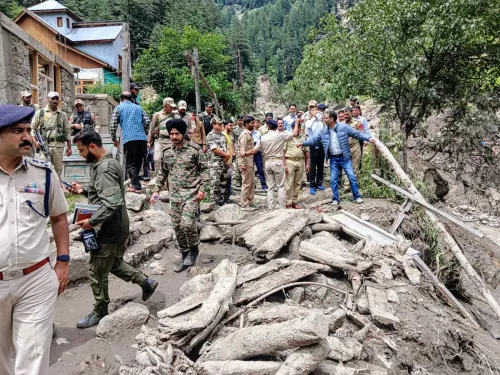
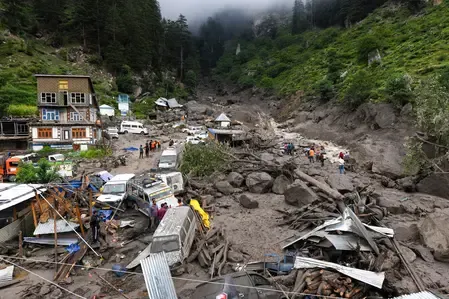
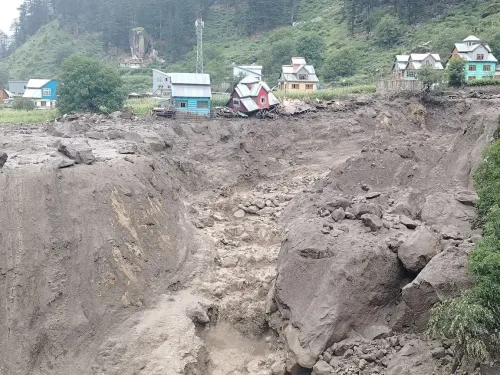
Some commercial outlets and shops were damaged; due compensation will be provided to affected owners.
Jitendra Singh personally spoke to DC Kishtwar Pankaj Kumar Sharma to assess the situation.
The Ministry of Earth Sciences has installed two Early Warning Systems (EWS) in Kishtwar and Machhail following last year's Chasoti cloudburst.
An Automatic Weather Station (AWS) for the Padder area is currently being installed, expanding the early-warning grid further.
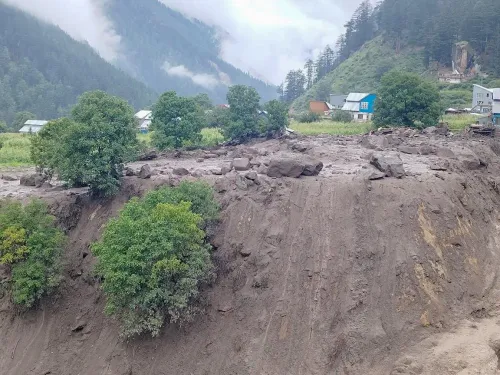
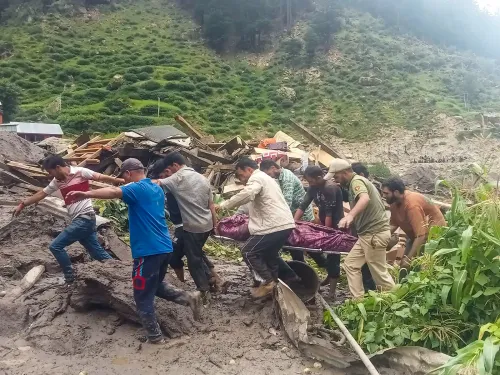
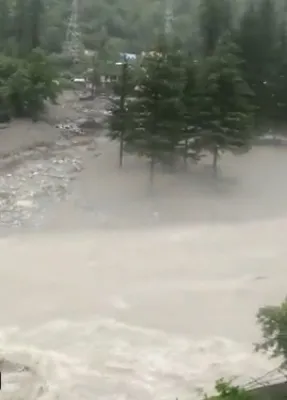
A cloudburst struck the Chhatroo area of Kishtwar district in Jammu and Kashmir in the early hours of Saturday, 1 August 2026 — and within hours, Union Science and Technology Minister Dr. Jitendra Singh was on the phone with district authorities to assess the damage and communicate directly with affected communities.
Dr. Singh confirmed he spoke to Deputy Commissioner Kishtwar Sh Pankaj Kumar Sharma immediately after receiving the cloudburst reports. The critical finding: no loss of life. Some commercial outlets and shops in the Chhatroo area sustained damage, and the minister stated that due compensation will be provided to affected shop owners.
How last year's Chasoti disaster reshaped Kishtwar's warning grid
The minister's response went beyond damage assessment. Drawing directly on the lessons of the Chasoti cloudburst — a deadly event from the previous year that exposed gaps in early warning coverage — Dr. Singh pointed to concrete infrastructure upgrades the Ministry of Earth Sciences, Government of India has since delivered.
Two 'Early Warning Systems' (EWS) have been installed in Kishtwar and Machhail respectively, using the latest available technology. These systems are designed to detect dangerous hydro-meteorological conditions and alert communities before a cloudburst or flash flood escalates into a catastrophe.
Padder next: an Automatic Weather Station in the pipeline
The infrastructure build-out is not yet complete. Dr. Singh disclosed that an 'Automatic Weather Station' (AWS) is currently in the process of being installed in the Padder area — another high-risk Himalayan valley in the Kishtwar district. Once operational, it will add a third layer of real-time meteorological data to a region that has historically had sparse ground-level monitoring.
Kishtwar sits deep in the Himalayan ranges, where narrow valleys, steep gradients, and intense monsoon rainfall create near-perfect conditions for flash floods and cloudbursts. Expanding automated sensing and warning infrastructure in such terrain is widely seen as among the most cost-effective disaster-risk reduction measures available.
The Chhatroo cloudburst of 1 August 2026 tested that infrastructure for the first time under real monsoon conditions — and the absence of fatalities, while not yet formally attributed to the new EWS, will inevitably sharpen attention on whether the systems performed as designed. The completion and commissioning of the Padder AWS will be the next milestone to watch as the 2026 monsoon season continues.
Point of View
Dr. Singh is framing the Ministry of Earth Sciences as a proactive responder rather than a passive observer — a politically useful posture heading into another active monsoon season. The real test of that framing will come when the Padder AWS is commissioned and the cumulative performance of these systems is formally evaluated. If fatality-free outcomes in future cloudbursts can be credibly linked to the early-warning network, it will significantly strengthen the government's disaster-preparedness narrative in the region.
NationPress
1 Aug 2026
Frequently Asked Questions
Was anyone killed in the Chhatroo cloudburst on 1 August 2026?
No. Union Minister Dr. Jitendra Singh confirmed that no loss of life was reported following the cloudburst in the Chhatroo area of Kishtwar district on 1 August 2026.
What damage did the Chhatroo cloudburst cause?
Some commercial outlets and shops in the Chhatroo area were damaged. Dr. Jitendra Singh stated that due compensation will be provided to affected owners.
What Early Warning Systems has the Ministry of Earth Sciences installed in Kishtwar?
Following the Chasoti cloudburst, the Ministry of Earth Sciences installed two Early Warning Systems (EWS) — one each in Kishtwar and Machhail — using the latest available technology.
What is the Automatic Weather Station planned for Padder?
An Automatic Weather Station (AWS) is currently being installed in the Padder area of Kishtwar district. Once operational, it will provide real-time ground-level meteorological data to strengthen disaster preparedness in that high-risk Himalayan valley.
Why is Kishtwar prone to cloudbursts and flash floods?
Kishtwar is located deep in the Himalayan ranges , where narrow valleys, steep terrain, and intense monsoon rainfall combine to create conditions highly conducive to cloudbursts and flash floods, making early-warning infrastructure especially critical there.