Dr. Jitendra Singh flags India's metabolic health crisis at ILBS meet
Synopsis
Union Minister Dr. Jitendra Singh addressed the InFLiMeN launch at ILBS, New Delhi on 4 July 2026, warning that India's genetic predisposition, rising fatty liver cases, and Type 2 Diabetes surge demand a mission-mode national preventive health response, especially as metabolic disorders increasingly strike younger Indians.
Key Takeaways
Jitendra Singh addressed the InFLiMeN (Indo-French Liver and Metabolic Disease Network) launch at ILBS, New Delhi on 4 July 2026 .
India's population faces heightened risk of diabetes, fatty liver, and cardiovascular disease even at lower BMI levels due to distinct genetic and phenotypic factors.
The minister described fatty liver, hypertension, dyslipidemia, and insulin resistance as a closely interconnected 'metabolic nexus' driving each other.
Metabolic disorders are increasingly affecting younger Indians , making it a national public health priority beyond clinical medicine.
Singh called for a mission-mode preventive healthcare response aligned with PM Modi's sustained anti-obesity and lifestyle-disease campaigns.
The India-France collaboration under InFLiMeN aims to generate India-specific genomic and phenotypic data to inform more targeted interventions.
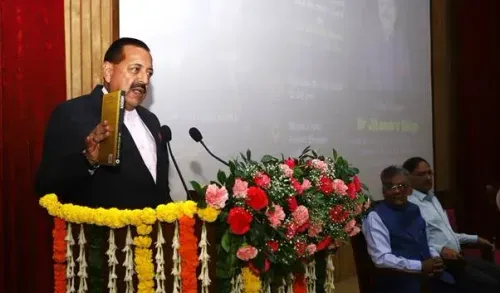
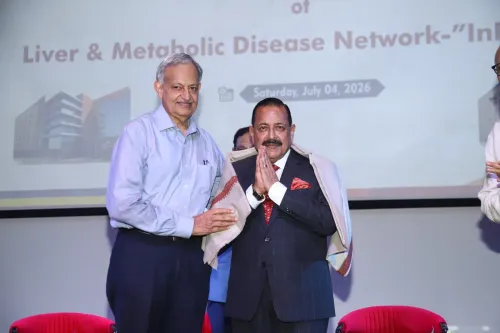
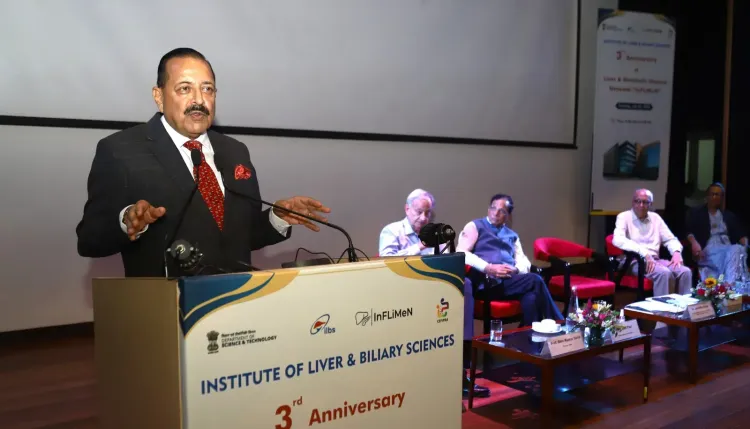
Union Science and Technology Minister Dr. Jitendra Singh addressed a medical conference at the Institute of Liver and Biliary Sciences (ILBS), New Delhi, on Saturday, 4 July 2026, marking the launch of the Indo-French Liver and Metabolic Disease Network (InFLiMeN) — a bilateral research initiative focused on liver and metabolic disorders.
Context
Speaking at the event, Dr. Singh underlined that India's population carries a distinct genetic predisposition that makes it especially vulnerable to diabetes, fatty liver disease, and cardiovascular conditions — often at lower Body Mass Index (BMI) levels than seen in Western populations. He described the country's liver epidemic and the sharp rise in Type 2 Diabetes Mellitus as part of a 'larger metabolic nexus', where fatty liver, hypertension, dyslipidemia, and insulin resistance 'closely interconnect and predispose one another.'
The minister noted that the liver, despite being 'the body's most resilient organ', is coming under growing stress from unhealthy diets, irregular sleep, sedentary lifestyles, and environmental pollution. Crucially, he flagged that metabolic disorders are now 'increasingly affecting younger Indians', framing the trend as a national concern rather than a purely medical one.
Policy Backdrop
ILBS, an autonomous institute established in 2009 under the Government of Delhi, has been a national referral centre for liver and biliary diseases. The InFLiMeN network builds on a long arc of India-France scientific cooperation, including a bilateral health research MoU renewed in 2019 and earlier agreements under the Centre Franco-Indien pour la Promotion de la Recherche Avancée (CEFIPRA).
India's non-communicable disease (NCD) burden has been addressed through successive policy frameworks, including the National Programme for Prevention and Control of Cancer, Diabetes, Cardiovascular Diseases and Stroke (NPCDCS), launched in 2010, and the National Health Policy 2017, which explicitly shifted emphasis from curative to preventive care. Dr. Singh's call for a 'mission-mode national response driven by preventive healthcare' aligns with this established policy direction.
He also linked his remarks to Prime Minister Narendra Modi's sustained public emphasis on tackling obesity and lifestyle-related diseases — a theme the PM has championed through platforms ranging from Yoga Day messaging to the Fit India Movement.
Stakeholders and Impact
India has recorded one of the fastest global rises in Type 2 Diabetes and Non-Alcoholic Fatty Liver Disease (NAFLD), with clinical data consistently showing metabolic onset at lower BMI thresholds than in Western cohorts. This phenotypic difference means standard global screening benchmarks may underestimate disease burden in Indian populations.
Younger Indians — working-age adults and even adolescents — are increasingly represented in metabolic disorder statistics, straining both household finances and public health infrastructure. The InFLiMeN network is intended to generate India-specific and France-collaborative genomic and phenotypic data that could eventually inform more targeted screening protocols.
Mass public awareness, which Dr. Singh called for explicitly, remains a gap: surveys have repeatedly shown low awareness of fatty liver disease as a precursor to cirrhosis and liver failure among the general population.
What's Next
Observers will watch whether metabolic screening is integrated into Ayushman Bharat Health and Wellness Centres, which already provide primary NCD screening services at the community level. The outcomes of the next India-France Joint Committee on Science and Technology will also indicate whether InFLiMeN secures sustained bilateral funding. Dr. Singh's framing of the issue as demanding a 'mission-mode' response signals political will at the ministerial level — but translating that into programmatic action across states will be the defining test.
Point of View
He is nudging the policy conversation toward a whole-of-government response rather than leaving it within the Health Ministry's lane. His invocation of PM Modi's anti-obesity emphasis is a deliberate signal that the Science Ministry sees lifestyle disease prevention as part of its own mandate, particularly through research partnerships like InFLiMeN. The bilateral angle with France is strategically significant — India-specific genomic data on metabolic disorders remains thin, and co-produced research could eventually justify recalibrating national BMI and screening thresholds. Whether this ministerial attention translates into budgetary allocations or programme integration within Ayushman Bharat will determine its real-world impact.
NationPress
3 Oct 2026
Frequently Asked Questions
What is InFLiMeN and what is its purpose?
InFLiMeN stands for the Indo-French Liver and Metabolic Disease Network. It is a bilateral research initiative between India and France designed to study the genetic, phenotypic, and metabolic aspects of fatty liver disease and diabetes, with a focus on generating India-specific clinical data.
Why are Indians at higher risk of diabetes and fatty liver at lower BMI?
Studies indicate that Indians have a distinct genetic predisposition and a higher prevalence of central obesity, meaning fat tends to accumulate around the abdomen and organs even when overall body weight appears normal. This makes metabolic disease onset occur at lower BMI thresholds compared to Western populations.
What is ILBS and where is it located?
The Institute of Liver and Biliary Sciences (ILBS) is an autonomous institute in New Delhi, established in 2009. It is a national referral centre specialising in liver, biliary, and metabolic disorders.
What did Dr. Jitendra Singh say about younger Indians and metabolic disease?
Dr. Singh stated that metabolic disorders are 'increasingly affecting younger Indians', describing the trend as a national concern rather than merely a medical issue and calling for a mission-mode preventive healthcare response backed by mass public awareness.
How does India-France cooperation on health research work?
India and France have a long-standing scientific partnership facilitated by bodies such as CEFIPRA. A bilateral health research MoU was renewed in 2019, and InFLiMeN is one of the collaborative networks that has emerged from this framework to address shared research priorities in liver and metabolic diseases.