Jitendra Singh Visits IIT Gandhinagar Research Park, Reviews Startups

Synopsis
Union Science and Technology Minister Dr. Jitendra Singh visited the Research Park at IIT Gandhinagar on June 11, 2026, reviewing young startup initiatives and touring NAMTECH's work in semiconductors, smart manufacturing, and automation, accompanied by Director Dr. Moona and DST Advisor Dr. Akhilesh Gupta.
Key Takeaways
Jitendra Singh visited the Research Park at IIT Gandhinagar, Ahmedabad on June 11, 2026 .
He was accompanied by Institute Director Dr.
Moona and DST Advisor Dr.
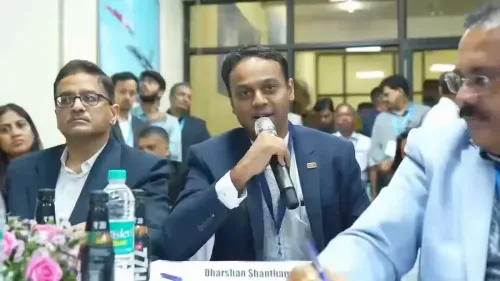
The minister appreciated young startups' efforts toward meaningful industry linkage.
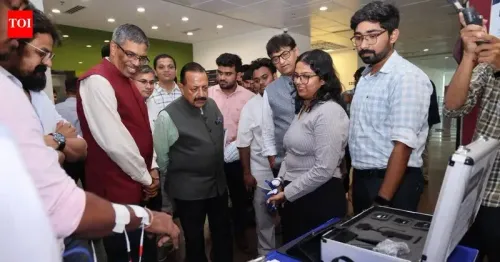
He toured NAMTECH , reviewing work in smart manufacturing, semiconductors, and automation .
The visit aligns with the India Semiconductor Mission (approved 2021, outlay ~ Rs 76,000 crore ) and the Startup India initiative launched in 2016 .
IIT Gandhinagar was established in 2008 and serves as a hub for interdisciplinary research and industry collaboration in Gujarat.
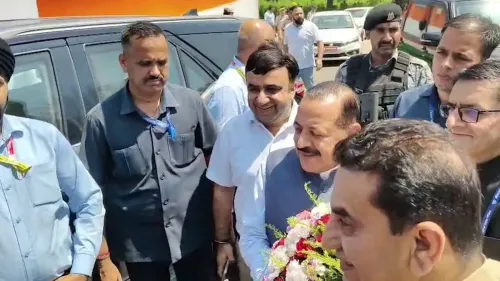
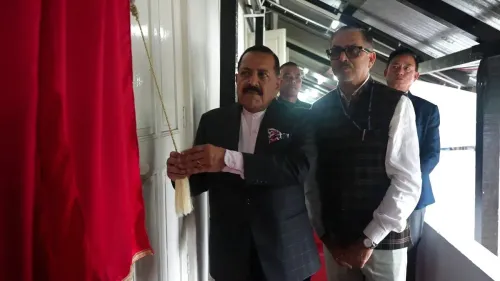
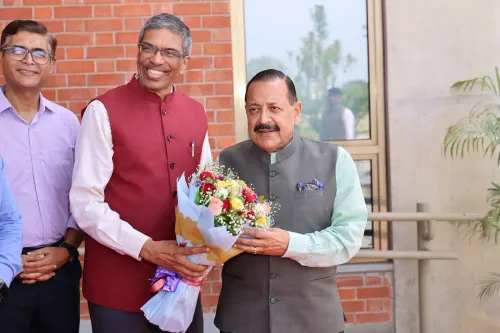
Union Science and Technology Minister Dr. Jitendra Singh visited the Research Park at IIT Gandhinagar, Ahmedabad, on Thursday, June 11, 2026, accompanied by Institute Director Dr. Moona, Department of Science and Technology Advisor Dr. Akhilesh Gupta, and other officials. The minister reviewed the work of young startups and their industry linkages, and also toured NAMTECH, where ongoing work in smart manufacturing, semiconductors, and automation was showcased.
Context
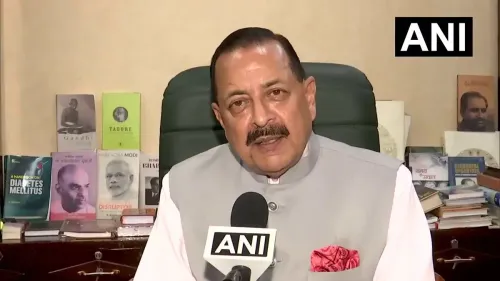
Posting on X, Dr. Jitendra Singh wrote: 'Appreciate the innovative efforts of young startups and their attempts for meaningful industry linkage.' He also noted that he 'walked through the work undertaken in smart manufacturing, semiconductors, automation etc at NAMTECH.' The visit was accompanied by senior officials, signalling the ministry's active engagement with one of India's premier technical institutions.
IIT Gandhinagar, established in 2008, has grown into a centre for interdisciplinary research and innovation. Its Research Park serves as an interface between academic research and commercial applications, hosting startups and industry partners seeking to translate laboratory work into market-ready products.
Policy Backdrop
The visit sits squarely within several overlapping national policy frameworks. The Startup India initiative, launched in 2016, was designed to foster entrepreneurship and strengthen industry-academia linkages — precisely the kind of activity on display at the IIT Gandhinagar Research Park. Research parks at IITs have been a key instrument for operationalising that agenda.
On the semiconductor front, the government approved the India Semiconductor Mission in 2021 with an outlay of approximately Rs 76,000 crore, aiming to build domestic capabilities across design, fabrication, and packaging. Work in this domain at institutions like IIT Gandhinagar feeds directly into that national pipeline. The National Education Policy 2020 also explicitly called for stronger research parks and industry connections within higher education.
More broadly, the engagement fits the pattern of promoting indigenous technology development under the Atmanirbhar Bharat and Make in India frameworks, which have guided science and technology policy since 2014.
Stakeholders and Impact
The primary beneficiaries of such ministerial attention are the young startup founders and researchers operating within the IIT Gandhinagar ecosystem. Visibility at the ministerial level can translate into faster access to government funding schemes, easier navigation of regulatory pathways, and stronger signals to private investors that the sector enjoys policy support.
For the semiconductor and smart manufacturing communities specifically, the minister's walkthrough at NAMTECH — a facility associated with advanced manufacturing technologies — underscores the government's interest in ensuring that academic research in these critical sectors finds practical, industrial application. Dr. Akhilesh Gupta's presence as DST Advisor further reinforces the institutional weight behind the visit.
What's Next
Observers will watch for whether the visit translates into concrete announcements: new funding allocations for IIT research parks, expanded mandates under the India Semiconductor Mission, or targeted grants for startups working in smart manufacturing and automation. The next Union Budget and any forthcoming science ministry scheme notifications are the natural venues for such follow-through.
With semiconductor fabrication units at various stages of approval and construction across India, the government's continued engagement with IIT-linked research ecosystems suggests that academic institutions are being positioned as critical nodes in the country's technology self-sufficiency drive.
Point of View
One of the government's most capital-intensive technology bets. By bringing a senior DST Advisor along, the ministry is also signalling that the visit carries institutional weight beyond optics. Whether this translates into fresh funding or scheme extensions will be the real test of intent.
NationPress
26 Oct 2026
Frequently Asked Questions
What did Dr. Jitendra Singh do at IIT Gandhinagar?
Dr. Jitendra Singh visited the Research Park at IIT Gandhinagar on June 11, 2026, where he reviewed the work of young startups focused on industry linkages and toured NAMTECH to see ongoing projects in smart manufacturing, semiconductors, and automation.
What is NAMTECH at IIT Gandhinagar?
NAMTECH is a facility associated with IIT Gandhinagar focused on advanced manufacturing technologies. During the minister's visit, it showcased work in smart manufacturing, semiconductors, and automation.
What is the India Semiconductor Mission?
The India Semiconductor Mission was approved in 2021 with a government outlay of approximately Rs 76,000 crore to develop domestic capabilities in semiconductor design, fabrication, and packaging as part of the Atmanirbhar Bharat initiative.
Who accompanied Jitendra Singh to IIT Gandhinagar?
The minister was accompanied by IIT Gandhinagar Director Dr. Moona and Department of Science and Technology Advisor Dr. Akhilesh Gupta, along with other officials.
How does this visit relate to Startup India?
The Startup India initiative, launched in 2016, promotes industry-academia linkages and entrepreneurship — the same goals the IIT Gandhinagar Research Park pursues. Dr. Jitendra Singh's visit reinforces the government's continued support for this framework.