J&K flash floods kill 10, 8 missing in Poonch and Rajouri districts
Synopsis
Multiple cloudbursts in the early hours of 20 July turned Poonch and Rajouri into disaster zones — at least 10 dead, 8 still missing, 50+ families homeless, and 20 vehicles swept away at a single bus stand. With IMD forecasting more heavy rain, the toll may not be final.
Key Takeaways
Flash floods triggered by cloudbursts struck Poonch and Rajouri districts of Jammu and Kashmir in the early hours of Sunday, 20 July .
At least 10 people were killed and 8 others remain missing, feared dead, with bodies still trapped under debris.
About 45 people were rescued on Sunday; more than 30 additional people were pulled from riverside areas.
At least 20 vehicles were swept away and nearly 40 others damaged at the New Bela Bus Stand in Rajouri alone.
More than 50 families lost their homes near Abdullah Bridge and Tariq Bridge in Rajouri.
IMD has forecast continued heavy rain and flash flood risk across Jammu division for the coming days.
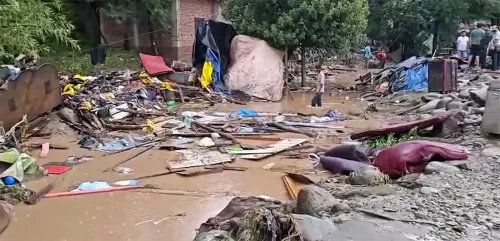
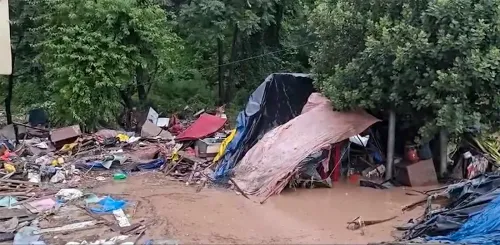
Flash floods triggered by multiple cloudbursts killed at least 10 people and left 8 others missing — feared dead — across the Poonch and Rajouri districts of Jammu and Kashmir in the early hours of Sunday, 20 July, with rescue operations still under way as of Monday. The disaster swept away at least 20 vehicles, damaged nearly 40 others, and destroyed or damaged at least 47 houses and other structures, leaving hundreds of families displaced and critical infrastructure in ruins.
Scale of the Destruction
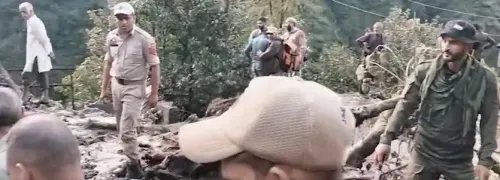
The worst-hit zone was the Surankote area of Poonch, where 15 people were either washed away or buried under debris after cloudbursts struck the upper reaches. By Sunday evening, teams from the Army, Police, and the State Disaster Response Force (SDRF) had retrieved 8 bodies, while 8 persons remained unaccounted for. Three injured survivors were hospitalised.
In Marrah village of Surankote, an entire residential house was swept away along with 8 members of a single family; three bodies were recovered and five remained buried under debris as of Monday. At Sangla village, another house was washed away — one body recovered, three persons still missing. Two more villagers, one each from Sanglani and Marhote, were swept away; both bodies were subsequently retrieved.
In the Haveli area of Poonch, a kutcha house collapsed, killing Nazia Kouser. Her husband, Mohd Hafiz, was seriously injured and transferred from District Hospital Poonch to Government Medical College (GMC) Rajouri for advanced treatment.
Rajouri: Bela Colony and the Bus Stand Bear the Brunt
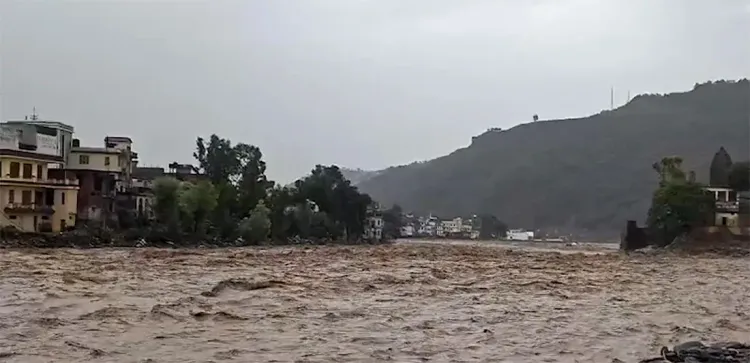
In Rajouri, the flash flood struck at around 2:45 am on Sunday after heavy rainfall lashed Thannamandi, Darhal, and the upper hilly areas, causing the Sukhto River and seasonal streams to breach their banks. The worst damage was recorded at Bela Colony, where floodwaters breached the river protection wall and inundated the New Bela Bus Stand and adjoining localities.
Around 20 vehicles parked at the bus stand were swept away by the currents, while nearly 40 others sustained severe damage. Several commercial establishments, workshops, and shops behind Bela Colony were completely destroyed. A woman identified as Pinky Devi was swept away and killed; her body was later recovered by rescue teams. A Jal Shakti Department daily-wage worker was also reported missing.
The flood also devastated slum settlements near Abdullah Bridge and Tariq Bridge, with more than 50 families losing their homes after floodwaters submerged the settlements. Eyewitnesses described the event as one of the worst floods seen in Rajouri in recent decades, with vehicles carried off within minutes by raging waters.
Government Response
Lieutenant Governor Manoj Sinha took stock of the situation on Sunday. Chief Minister Omar Abdullah chaired an emergency meeting of senior officers in Jammu, directing all departments to extend maximum assistance to affected families. According to reports, Abdullah was receiving half-hourly situation updates from Sunday evening through Monday morning, and was personally calling officers and civilians to assure them of the administration's support.
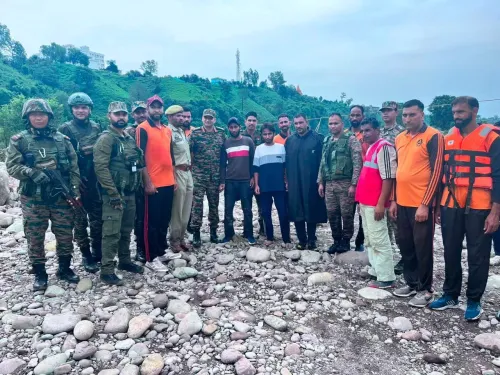
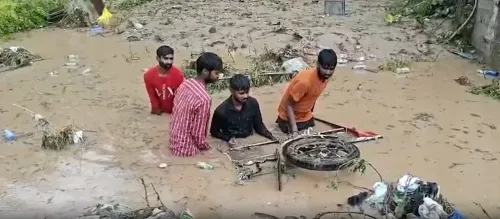
About 45 people trapped in flood-affected areas were rescued from Jammu, Rajouri, and Poonch on Sunday. More than 30 additional people were rescued from riverside locations. The district administration, along with the Army, SDRF, Police, Civil Defence, and National Disaster Response Force (NDRF), launched large-scale rescue and relief operations across affected zones.
Infrastructure and Power Damage
The floods damaged multiple electricity poles and at least half a dozen transformers, snapping power supply to several areas including Thannamandi and Darhal in Rajouri, and Surankote, Mandi, and Haveli in Poonch. Agricultural land, livestock, water mills, and household belongings were also lost. Dozens of cattle perished in the Suran River and adjoining seasonal streams.
Eyewitnesses and locals blamed past administrations for permitting the construction of the bus stand and commercial complex on the riverbank, alleging that encroachment on state land along the stream was carried out with the connivance of local officials. A comprehensive damage assessment is reportedly under way across all affected departments.
What Comes Next
The India Meteorological Department (IMD) has predicted continued heavy rainfall and flash flood risk across Jammu division and the Valley for the coming days. Residents in low-lying areas along water bodies have been advised to remain on high alert. Search operations for the missing continue, and officials said teams would keep working until all bodies are accounted for.
Point of View
And the floods have now extracted a brutal price for that negligence. J&K's cloudburst vulnerability is well-documented, yet protective infrastructure — river walls, early-warning systems, regulated construction along water bodies — remains chronically underfunded. Chief Minister Abdullah's half-hourly calls signal political intent, but the real test is whether the post-disaster assessment leads to enforceable land-use action, not just relief cheques.
NationPress
21 Jul 2026
Frequently Asked Questions
How many people died in the Jammu and Kashmir flash floods on 20 July?
At least 10 people were killed and 8 others remain missing, feared dead, after flash floods triggered by cloudbursts struck Poonch and Rajouri districts in the early hours of 20 July. Search operations for the missing were still under way as of Monday.
Which areas were worst affected by the J&K flash floods?
The Surankote area of Poonch and Bela Colony in Rajouri were the hardest hit. In Surankote, 15 people were washed away or buried under debris; in Rajouri, floodwaters breached the river protection wall at the New Bela Bus Stand, sweeping away around 20 vehicles and destroying dozens of shops and homes.
What is the government doing to help flood victims in Poonch and Rajouri?
Lieutenant Governor Manoj Sinha reviewed the situation on Sunday, while Chief Minister Omar Abdullah chaired an emergency meeting of senior officers in Jammu. The Army, NDRF, SDRF, Police, and Civil Defence launched large-scale rescue operations, rescuing about 45 people on Sunday. A comprehensive damage assessment is under way across all departments.
Will there be more flooding in Jammu and Kashmir?
The India Meteorological Department has predicted continued heavy rainfall and flash flood risk across Jammu division and the Valley for the coming days. Residents in low-lying areas along water bodies have been officially advised to remain on high alert.
Why did the Rajouri bus stand suffer such severe flood damage?
According to eyewitnesses and locals, the New Bela Bus Stand and an adjoining shopping complex were constructed on the riverbank, allegedly through encroachment on state land with the connivance of local officials. When floodwaters breached the river protection wall, around 20 vehicles were swept away and nearly 40 others were damaged within minutes.