Pralhad Joshi Backs Modi's Green Economy Vision on I-Day
Synopsis
On Independence Day 2026, Union Minister Pralhad Joshi shared PM Modi's call for India to achieve global scale in Green Hydrogen, Renewable Energy, Energy Storage, Green Mobility, and Green Manufacturing — framing India as a provider of climate solutions, not merely a participant in the global debate.
Key Takeaways
Union Minister Pralhad Joshi quoted PM Narendra Modi on Independence Day, August 15, 2026 , outlining the sixth pillar of the Sapta Dhara framework.
The Green Economy and Blue Economy are identified as twin pillars that also generate Green Jobs .
Five target sectors named: Green Hydrogen, Renewable Energy, Energy Storage, Green Mobility, and Green Manufacturing .
India's National Green Hydrogen Mission (approved 2023 ) and 500 GW non-fossil fuel target by 2030 (committed at COP26) underpin the ambition.
Modi's framing positions India as a global solutions provider on climate change, not a passive participant.
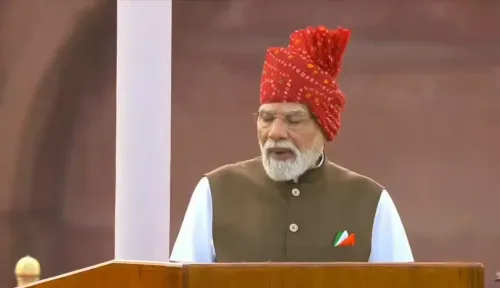
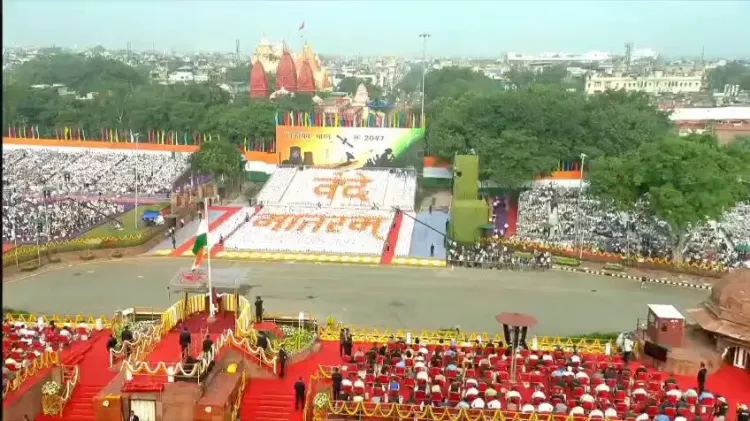
On Independence Day, August 15, 2026, Union Minister Pralhad Joshi amplified a sweeping green-economy vision attributed to Prime Minister Narendra Modi — one that positions India not as a country chasing climate solutions, but as the country supplying them to the world.
Quoting the Prime Minister, Joshi shared what was described as the sixth pillar of a framework called Sapta Dhara (seven streams) — a vision that names the Green Economy and Blue Economy as twin engines of India's next growth phase. 'When the world discusses global warming, we keep searching for solutions. We are providing solutions to the problem,' the post quoted Modi as saying, adding that 'India is moving forward with the strength to lead this Green Movement.'
Five Sectors, One Ambition
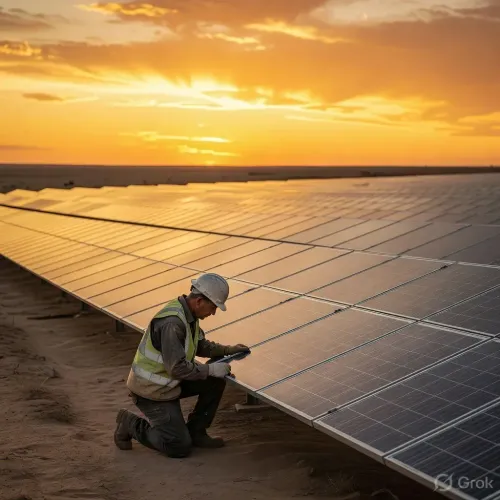
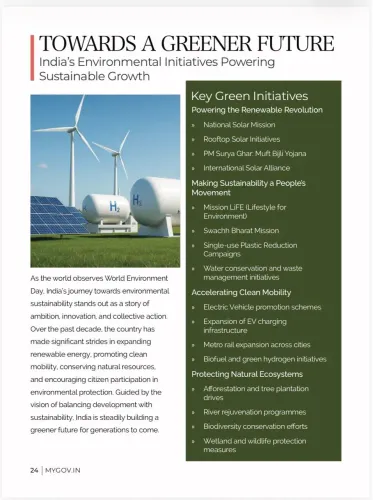
The statement singles out five specific arenas where India must achieve 'global scale': Green Hydrogen, Renewable Energy, Energy Storage, Green Mobility, and Green Manufacturing. Each of these maps directly onto existing policy architecture. The National Green Hydrogen Mission, approved in 2023, is already designed to make India a major producer and exporter of green hydrogen. The 500 GW non-fossil fuel electricity target by 2030 — committed at COP26 in 2021 — gives the renewable energy plank its deadline.
The phrase 'Green Jobs' is woven into the framing deliberately: the argument is that decarbonisation is not an economic cost but a source of employment, linking climate policy to livelihoods in a way that resonates with a young, job-seeking population.
India as Climate Solution-Provider, Not Just Participant
The rhetorical pivot here is pointed. Where most climate discourse frames developing nations as recipients of technology transfer and climate finance, this framing flips the script — India as architect and exporter of green solutions. It echoes the logic behind the International Solar Alliance, launched by Modi in 2015, which positioned India as a convener of solar-energy cooperation among sun-rich nations.
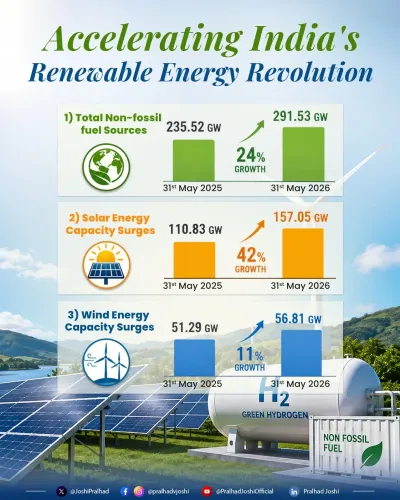
India has expanded renewable capacity at one of the fastest rates globally in recent years, and successive policy frameworks have tied domestic manufacturing targets — under initiatives like production-linked incentive schemes — to international climate commitments. The Independence Day platform amplifies that narrative to its widest possible audience.
As India watches its 2070 net-zero target and its 2030 renewable milestones draw closer, the pressure to convert political ambition into gigawatts, green-hydrogen tonnes, and factory jobs will only intensify. The speech sets the bar; the mission logs will keep the score.
Point of View
The BJP is consciously weaving climate leadership into the national-identity narrative — a high-visibility platform that turns green policy from technocratic detail into patriotic aspiration. The five-sector framing mirrors the production-linked incentive logic: domestic manufacturing capacity as the bridge between climate commitment and economic growth. With India's 2030 renewable targets approaching and green hydrogen still in early scale-up, this rhetoric will increasingly be tested against actual gigawatt and tonnage milestones. The 'solutions provider' posture also carries diplomatic weight, reinforcing India's bid for greater influence in global climate governance.
NationPress
29 Sept 2026
Frequently Asked Questions
What is Sapta Dhara in PM Modi's speech?
Sapta Dhara translates to 'seven streams' and refers to a framework of seven pillars or strengths outlined by PM Modi. The sixth pillar, highlighted in this post, is the Green Economy and Blue Economy.
What is India's National Green Hydrogen Mission?
The National Green Hydrogen Mission was approved by the central government in 2023 to scale up green hydrogen production and usage as a key part of India's decarbonisation strategy, with an eye on both domestic use and exports.
What is India's renewable energy target by 2030?
India committed to achieving 500 GW of non-fossil fuel electricity capacity by 2030 at the COP26 climate summit in 2021 .
What did Pralhad Joshi post on Independence Day 2026?
Union Minister Pralhad Joshi shared a quote from PM Narendra Modi calling for India to achieve global scale in Green Hydrogen, Renewable Energy, Energy Storage, Green Mobility, and Green Manufacturing, framing India as a provider of climate solutions to the world.
What is India's net-zero emissions target year?
India has committed to achieving net-zero emissions by 2070 , a pledge made at the COP26 summit in 2021 .