Joshi holds Chai Pe Charcha in Vijayawada, highlights AP welfare schemes
Synopsis
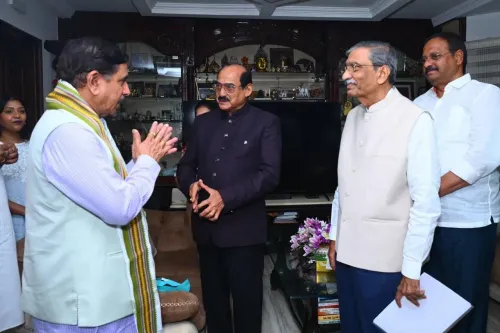
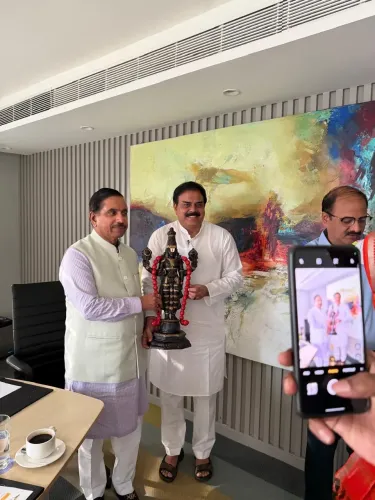
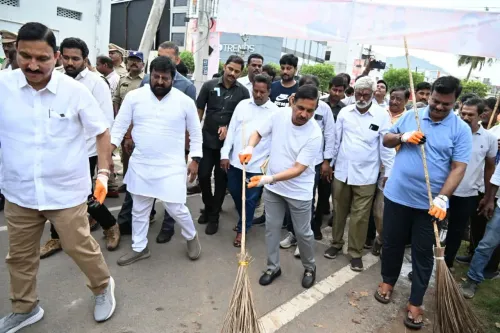
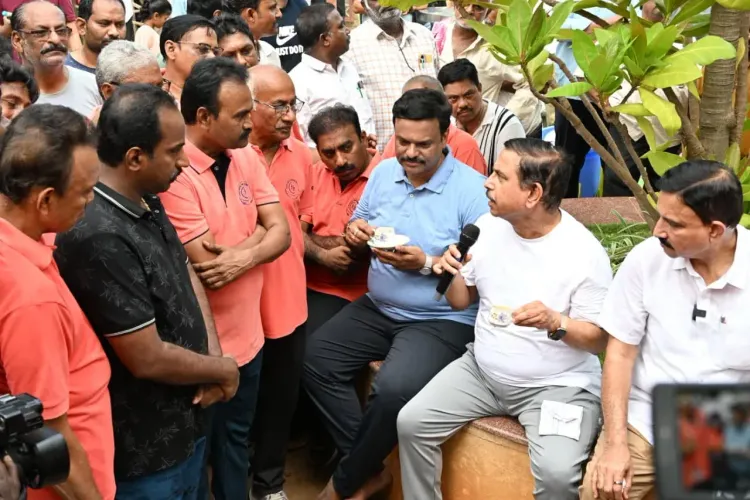
Union Minister Pralhad Joshi met Vijayawada residents at Sri Atal Bihari Park on 16 June 2026 for a Chai Pe Charcha session, spotlighting QR-based PDS transparency measures and rooftop solar installations for SC/ST households in Andhra Pradesh under the NDA government.
Key Takeaways
Pralhad Joshi held a Chai Pe Charcha at Sri Atal Bihari Park, Vijayawada on 16 June 2026 , engaging residents on local development and welfare concerns.
The minister highlighted the Improved Rice Procurement programme in Andhra Pradesh aimed at sourcing better-quality rice for PDS distribution.
QR-code-based tracking of foodgrain bags was cited as a measure to enhance transparency in the Public Distribution System .
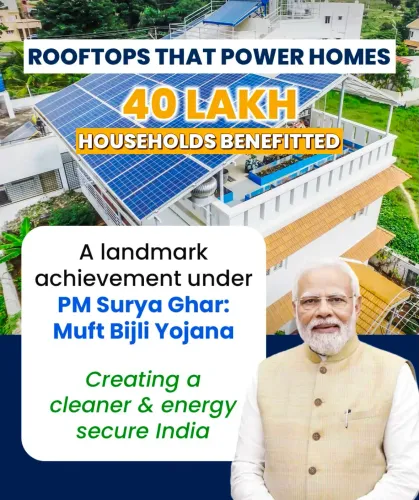
Rooftop solar installations targeting SC/ST households in Andhra Pradesh were underscored as a key renewable energy achievement.
Employment generation linked to renewable energy programmes in the state was also highlighted during the interaction.
The visit is part of a broader NDA pattern of ministerial outreach in states governed by regional parties to publicise central scheme implementation.
Union Consumer Affairs Minister Pralhad Joshi on Tuesday, 16 June 2026, held a Chai Pe Charcha (tea-time conversation) with local residents at Sri Atal Bihari Park in Vijayawada, Andhra Pradesh, listening to their concerns on local development and public welfare while outlining central government initiatives benefiting the state.
Context
The outreach event, named after the format popularised during the 2014 general election campaign, saw Joshi engage directly with citizens over tea at the park named after former Prime Minister Atal Bihari Vajpayee. The minister described the interaction as an opportunity to 'listen to their concerns and suggestions' on development and welfare issues at the grassroots level.
Such Chai Pe Charcha sessions have become a recurring format for central ministers seeking to publicise scheme implementation and gather on-ground feedback, particularly in states governed by regional parties where the NDA's direct electoral footprint is limited.
Policy Backdrop
During the interaction, Joshi highlighted two key areas under his ministerial portfolios. On food security, he pointed to the Improved Rice Procurement programme in Andhra Pradesh, which aims to source better-quality rice for distribution, and to the introduction of QR-code-based tracking of foodgrain bags to improve transparency within the Public Distribution System (PDS).
The PDS, governed by the National Food Security Act of 2013, provides subsidised foodgrains to eligible households across India. Digitisation efforts — including Aadhaar-based biometric authentication scaled up nationally from 2015 — have been central to reducing leakages and improving last-mile delivery. The QR-based tracking initiative represents a further step in that transparency drive.
On renewable energy, Joshi underscored Andhra Pradesh's progress in rooftop solar installations specifically targeting Scheduled Caste (SC) and Scheduled Tribe (ST) households, as well as employment generation linked to renewable energy programmes. These initiatives fall under the Ministry of New and Renewable Energy, which Joshi also heads. The ministry has expanded rooftop solar components for vulnerable communities after 2014 as part of a broader national capacity-addition push.
Stakeholders and Impact
The primary beneficiaries highlighted are Vijayawada residents and, more broadly, Andhra Pradesh's PDS beneficiaries and SC/ST households eligible for rooftop solar installations. The state has been a focus of central welfare outreach since its bifurcation in 2014, with successive NDA governments citing central transfers and scheme implementation as evidence of support for the state.
Employment creation linked to renewable energy deployment was also flagged as a tangible benefit for the local workforce, reflecting the dual emphasis on welfare delivery and economic opportunity that characterises the ministry's communication in the state.
What's Next
Attention will now turn to state-level audits of the QR-coded foodgrain tracking system and the pace of rooftop solar unit disbursal under central schemes in Andhra Pradesh. The effectiveness of these programmes in reaching SC/ST households and PDS beneficiaries will be a key metric for assessing the on-ground impact of the initiatives Joshi outlined during his Vijayawada visit.
Point of View
With its grassroots optics, adds a layer of accessibility to what is essentially a political-administrative outreach exercise.
NationPress
15 Sept 2026
Frequently Asked Questions
What is Chai Pe Charcha and why did Pralhad Joshi hold one in Vijayawada?
Chai Pe Charcha is a public outreach format where leaders interact with citizens over tea to discuss local issues. Minister Pralhad Joshi held one at Sri Atal Bihari Park in Vijayawada on 16 June 2026 to listen to residents' concerns and brief them on central government welfare and development schemes benefiting Andhra Pradesh.
What is the QR-based tracking of foodgrain bags mentioned by Pralhad Joshi?
QR-based tracking involves attaching QR codes to bags of foodgrain distributed through the Public Distribution System, enabling authorities and beneficiaries to verify the origin, quantity, and movement of grain. Joshi cited it as a transparency measure being implemented in Andhra Pradesh to reduce leakages in PDS delivery.
Which households in Andhra Pradesh benefit from the rooftop solar scheme Joshi highlighted?
Joshi highlighted rooftop solar installations specifically targeting Scheduled Caste (SC) and Scheduled Tribe (ST) households in Andhra Pradesh, a component of the Ministry of New and Renewable Energy's broader push to expand solar capacity among vulnerable communities.
What is the Improved Rice Procurement programme in Andhra Pradesh?
The Improved Rice Procurement programme aims to procure better-quality rice for distribution through the Public Distribution System in Andhra Pradesh. Joshi cited it as a food security initiative under the NDA government, though granular operational details of the programme are subject to official state and central government disclosures.
Why does the NDA government focus on Andhra Pradesh for scheme outreach?
Andhra Pradesh is governed by a regional party, making it a key state where the NDA seeks to demonstrate the impact of central schemes and transfers. Since the state's bifurcation in 2014, successive central governments have highlighted welfare spending in Andhra Pradesh as part of their political communication strategy.