Joshi launches CBDC-based DBT under PDS in Chandigarh
Synopsis
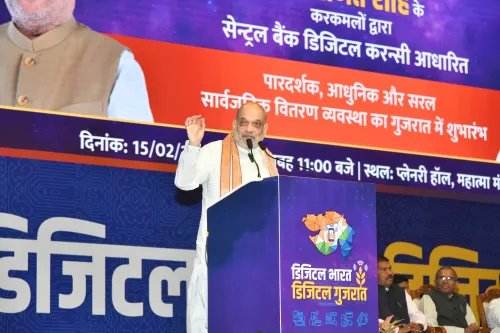
Union Minister Pralhad Joshi addressed the launch of a CBDC-based DBT pilot under India's PDS in Chandigarh on August 14, 2026 — the first deployment of the RBI's Digital Rupee within the national food security architecture, aimed at eliminating subsidy leakages at the last mile.
Key Takeaways
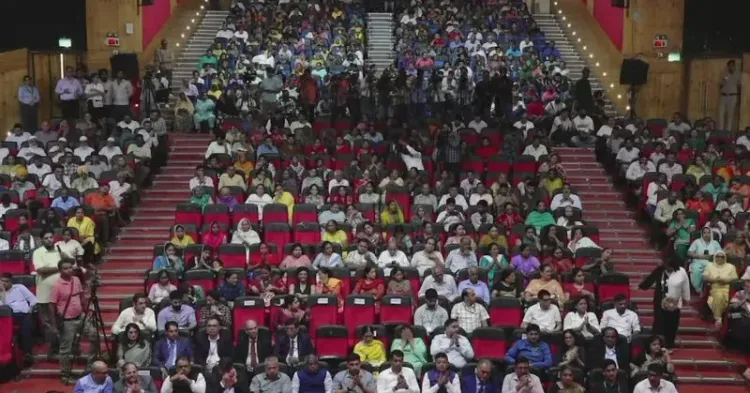
Union Minister Pralhad Joshi addressed the live launch of CBDC-based DBT under PDS in Chandigarh on August 14, 2026 .
Chandigarh has been chosen as the pilot Union Territory for the CBDC-DBT integration under the food security system.
The Reserve Bank of India launched its retail Digital Rupee (e₹-R) pilot in December 2022 ; this launch marks its first formal entry into PDS welfare delivery.
DBT reforms in the PDS have been underway since 2013 , using Aadhaar-linked ration cards and biometric verification to curb diversion.
A successful Chandigarh pilot could pave the way for CBDC-DBT rollout across additional states and union territories.
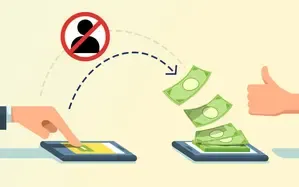
The model creates a programmable, auditable subsidy trail from government disbursal to beneficiary redemption at fair price shops.
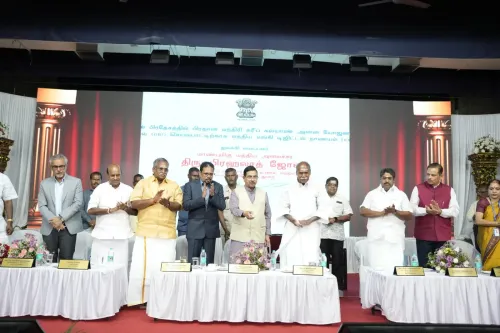
India's food subsidy system just crossed a threshold it has been inching toward for years. Union Minister of Consumer Affairs, Food and Public Distribution, Pralhad Joshi on Friday, August 14, 2026, addressed the live launch of a Central Bank Digital Currency (CBDC)-based Direct Benefit Transfer (DBT) under the Public Distribution System (PDS) in Chandigarh — marking the first time India's sovereign digital currency has been formally wired into its national food security architecture.
What CBDC-DBT means for the ration card holder
At its core, the integration replaces the existing subsidy-transfer chain with transactions denominated in the Digital Rupee (e₹), the retail CBDC that the Reserve Bank of India piloted from December 2022. Instead of grain entitlements flowing through conventional banking rails — where delays, diversions, and ghost beneficiaries have long been documented — the e₹ creates a programmable, auditable transfer directly to the beneficiary. Chandigarh, as a compact Union Territory with a manageable PDS base, was selected as the pilot ground precisely because it offers a controlled environment to stress-test the model before any wider rollout.
For a ration card holder in Chandigarh, the practical change is significant: the subsidy value arrives in a digital wallet in the form of e₹, which can then be redeemed at a fair price shop. Every step is logged on the RBI's CBDC ledger, making diversion structurally harder.
A decade of DBT reform, now at its sharpest edge
The DBT architecture that underpins this launch has been in construction since 2013, when the government began routing welfare payments directly into beneficiary accounts to cut out middlemen. Over the following decade, the PDS was progressively brought under DBT discipline — Aadhaar-linked ration cards, point-of-sale biometric machines at fair price shops, and one-nation-one-ration portability all formed successive layers of the same reform logic. The CBDC layer is the latest, and arguably the most structurally disruptive, addition: it replaces fiat cash flows with programmable sovereign digital money, giving the state granular visibility over every rupee of food subsidy from disbursal to redemption.
The RBI's retail e₹ pilot, which began with select banks and cities, has been expanding cautiously. Plugging it into PDS — one of India's largest welfare programmes, covering hundreds of millions of beneficiaries — represents a qualitative leap in the CBDC's real-world footprint.
Chandigarh as the testing ground
The choice of Chandigarh is deliberate. As a Union Territory administered directly by the Centre, it bypasses the state-Centre coordination complexity that would accompany a rollout in, say, Uttar Pradesh or West Bengal. A successful pilot here will generate the usage metrics and operational learnings — beneficiary onboarding rates, redemption friction, system downtime — that policymakers will need before they can credibly propose scaling to larger states. What happens in Chandigarh's fair price shops over the coming months will effectively write the playbook for the rest of India.
If the pilot holds, the CBDC-DBT model could eventually reshape how India disburses not just food subsidies but the broader universe of welfare transfers — from fertiliser to cooking gas to scholarship payments. The question now is not whether digital currency can enter the welfare state. It just did.
Point of View
The government is testing whether programmable sovereign money can do what a decade of DBT reform has only partially achieved — closing the last-mile leakage gap entirely. For Minister Joshi's ministry, a clean pilot outcome would provide the political and operational mandate to push for national-scale rollout, potentially reshaping how India disburses its entire welfare budget. The broader signal is unmistakable: CBDC is no longer a fintech experiment; it is becoming infrastructure for the welfare state.
NationPress
14 Aug 2026
Frequently Asked Questions
What is CBDC-based DBT under PDS?
It is a system where food subsidies under the Public Distribution System are transferred to beneficiaries using India's Central Bank Digital Currency — the Digital Rupee (e₹) — instead of conventional cash or bank transfers, making each transaction programmable and auditable.
Why was Chandigarh chosen for the CBDC-DBT pilot?
Chandigarh is a Union Territory administered directly by the Centre, giving the government full operational control without state-level coordination hurdles, and its compact size makes it a manageable environment to test the model before a wider rollout.
What is India's Digital Rupee (e₹)?
The Digital Rupee is a Central Bank Digital Currency issued by the Reserve Bank of India. Its retail pilot (e₹-R) was launched in December 2022 across select cities and banks as a sovereign digital alternative to physical cash.
How does CBDC-DBT help reduce PDS leakages?
Because e₹ transactions are logged on the RBI's CBDC ledger and can be programmed for specific redemption purposes, it becomes structurally harder for middlemen to divert subsidised grain — every rupee is traceable from government disbursal to beneficiary redemption.
When did India start DBT reforms in the PDS?
Direct Benefit Transfer integration into the Public Distribution System began in phases from 2013, progressively adding Aadhaar-linked ration cards, biometric point-of-sale devices at fair price shops, and one-nation-one-ration portability over the following decade.