Pralhad Joshi Releases Floating Solar Report, Launches Hydro Portal
Synopsis
Union Minister Pralhad Joshi on June 10, 2026 released a national floating solar potential report estimating 102 GWp capacity, launched an online portal for the Small Hydro Power Development Scheme, and witnessed a NISE-MES MoU, marking multiple milestones in India's clean energy push.
Key Takeaways
Union Minister Pralhad Joshi chaired a clean energy milestones programme on June 10, 2026 .
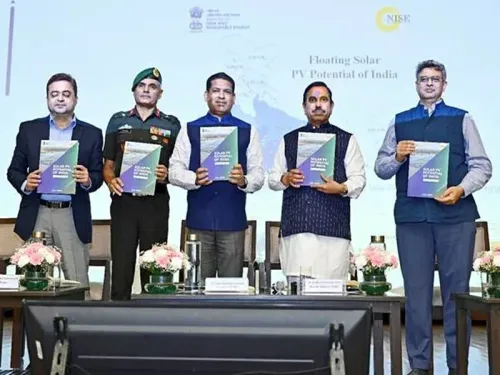
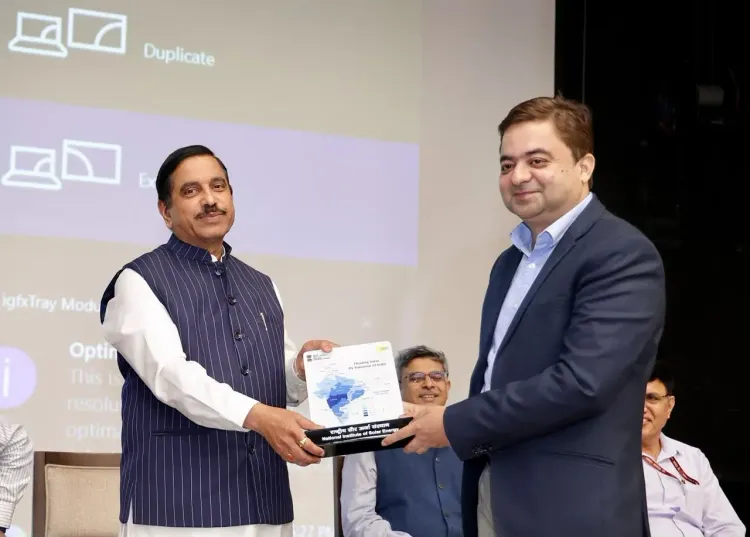
The Report on Floating Solar PV Potential Assessment of India estimates a national floating solar potential of 102 GWp .
An Online Portal for the Small Hydro Power Development Scheme was launched to streamline project clearances for plants up to 25 MW .
An MoU was exchanged between the National Institute of Solar Energy (NISE) and MES .
The book Green Energy and Sustainable Development was also released at the event.
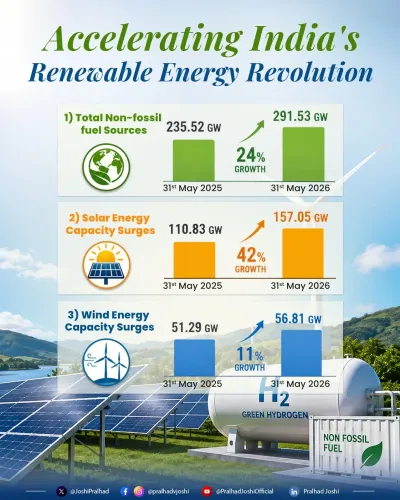
India has added more than 170 GW of renewable capacity since 2014 and targets 500 GW of non-fossil fuel capacity by 2030 .
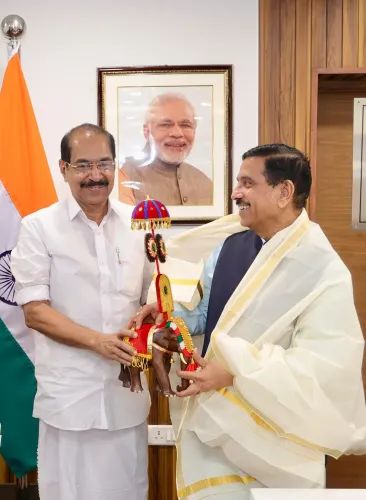
Union Consumer Affairs and New and Renewable Energy Minister Pralhad Joshi on Wednesday, June 10, 2026, chaired a programme marking several milestones in India's clean energy journey, releasing a national assessment of floating solar potential, launching a digital portal for small hydro power, and witnessing the signing of a memorandum of understanding between two energy institutions.
Context
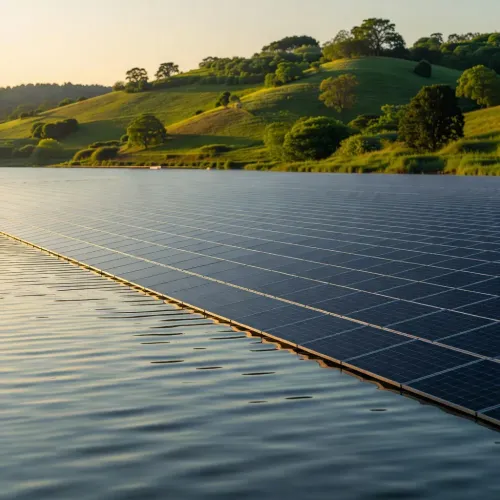
The centrepiece of the event was the release of the Report on Floating Solar PV Potential Assessment of India, which estimates the country's floating solar potential at 102 GWp. Floating solar installations are mounted on reservoirs and water bodies, reducing the demand for land — a persistent constraint in India's ground-mounted solar expansion — while also limiting water evaporation from those surfaces.
Minister Joshi also launched an Online Portal for the Small Hydro Power Development Scheme, a central scheme that supports survey, investigation and project development of small hydro plants of up to 25 MW, primarily in hilly and remote regions. A separate MoU was exchanged between the National Institute of Solar Energy (NISE) and MES, and the book Green Energy and Sustainable Development was released at the event.
Policy Backdrop
India's renewable energy ambitions have expanded significantly over the past decade. The government announced at COP26 in 2021 a target of 500 GW of non-fossil fuel electricity capacity by 2030, and the country has added more than 170 GW of renewable capacity since 2014, with solar constituting the largest share. The Ministry of New and Renewable Energy issued guidelines for floating solar projects on reservoirs and lakes as early as 2019-2020, laying the regulatory groundwork for the sector.
The shift from large ground-mounted solar parks to alternative surfaces — rooftops, canals and now water bodies — reflects a deliberate policy response to land-use pressures. Small hydro, meanwhile, complements solar by providing dispatchable generation in terrain where grid connectivity is limited.
Stakeholders and Impact
The floating solar potential report is expected to guide renewable energy developers and state utilities in identifying viable reservoirs and irrigation bodies for project development. An estimated 102 GWp of untapped potential, if even partially harnessed, would represent a substantial addition to India's installed renewable base.
The new online portal for the Small Hydro Power Development Scheme is designed to streamline project clearances and improve transparency for developers operating in difficult terrain. Digital integration of scheme processes has been a recurring theme in recent energy ministry reforms aimed at reducing project timelines and improving bankability for smaller developers.
In his address, Joshi also extended congratulations to Prime Minister Narendra Modi on becoming India's longest continuously serving elected Prime Minister, crediting his leadership for the country's progress in clean energy, infrastructure, digital connectivity, manufacturing and economic development.
What's Next
Attention will now turn to how quickly state governments and project developers act on the floating solar assessment, and whether the report triggers fresh tender announcements by central or state agencies. The uptake of the new small hydro portal across hilly states will be an early indicator of whether digital streamlining translates into faster project commissioning. India's ability to meet its 500 GW non-fossil fuel target by 2030 will depend in large part on accelerating precisely these diversified, land-light renewable sources.
Point of View
Where land acquisition remains a bottleneck. Quantifying 102 GWp of floating solar potential gives developers and state utilities a concrete planning baseline, which could unlock a new wave of tenders. The digitisation of the Small Hydro Development Scheme portal continues a broader pattern of using technology to reduce friction in project approvals — a priority in terrains where physical access is difficult. Taken together, the announcements signal that the ministry is targeting renewable diversification as the primary lever to keep India's 500 GW by 2030 ambition on track.
NationPress
25 Oct 2026
Frequently Asked Questions
What is India's floating solar potential according to the new report?
The Report on Floating Solar PV Potential Assessment of India , released on June 10, 2026 , estimates India's floating solar potential at 102 GWp .
What is the Small Hydro Power Development Scheme?
The Small Hydro Power Development Scheme is a central government scheme that supports the survey, investigation and development of small hydro power plants of up to 25 MW , primarily in hilly and remote regions of India.
What is floating solar and why is it important for India?
Floating solar refers to photovoltaic panels installed on reservoirs and water bodies rather than land. It is important for India because it reduces pressure on scarce land while also limiting water evaporation from the surfaces on which panels are placed.
What is NISE and what MoU was signed at the event?
NISE , the National Institute of Solar Energy , is an autonomous institute under the Ministry of New and Renewable Energy focused on solar research, testing and capacity building. An MoU was exchanged between NISE and MES at the June 10 event, though full details of the agreement were not disclosed in the minister's statement.
What is India's renewable energy target for 2030?
India has committed to achieving 500 GW of non-fossil fuel electricity capacity by 2030 , a target announced at COP26 in 2021 . The country has added more than 170 GW of renewable capacity since 2014.