India's floating solar PV potential pegged at 102 GWp, total solar capacity assessed at 3,445 GWp
Synopsis
India has formally assessed its floating solar potential at over 102 GWp — a number that pushes total evaluated solar capacity to 3,445 GWp and signals a serious policy pivot toward water-body-based clean energy. With a dedicated floating solar scheme in the works and a new small hydro portal live, the government is moving from resource mapping to deployment infrastructure.
Key Takeaways
India's floating solar PV potential assessed at over 102 GWp , taking total solar potential to 3,445 GWp .
Union Minister Pralhad Joshi released the report on 10 June 2025 in New Delhi .
A dedicated scheme to promote floating solar deployment across India is under development.
Online portal for the Small Hydro Power Development Scheme launched — first major small hydro policy move since 2017 .
India's solar capacity has grown from 2.8 GW in 2014 to 155 GW ; module manufacturing capacity stands at 192 GW .
NISE and Military Engineering Services signed an MoU to expand solar energy across defence establishments.
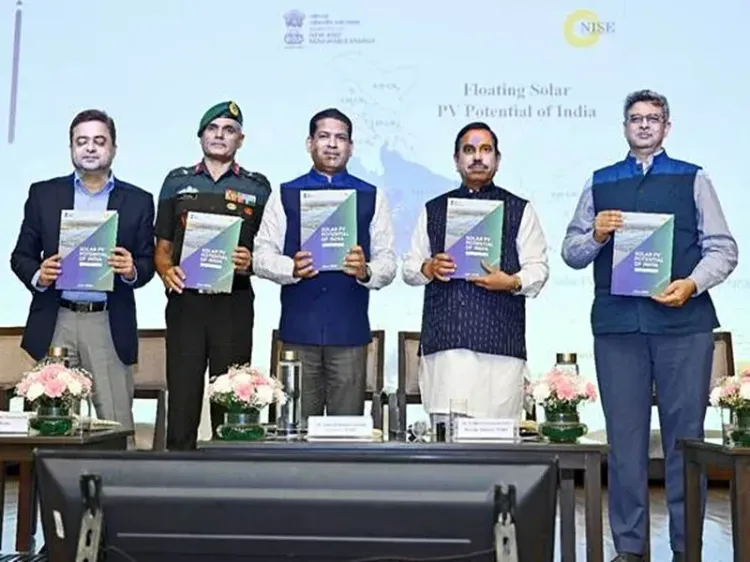
India's floating solar photovoltaic potential has been assessed at over 102 GWp, lifting the country's total evaluated solar potential to 3,445 GWp, according to a report released by Union Minister for New and Renewable Energy Pralhad Joshi in New Delhi on 10 June 2025. The findings mark a significant expansion in India's clean energy resource mapping and underscore the growing role of water bodies in the country's renewable energy strategy.
Floating Solar and the Dedicated Scheme
Minister Joshi said the Ministry of New and Renewable Energy is actively developing a dedicated scheme to promote floating solar deployment across the country. He noted that reservoirs and other water bodies are increasingly being recognised as strategic assets for clean energy generation, offering dual benefits of power production and reduced water evaporation.
Notably, this assessment places India among the few nations to have formally quantified large-scale floating solar potential as part of national energy planning — a step that could unlock private and institutional investment in the segment.
Small Hydro Portal Launch and Policy Shift
On the same occasion, Joshi launched an online portal for the Small Hydro Power Development Scheme, describing it as the first major policy intervention in the small hydro sector since 2017. The portal is designed to enhance transparency and operational efficiency in scheme implementation, streamlining approvals and monitoring for developers and state agencies alike.
India's Solar Manufacturing and Capacity Milestones
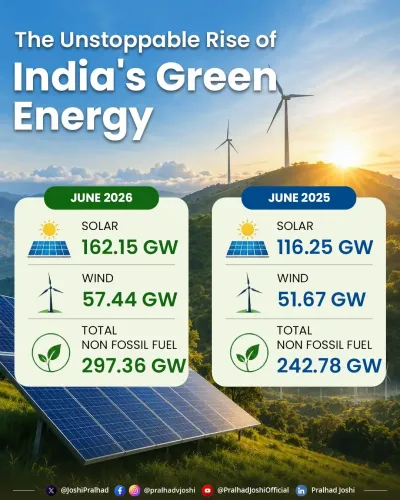
Joshi highlighted that India's non-fossil fuel capacity has grown from 81 GW in 2014 to 288 GW, while solar capacity alone has surged from 2.8 GW to 155 GW over the same period. Domestic manufacturing has kept pace: module manufacturing capacity has reached 192 GW and cell manufacturing capacity stands at 30 GW.
The Minister said India has transitioned from a power-deficit nation to a power-surplus nation, positioning itself as a major renewable energy manufacturing hub with growing global recognition for its clean energy delivery.
Flagship Programmes and Citizen Participation
Joshi underscored that schemes such as PM Surya Ghar: Muft Bijli Yojana and PM-KUSUM are broadening citizen participation in India's clean energy transition. These programmes target rooftop solar adoption by households and agricultural consumers, respectively, accelerating grassroots renewable uptake.
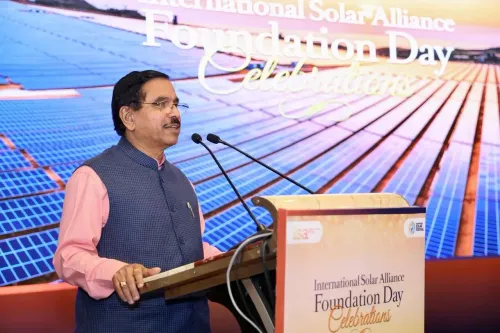
'Prime Minister Narendra Modi's vision and leadership over the past twelve years have transformed India into a global clean energy leader and accelerated the country's journey towards Viksit Bharat,' Joshi said at the event.
NISE-MES MoU and Book Release
On the sidelines, the National Institute of Solar Energy (NISE) and Military Engineering Services (MES) signed a memorandum of understanding to advance solar energy adoption across defence establishments. Under the agreement, NISE will provide technical support for planning, implementation, and monitoring of renewable energy projects in the defence sector.
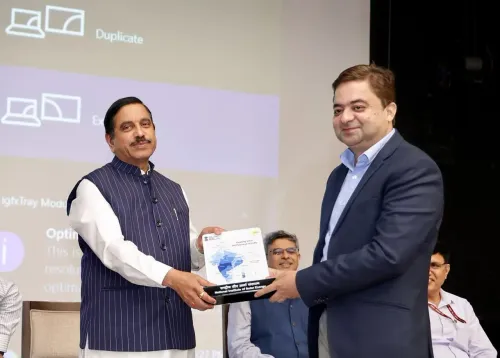
Joshi also released 'Green Energy and Sustainable Development', a book authored by Dr. Mohammad Rihan, expressing confidence that it would serve researchers, students, and policymakers working in the clean energy space. With floating solar guidelines and a small hydro portal now in motion, the ministry's next steps will likely determine how quickly these assessed gigawatts translate into commissioned capacity.
Point of View
Not a deployment target — and that distinction matters. India has a strong record of ambitious capacity numbers that outpace actual commissioning timelines. The dedicated floating solar scheme is still being formulated, and without clear land-use frameworks, grid connectivity mandates, and financing structures, this potential risks remaining on paper. The small hydro portal is a welcome transparency measure, but the sector has been largely stagnant since 2017 — a portal alone will not revive it. The real test is whether these announcements translate into tendered capacity within the next 12 months.
NationPress
26 Oct 2026
Frequently Asked Questions
What is India's floating solar PV potential?
India's floating solar photovoltaic potential has been assessed at over 102 GWp, according to a report released on 10 June 2025. This figure raises the country's total evaluated solar potential to 3,445 GWp.
What is the dedicated floating solar scheme being planned?
The Ministry of New and Renewable Energy is working on a dedicated scheme to promote floating solar deployment across India, focusing on reservoirs and other water bodies as clean energy assets. Details of the scheme have not yet been formally notified.
What is the Small Hydro Power Development Scheme portal?
The online portal for the Small Hydro Power Development Scheme was launched on 10 June 2025 to improve transparency and efficiency in scheme implementation. Minister Joshi described it as the first significant policy intervention in the small hydro sector since 2017.
How much has India's solar capacity grown since 2014?
India's solar capacity has grown from 2.8 GW in 2014 to 155 GW as of 2025, while overall non-fossil fuel capacity rose from 81 GW to 288 GW over the same period. Domestic module manufacturing capacity has also reached 192 GW.
What is the NISE-MES MoU about?
The National Institute of Solar Energy (NISE) and Military Engineering Services (MES) signed an MoU to strengthen solar energy adoption across defence establishments. NISE will provide technical support for planning, implementation, and monitoring of renewable energy projects in the defence sector.