Pralhad Joshi Reviews Festive-Season Prices, Buffer Stocks

Synopsis
Union Consumer Affairs Minister Pralhad Joshi chaired a review of festive-season price trends and buffer stock positions with departmental officials on October 26, declaring prices are stabilising and essential commodity stocks are adequate heading into the new year.
Key Takeaways
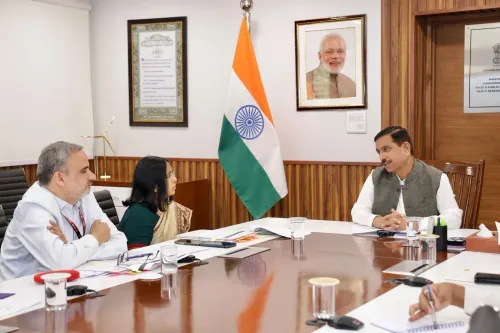
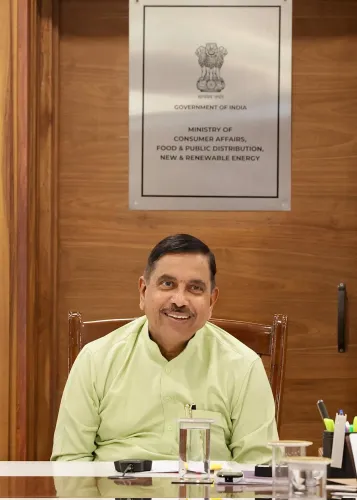
Union Consumer Affairs Minister Pralhad Joshi held a high-level review on October 26, 2026 with the Secretary and senior officials of the Department of Consumer Affairs .
The review covered prevailing price conditions, festive-season market trends, and commodity stock requirements for the coming year.
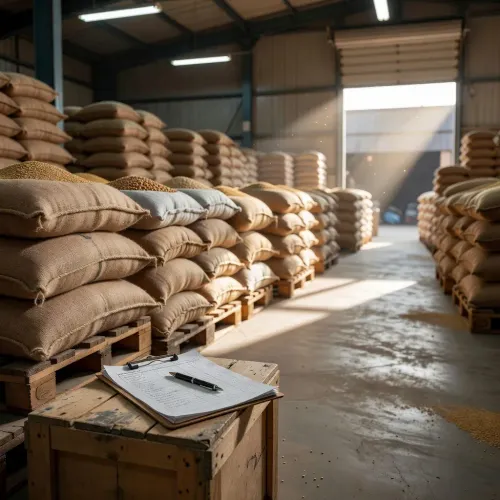
The minister stated that adequate buffer stocks are in place and that prices are 'showing signs of stabilisation'.
The Price Monitoring Division under the department tracks daily prices of 22 essential commodities , forming the backbone of the government's food inflation surveillance.
Buffer norms for wheat and rice are maintained by the Food Corporation of India under policy last revised in 2015 .
Monthly CPI food inflation data from the Ministry of Statistics will be the next key indicator of whether stabilisation claims hold in practice.
With India's festive season in full swing and household budgets under scrutiny, Union Consumer Affairs Minister Pralhad Joshi on Monday, October 26, 2026, convened a high-level review with the Secretary and senior officials of the Department of Consumer Affairs — zeroing in on price trends, market availability, and whether the government's stockpiles can hold the line through the months ahead.
The minister reported that adequate buffer stocks are in place and that prices are showing 'signs of stabilisation' — language that signals cautious optimism rather than a clean bill of health. The review also took stock of festive-season market trends and projected commodity requirements heading into the new year, with consumer protection at the centre of the agenda.
Why the festive window is always the pressure test
Central ministries conducting pre-festive supply reviews is a well-worn playbook — and for good reason. The weeks bracketing major festivals are historically the sharpest stress-test for retail prices of essentials such as pulses, edible oils, and onions. Demand spikes, supply chains tighten, and the window for hoarding or profiteering widens. A ministerial-level review at exactly this juncture is the government's way of signalling active price surveillance, not passive monitoring.
The Department of Consumer Affairs runs a Price Monitoring Division that tracks daily retail and wholesale prices of 22 essential commodities — a system in place since the early 2000s. That data feeds directly into decisions on stock releases, import windows, and export curbs, making the department's real-time view one of the sharper early-warning instruments the government possesses against food inflation.
Buffer stock policy and what it actually means for consumers
The minister's mention of 'adequate buffer stocks' connects to a specific policy architecture. Buffer norms for wheat and rice are maintained by the Food Corporation of India under norms last formally revised in 2015. When stocks run above those norms, the government has the option to release grain into open markets to cap wholesale prices — a lever it has used repeatedly during episodes of food inflation driven by erratic monsoons or global commodity shocks.
The review also invoked the Jago Grahak Jago campaign — the ministry's long-running national consumer awareness programme, tagged in the post — which focuses on educating citizens about their rights, grievance redressal mechanisms, and protections under the Consumer Protection Act, 2019, the legislation that replaced a three-decade-old framework to sharpen enforcement against unfair trade practices.
The inflation number that will tell the real story
The government's assurances are only as durable as the next data release. Monthly CPI food inflation figures from the Ministry of Statistics will be the definitive scorecard for whether today's review translates into genuine price relief at the mandis and retail counters that ordinary consumers actually navigate. Any follow-through — stock releases, export restrictions, targeted interventions on specific commodities — will reflect how seriously the stabilisation signals hold.
Price stability through a festival season is never accidental. It is the cumulative result of monitoring, stocking, and the willingness to act fast. The minister has signalled the posture; the numbers will deliver the verdict.
Point of View
The ministry is threading a careful needle: reassuring consumers without overpromising. The mention of the Jago Grahak Jago campaign alongside a stock review suggests the ministry is pursuing a dual-track strategy — supply-side management combined with demand-side awareness. The true test will come with the next CPI food print, which will either validate the buffer-stock posture or expose the gap between ministerial assurance and retail reality.
NationPress
26 Oct 2026
Frequently Asked Questions
What did Pralhad Joshi review regarding essential commodity prices?
Minister Pralhad Joshi reviewed the prevailing price situation, festive-season market trends, and stock requirements for the coming year with the Secretary and senior officials of the Department of Consumer Affairs on October 26, 2026.
What is the current status of buffer stocks for essential commodities in India?
The minister stated that adequate buffer stocks are in place, with prices showing signs of stabilisation, though exact figures from the October 2026 review have not been independently disclosed.
Which commodities does the Department of Consumer Affairs monitor daily?
The department's Price Monitoring Division tracks daily retail and wholesale prices of 22 essential commodities, a system in operation since the early 2000s.
What is the Jago Grahak Jago campaign?
Jago Grahak Jago is a national consumer awareness campaign run by the Ministry of Consumer Affairs to educate citizens about their consumer rights, grievance redressal, and protections against unfair trade practices.
How does the government use buffer stocks to control food prices?
The Food Corporation of India maintains buffer stocks of wheat and rice under norms last revised in 2015. When stocks exceed these norms, the government can release grain into open markets to moderate wholesale prices during periods of food inflation.