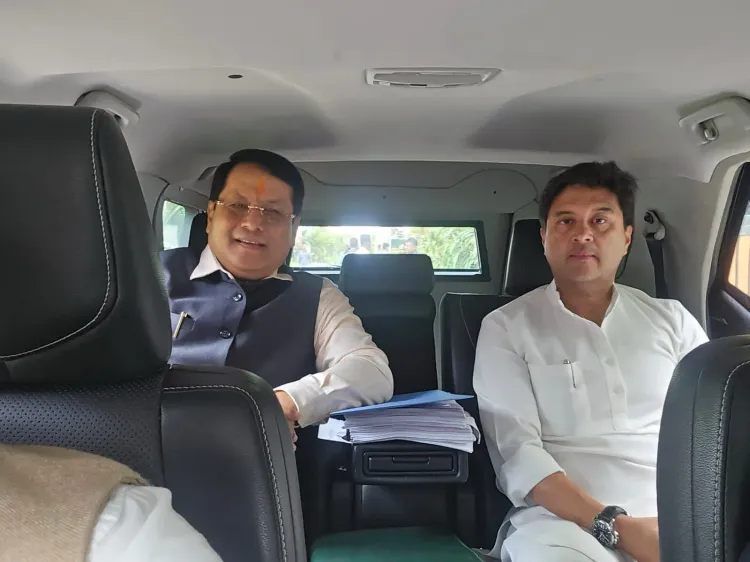
Scindia, Sonowal carpool to Cabinet meet in fuel-saving push
Synopsis
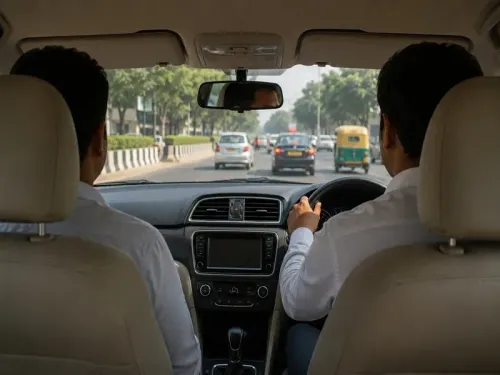
Two senior Union Ministers sharing a ride to Cabinet is a small act with a pointed message. Scindia and Sonowal's carpool on 24 June — the second such gesture by Scindia this month alone — is part of a visible pattern of senior officials across parties using carpools and electric vehicles to back PM Modi's fuel conservation push at the highest levels of government.
Key Takeaways
Jyotiraditya Scindia and Sarbananda Sonowal carpooled to the Cabinet meeting on 24 June in New Delhi.
Earlier this month, Scindia and Civil Aviation Minister Ram Mohan Naidu had also shared a vehicle to a Cabinet meeting.
Delhi ministers Parvesh Verma and Ravinder Indraj Singh travelled by electric bus to a PWD project inauguration.
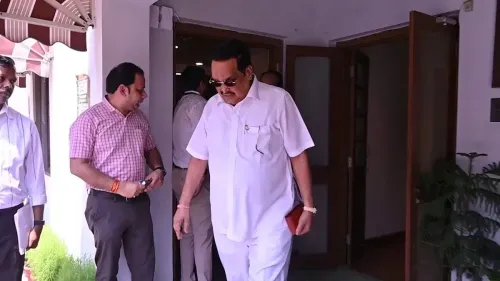
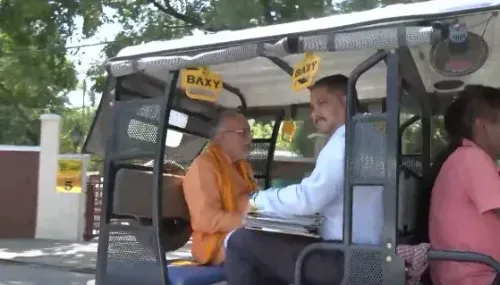
Uttar Pradesh Finance Minister Suresh Khanna commuted to the state Assembly in an e-rickshaw .
The gestures align with PM Modi's call to make fuel conservation a mass movement and reduce India's crude oil import dependence.
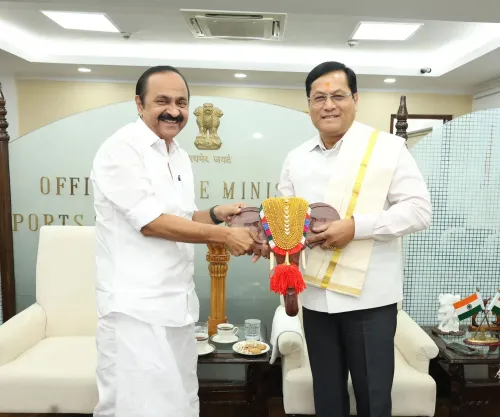
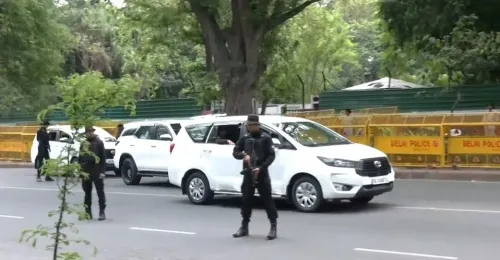
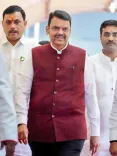
Union Ministers Jyotiraditya Scindia and Sarbananda Sonowal arrived together in a single vehicle at the Cabinet meeting on Wednesday, 24 June in New Delhi, putting into practice Prime Minister Narendra Modi's call for citizens and officials to conserve fuel. The joint commute by two senior Cabinet members — Scindia holds the Communications and Development of North Eastern Region portfolio, while Sonowal heads Ports, Shipping and Waterways — was seen as a deliberate signal on resource stewardship.
A Pattern, Not a One-Off
This is not the first time Scindia has led by example on this front. Earlier this month, he and Union Minister for Civil Aviation Ram Mohan Naidu had also shared a vehicle to reach a Cabinet meeting, underlining that the initiative reflects a sustained commitment rather than a symbolic one-time gesture. The back-to-back instances suggest a coordinated effort among senior ministers to normalise fuel-saving behaviour within government circles.
Fuel Conservation Across Governments
The trend extends beyond the Union Cabinet. Delhi ministers Parvesh Verma and Ravinder Indraj Singh travelled by electric bus to attend the inauguration of a Public Works Department (PWD) drainage project, opting for zero-emission public transport over official vehicles. In Uttar Pradesh, Finance Minister Suresh Khanna commuted to the state Assembly in an e-rickshaw alongside his staff, spotlighting electric mobility at the state level. Notably, these gestures span multiple parties and state governments, giving the conservation push a cross-political character.
Why It Matters
India remains one of the world's largest importers of crude oil, and vehicular fuel consumption accounts for a significant share of the country's energy bill and urban pollution load. Carpooling and the adoption of electric vehicles directly address both concerns — reducing import dependence and cutting tailpipe emissions. When senior public figures visibly embrace these habits, the behavioural signal to ordinary commuters is amplified beyond what any awareness campaign alone can achieve.
Modi's Push for a Mass Movement
Prime Minister Modi has repeatedly framed fuel conservation as a collective national responsibility, urging citizens to treat every drop of petrol and diesel as a resource worth protecting. His administration has positioned individual conservation choices as contributors to larger goals: shrinking the import bill, improving urban air quality, and meeting India's climate commitments. The ministerial carpooling and e-vehicle commutes are being positioned as ground-level extensions of that broader policy intent.
With the practice now visible across Union and state governments, observers will watch whether these gestures translate into measurable shifts in official vehicle usage policies in the months ahead.
Point of View
But its policy value depends on whether it nudges institutional change — revised official vehicle norms, mandatory EV quotas for government fleets, or measurable fuel-use reporting. India's crude import bill runs into hundreds of billions of dollars annually; a few shared rides, however symbolic, do not move that needle. What would is a binding policy framework for government vehicle electrification, which none of these gestures have been accompanied by. The cross-party spread of the trend is genuinely notable, but without structural follow-through, it risks remaining precisely what critics of such initiatives always say it is: optics.
NationPress
24 Jun 2026
Frequently Asked Questions
Why did Scindia and Sonowal carpool to the Cabinet meeting?
The two ministers shared a vehicle on 24 June to visibly support PM Modi's appeal for fuel conservation. The gesture was intended to encourage citizens, officials, and public representatives to adopt similar practices in daily life.
Is this the first time ministers have carpooled to a Cabinet meeting?
No. Earlier in June, Scindia and Civil Aviation Minister Ram Mohan Naidu had also arrived at a Cabinet meeting together in a single vehicle, making this the second such instance involving Scindia within the same month.
Which other leaders have adopted fuel-saving commuting practices?
Delhi ministers Parvesh Verma and Ravinder Indraj Singh took an electric bus to a PWD project inauguration, while Uttar Pradesh Finance Minister Suresh Khanna commuted to the state Assembly in an e-rickshaw alongside his staff.
What is PM Modi's broader position on fuel conservation?
PM Modi has consistently urged Indians to treat fuel conservation as a collective national responsibility, framing it as essential to reducing crude oil imports, lowering pollution, and meeting India's climate goals. He has called for conservation to become a mass movement.
Why does government-led fuel conservation matter for India?
India is among the world's largest crude oil importers, and vehicular emissions are a major source of urban air pollution. Senior officials visibly adopting carpooling and electric vehicles can amplify behavioural change more effectively than awareness campaigns alone.