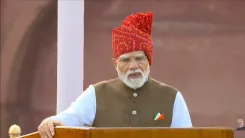
Karnataka CM launches AI Akshar Abhiyan, Coding Gurukul for schools
Synopsis
On Independence Day 2026, Karnataka's Chief Minister announced 'AI Akshar Abhiyan' and 'Coding Gurukul' to introduce AI education from Class 6, India's first government AI university in Bengaluru, upgrades to 1,000 schools, and 10,000 youth sanghas backed by Rs 1,000 crore annually.
Key Takeaways
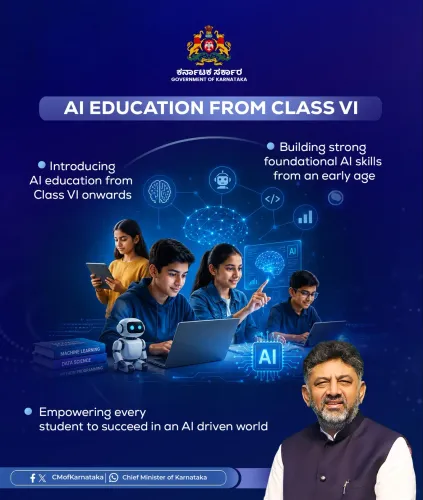
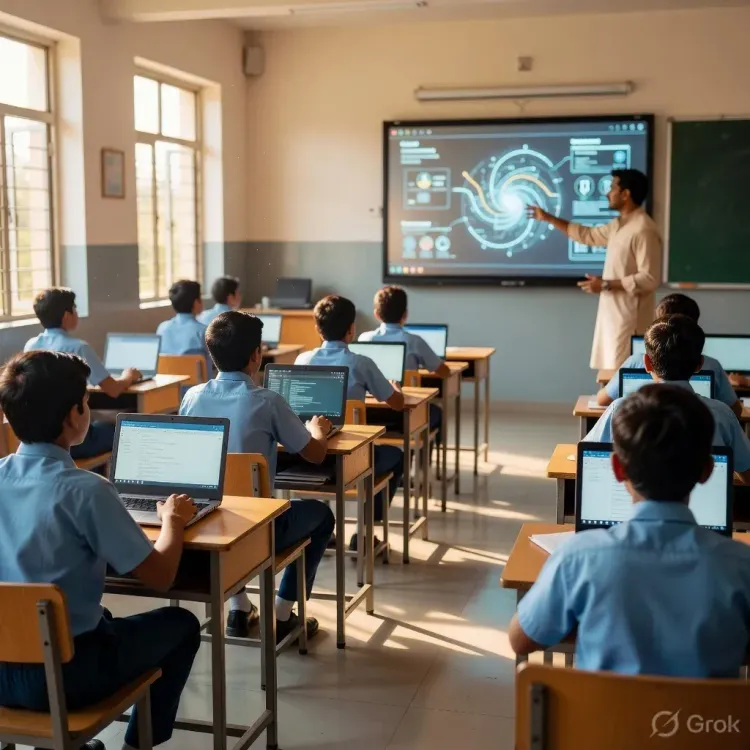
AI Akshar Abhiyan and Coding Gurukul will introduce AI and coding education in all Karnataka government schools from Class 6 .
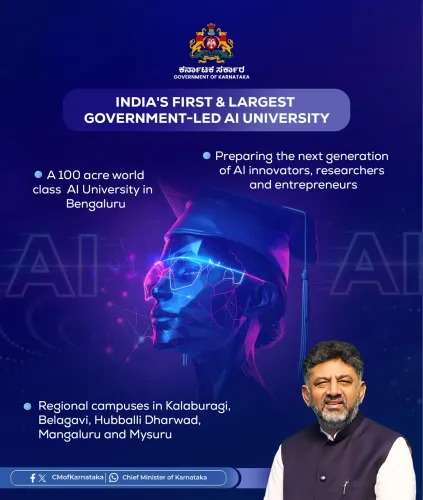
India's first government-owned AI University will be established in Bengaluru , with certification courses launching by January 2027 .
1,000 government schools will be upgraded to Karnataka Public Schools within two years , benefiting approximately 10 lakh students .
Over 6 lakh free bus passes have already been distributed to school and college students across the state.
10,000 Bharat Jodo Yuva Sanghas will be formed with an annual grant of Rs 10 lakh each , totalling Rs 1,000 crore per year .
The Yuva Nidhi scheme has disbursed Rs 1,154 crore to 3.72 lakh unemployed graduates and diploma holders.
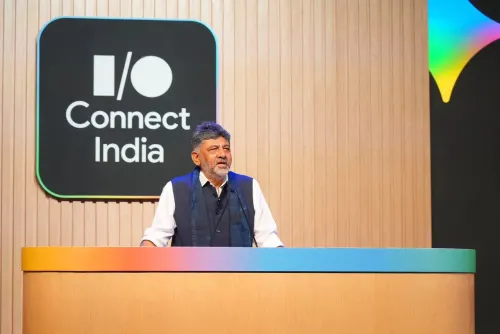
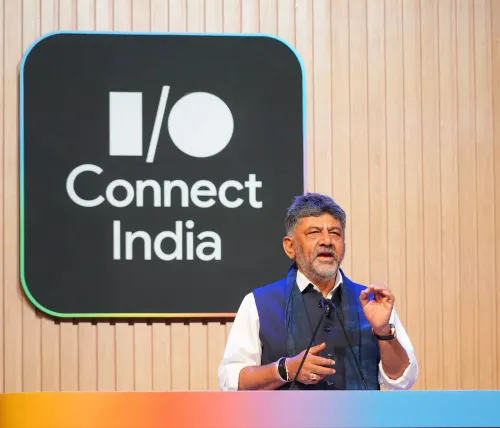
Starting from Class 6, every child in a Karnataka government school will learn artificial intelligence — not as an elective, not as an experiment, but as a declared state policy. On Independence Day, 15 August 2026, the Chief Minister's Office of Karnataka announced two landmark education programmes — 'AI Akshar Abhiyan' and 'Coding Gurukul' — positioning the state as the first in India to embed AI literacy into its mainstream school curriculum at this scale.
AI in every classroom, from Grade 6 upward
The announcement, made directly by the Chief Minister, frames the moment with unmistakable ambition: 'ಇದು ನಿಮ್ಮ ಯುಗ. ನವ ಯುಗ.' — 'This is your era. A new era.' Under AI Akshar Abhiyan, artificial intelligence education will be introduced across all government schools in Karnataka starting at the sixth standard. Free Coding Gurukul special classes will run alongside, ensuring every student — regardless of economic background — has access to coding and AI skill-building.
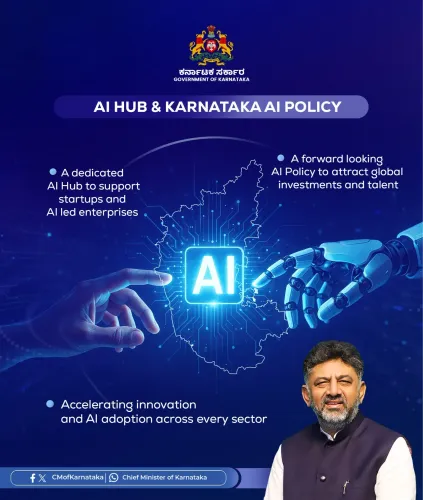
The capstone of the announcement is India's first government-owned AI University, to be established in Bengaluru. The institution will launch AI certification courses by January 2027, and a network of AI Hubs will be set up across the state to anchor the broader ecosystem.
1,000 Karnataka Public Schools in two years
The digital push sits inside a wider school transformation plan. 1,000 government schools will be upgraded to Karnataka Public Schools within two years, each offering a unified LKG-to-Class-12 campus with modern infrastructure, bilingual education, digital classrooms, vocational training, and student transport. The upgrade is projected to benefit approximately 10 lakh students. The state has already distributed more than 6 lakh free bus passes to school and college students, extending mobility to learners who previously faced access barriers.
10,000 Bharat Jodo Yuva Sanghas and a Rs 1,000-crore annual fund
Beyond the classroom, the announcement signals a parallel investment in youth civic identity. The government has moved to establish 10,000 Bharat Jodo Yuva Sanghas across Karnataka — youth collectives tasked with promoting constitutional values, communal harmony, sports, and cultural heritage, with a particular focus on surfacing rural leadership and talent. Each sangha will receive Rs 10 lakh annually, amounting to a total annual grant outlay of Rs 1,000 crore.
The Yuva Nidhi programme, Karnataka's unemployment support scheme, has already delivered Rs 1,154 crore in assistance to 3.72 lakh unemployed graduates and diploma holders — providing a financial floor while the skills pipeline is being built.
Karnataka's bet on the NEP framework and beyond
The announcements align with the National Education Policy 2020, which mandated computational and vocational skills from Grade 6, but Karnataka's package goes further — layering an AI university, a certification track, and a state-funded youth network on top of the central framework. Bengaluru's existing identity as India's technology capital gives the state a natural institutional base to recruit faculty, attract industry partnerships, and validate credentials for the new AI university.
The real test will be execution: whether the 1,000-school upgrade lands within the two-year window, whether the January 2027 AI certification launch holds, and whether the annual grants to youth sanghas translate into measurable outcomes for rural communities. Karnataka has placed a large, public bet — on Independence Day, no less. The scoreboard starts now.
Point of View
Pre-empting any central government claim to that space. By anchoring the AI university in Bengaluru and tying school-level coding to the NEP 2020 mandate, the government is building political capital in the tech sector while delivering visible welfare optics — free bus passes, Yuva Nidhi transfers — to its base. The Bharat Jodo Yuva Sanghas reveal an equally deliberate move: using a Rs 1,000-crore youth network to institutionalise civic identity and rural outreach ahead of the next electoral cycle. Whether the delivery architecture matches the announcement ambition will define the programme's legacy.
NationPress
15 Aug 2026
Frequently Asked Questions
What is AI Akshar Abhiyan in Karnataka?
'AI Akshar Abhiyan' is a Karnataka government programme announced on 15 August 2026 to introduce artificial intelligence education in all state government schools starting from Class 6, giving every student foundational AI literacy.
What is Coding Gurukul Karnataka?
'Coding Gurukul' is a free special-class programme launched alongside AI Akshar Abhiyan, designed to teach coding and AI skills to school students across Karnataka at no cost.
Where will India's first government AI university be set up?
India's first government-owned AI university will be established in Bengaluru , Karnataka, with AI certification courses expected to begin by January 2027.
What are Bharat Jodo Yuva Sanghas and how much funding will they get?
Bharat Jodo Yuva Sanghas are proposed youth groups focused on constitutional values, harmony, sports, and cultural promotion. Karnataka plans to form 10,000 such sanghas, each receiving Rs 10 lakh annually — a total state outlay of Rs 1,000 crore per year.
What is the Yuva Nidhi scheme and who benefits from it?
Yuva Nidhi is Karnataka's financial assistance programme for unemployed graduates and diploma holders. As of the latest update, it has provided Rs 1,154 crore in support to 3.72 lakh beneficiaries.