Goyal flags manufacturing as India's first pillar on Independence Day
Synopsis
On Independence Day 2026, Commerce Minister Piyush Goyal declared manufacturing the primary pillar of a 'Saptadhara' growth framework, reinforcing India's long-standing push to raise manufacturing's share of GDP and signalling a structured multi-sector economic vision ahead.
Key Takeaways
Union Commerce and Industry Minister Piyush Goyal posted on Independence Day, August 15, 2026 , naming manufacturing as the 'first strength' of a concept he called 'Saptadhara'.
The term Saptadhara ('seven streams') implies a broader, multi-pillar economic framework, of which manufacturing is the opening priority.
The post was accompanied by a video , suggesting a structured, possibly sequential communication campaign around the concept.
India's Make in India initiative, launched in 2014 , established the policy lineage that Goyal's framing builds upon.
Stakeholders in manufacturing industries and export sectors will watch for the remaining pillars and any linked scheme announcements in upcoming economic reviews.
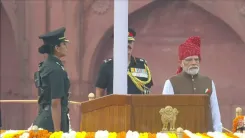
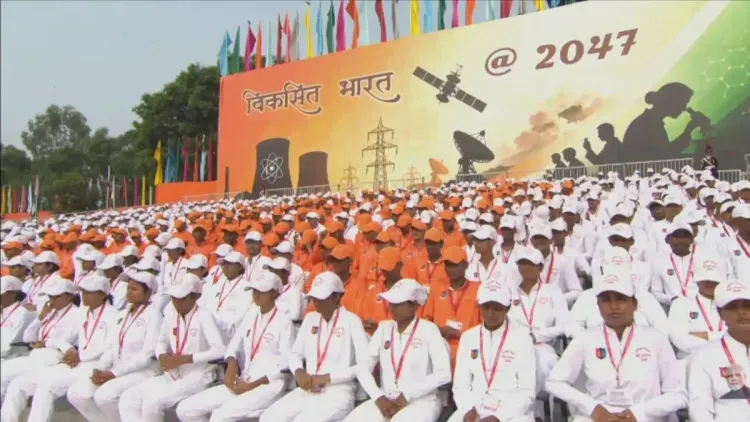
On India's 80th Independence Day, Saturday, August 15, 2026, Union Commerce and Industry Minister Piyush Goyal placed manufacturing at the centre of the nation's economic ambitions, describing it as the foremost force in what he termed a 'Saptadhara' — a seven-stream framework for India's growth.
Posting on X, Goyal wrote: 'सप्तधारा की पहली शक्ति मैन्युफैक्चरिंग' — 'Manufacturing: the first strength of the Saptadhara' — tagging the message to #IndiaIndependenceDay. The post accompanied a video, signalling a structured, possibly multi-part communication around the concept.
Manufacturing and the Independence Day tradition
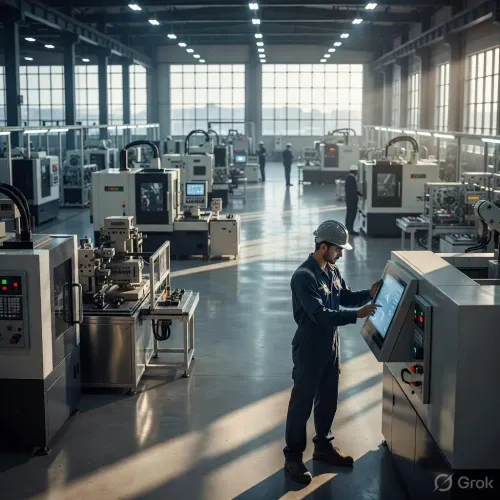
The choice of Independence Day for this message is deliberate and well-precedented. Indian governments have consistently used the occasion to frame manufacturing as the backbone of economic self-reliance — a throughline running from the Make in India initiative launched in 2014 to successive policy frameworks aimed at raising manufacturing's share of GDP. Goyal's framing follows that tradition, casting the sector not merely as an industry vertical but as a civilisational priority.
What 'Saptadhara' signals for industry
The term 'Saptadhara' — literally 'seven streams' — suggests a broader, structured economic vision of which manufacturing is only the opening chapter. While the full framework has not been independently detailed in established public records, positioning manufacturing as the first strength implies that further pillars are to follow, likely spanning sectors such as exports, services, infrastructure, or technology. Exporters and industrial stakeholders will be watching closely for the complete articulation.
The timing matters: any follow-up on manufacturing targets or linked schemes in upcoming economic reviews or parliamentary sessions will be read against this Independence Day framing as a policy signal from one of the government's most senior economic ministers.
Point of View
Numbered framework, not just a slogan. The sequential logic — 'first' implies second, third, and beyond — sets up a drip-release communication strategy that keeps the economic agenda in the news cycle well past Independence Day. Whether the framework translates into concrete policy targets or remains aspirational branding will be the real test.
NationPress
15 Aug 2026
Frequently Asked Questions
What is 'Saptadhara' that Piyush Goyal mentioned on Independence Day 2026?
'Saptadhara' translates from Sanskrit as 'seven streams' or 'seven pillars.' Goyal used the term on Independence Day 2026 to describe what appears to be a multi-sector economic vision for India, with manufacturing named as its first and foremost strength. The full framework has not yet been officially detailed in public records.
Why did Piyush Goyal highlight manufacturing on Independence Day?
Independence Day is a traditional platform for Indian governments to reaffirm economic priorities. Manufacturing has been a central theme since the Make in India initiative launched in 2014, and Goyal's post continues that tradition by positioning industrial growth as foundational to India's self-reliance and global integration.
What is Make in India and how does it relate to Goyal's post?
Make in India is a flagship government initiative launched in 2014 to increase the share of manufacturing in India's GDP by attracting investment and building industrial infrastructure. Goyal's framing of manufacturing as the 'first strength' of a new framework builds directly on the policy lineage established by that initiative.
What should industry and exporters watch for after Goyal's Independence Day post?
Stakeholders in manufacturing and export sectors should watch for the articulation of the remaining pillars of the 'Saptadhara' framework, as well as any follow-up announcements on manufacturing targets or linked schemes in upcoming economic reviews or parliamentary sessions.
Who is Piyush Goyal?
Piyush Goyal is India's Union Minister of Commerce and Industry. He is also a senior BJP leader and serves as the Leader of the House in the Rajya Sabha, making him one of the government's most prominent voices on economic and trade policy.