Karnataka CMO salutes Chennamma, Abbakka, Obavva
Synopsis
The Chief Minister's Office of Karnataka paid tribute on 17 November 2026 to warrior queens Kittur Chennamma, Rani Abbakka, and Onake Obavva, honouring their centuries-spanning resistance and calling their sacrifice an eternal guiding light for Kannadigas.
Key Takeaways
The Chief Minister's Office of Karnataka posted a tribute on 17 November 2026 honouring three iconic women warriors of Karnataka.
Rani Abbakka of Ullal resisted Portuguese colonial expansion on the Karnataka coast in the 16th century .
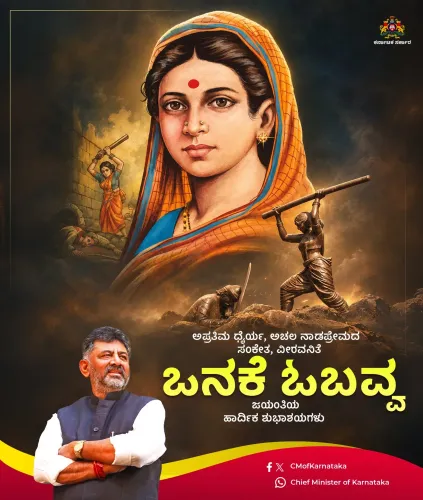
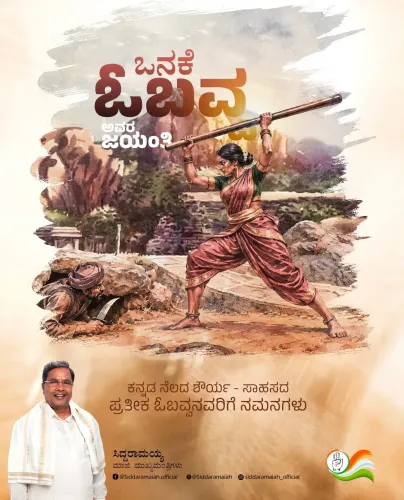
Onake Obavva single-handedly defended Chitradurga Fort against Hyder Ali's troops in the 18th century using only a pestle.
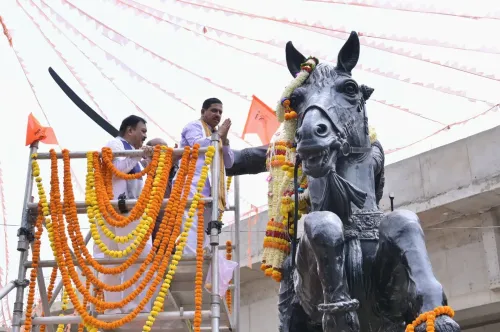
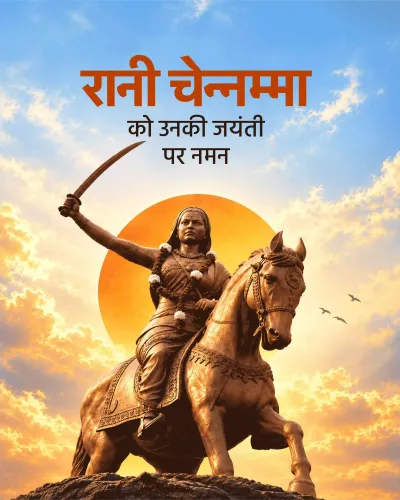
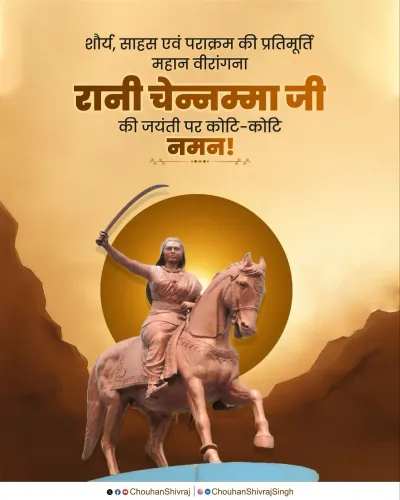
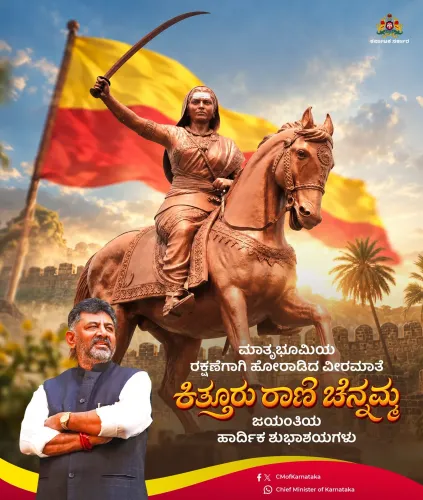
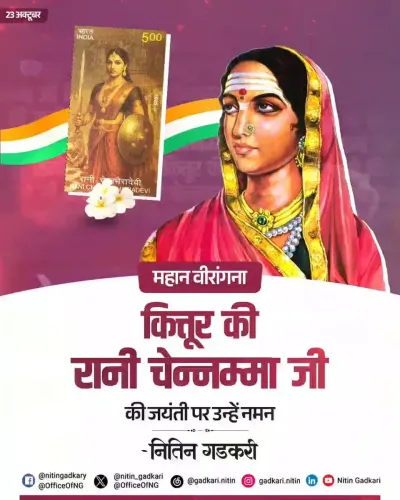
Kittur Chennamma led an armed revolt against the British East India Company in 1824 , predating the 1857 uprising by over 30 years.
The post calls the three women's courage and sacrifice an eternal daari deepa (guiding lamp) for Kannadigas.
Karnataka state communications regularly invoke these figures to reinforce regional identity and document local martial history.
Three women who made empires tremble — and Karnataka's Chief Minister's Office wants every Kannadiga to remember why. On Tuesday, 17 November 2026, the Chief Minister's Office of Karnataka posted a stirring tribute on X honouring Kittur Chennamma, Rani Abbakka, and Onake Obavva — three warrior queens whose acts of defiance against colonial and foreign forces remain among the most vivid chapters in the state's history.
The post, written in Kannada, declares: 'Shatrugala edeyalli naduka huttisi, karunadina shakti enandu jagattige saridha veera mateayara sahasa-gathe sada amara' — 'The epic of brave mothers who struck fear in the hearts of enemies and proclaimed the strength of this land to the world shall live forever.' It names the three women explicitly, calling their courage and sacrifice 'daari deepa' — a guiding lamp — for Kannadigas for all time.Three warriors, three centuries of resistance
Rani Abbakka was the first to hold the line. The 16th-century ruler of Ullal in coastal Karnataka repeatedly repelled Portuguese naval forces seeking control of the southwestern coastline, earning the title Abhaya Rani — the fearless queen. Her sustained resistance over decades made her a foundational figure in India's pre-colonial story of defiance. Two centuries later, Onake Obavva became legend in a single night. During the 18th century, when the forces of Hyder Ali probed the walls of Chitradurga Fort for a weakness, Obavva — the wife of a watchman — discovered an enemy soldier squeezing through a small gap known as a kindi. Armed with nothing but a pestle (the onake that became her name), she held the breach alone, killing soldiers one by one until help could arrive. The story of Chitradurga's kindi is taught across Karnataka to this day. Kittur Chennamma took on the most formidable adversary of them all. In 1824, the queen of Kittur in what is now Belagavi district led an armed uprising against the British East India Company after they moved to annex her kingdom under the Doctrine of Lapse. Her forces defeated a Company contingent and briefly captured British officials — a rare reversal in an era of relentless colonial expansion. Though she was eventually imprisoned at Bailhongal Fort, where she died in 1829, Chennamma's revolt predated the more widely known 1857 uprising by over three decades.Karnataka's tradition of honouring its women warriors
The CMO's tribute fits a pattern of state communications that consistently invoke these figures to reinforce Karnataka's distinct regional identity. All three women operate as cultural touchstones — their names appear in school curricula, public statues, and civic ceremonies across the state. Karnataka Rajyotsava, celebrated every 1 November, is the most prominent occasion for such tributes, though the government regularly amplifies their stories throughout the year. The choice to group Abbakka, Obavva, and Chennamma together underlines a deliberate narrative: that Karnataka's resistance to external domination spans centuries, cuts across geography — coast, plateau, northern frontier — and was powered significantly by women. That a government Twitter account can summon six centuries of history in two Kannada sentences says everything about how deeply these names are woven into the state's consciousness. The guiding lamp, as the CMO puts it, has never gone out.Point of View
Women-led martial heritage that cuts across the Congress-BJP political divide. By grouping a coastal queen, a plateau defender, and a northern frontier rebel in a single post, the government reinforces a pan-Karnataka narrative that transcends caste and regional sub-identities. In a state where linguistic pride and regional distinctiveness are powerful electoral currents, invoking Abbakka, Obavva, and Chennamma together is both cultural affirmation and soft political signalling. The long-term policy question is whether such tributes translate into structural recognition — curriculum depth, memorial funding, or formal heritage designations.
NationPress
17 Nov 2026
Frequently Asked Questions
Who was Kittur Chennamma and why is she famous?
Kittur Chennamma was the queen of Kittur in present-day Belagavi district who led an armed revolt against the British East India Company in 1824, defeating a Company contingent before being captured and imprisoned. Her uprising predated the 1857 revolt by over three decades.
Who was Rani Abbakka of Ullal?
Rani Abbakka was a 16th-century ruler of Ullal on the Karnataka coast who repeatedly repelled Portuguese naval forces seeking control of the region, earning her the title Abhaya Rani, meaning the fearless queen.
What is the story of Onake Obavva at Chitradurga Fort?
Onake Obavva was an 18th-century woman who, armed only with a pestle (onake), single-handedly held a small breach in Chitradurga Fort against Hyder Ali's infiltrating soldiers until reinforcements arrived, becoming one of Karnataka's most celebrated local heroines.
Why does the Karnataka government tribute these three women warriors together?
Karnataka's official communications group Abbakka, Obavva, and Chennamma to highlight that the state's resistance to colonial and external forces spans six centuries, different geographies, and was significantly led by women, reinforcing a cohesive Kannadiga regional identity.
What does 'daari deepa' mean in the Karnataka CMO's post?
'Daari deepa' is a Kannada phrase meaning 'guiding lamp' or 'beacon on the path.' The CMO used it to describe the three warrior queens' sacrifice as an eternal source of inspiration for Kannadigas.