Karnataka CM's Office Marks World Fisheries Day 2026
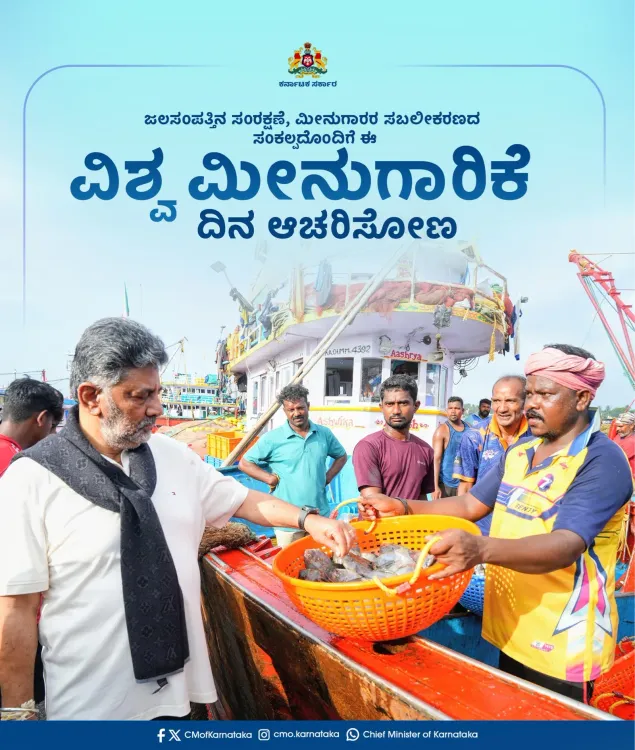
Synopsis
On World Fisheries Day, 21 November 2026, the Chief Minister's Office of Karnataka called for honouring the fishing community's contributions and pledged to advance both fisher economic empowerment and aquatic resource conservation in the state.
Key Takeaways
The Chief Minister's Office of Karnataka posted a World Fisheries Day message on 21 November 2026 .
World Fisheries Day is observed annually on 21 November to highlight fisheries' role in food security and sustainable resource management.
The CMO called for respecting the labour and contribution of the fishing community and prioritising conservation of aquatic wealth.
Karnataka's fisheries sector spans both a significant Arabian Sea coastline and extensive inland water bodies.
The Pradhan Mantri Matsya Sampada Yojana (PMMSY) , launched in 2020 , is the central scheme driving fish production growth and fisher income improvement across states including Karnataka.
The CMO framed economic empowerment and aquatic conservation as complementary — not competing — priorities.
On World Fisheries Day, 21 November 2026, the Chief Minister's Office of Karnataka called on citizens to honour the labour and contributions of the fishing community while renewing the state's commitment to sustainable aquatic resource management and the economic empowerment of fishers.
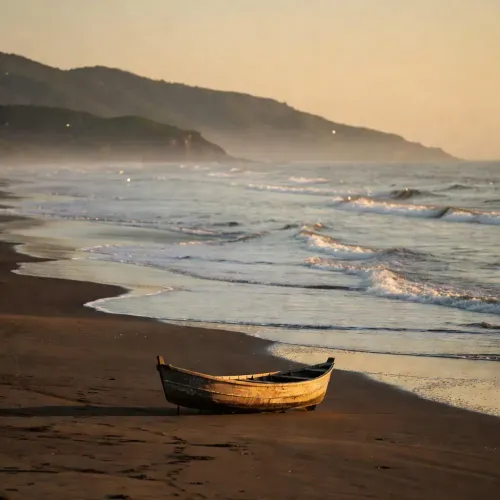
The Kannada-language post, shared on the official CMO account, reads: 'ಮೀನುಗಾರ ಸಮುದಾಯದ ಶ್ರಮ ಮತ್ತು ಕೊಡುಗೆಯನ್ನು ಗೌರವದಿಂದ ಸ್ಮರಿಸೋಣ' — 'Let us respectfully acknowledge the toil and contribution of the fishing community.' The message pairs that tribute with a call to prioritise the conservation of aquatic wealth alongside efforts to economically strengthen the sector.
Why November 21 matters for India's fishers
World Fisheries Day, observed every year on 21 November, was established by fishing communities worldwide to spotlight the centrality of fisheries to food security, rural livelihoods and the urgent need for sustainable stewardship of rivers, lakes and coastal waters. For Karnataka — a state with both a significant coastline along the Arabian Sea and rich inland fisheries across its river systems — the day carries concrete economic weight. Fishing is the primary livelihood for hundreds of thousands of families across the state's coastal districts and interior water bodies.
The national push for a blue economy
Karnataka's observance fits within a broader national pattern. The Pradhan Mantri Matsya Sampada Yojana (PMMSY), launched in 2020, is the flagship central scheme aimed at boosting fish production, modernising the supply chain and raising fisher incomes across both marine and inland sectors in states including Karnataka. Indian states routinely use World Fisheries Day to reinforce alignment between state welfare programmes and the Centre's blue economy goals — increasing output while simultaneously addressing the twin threats of overfishing and habitat degradation.
Conservation alongside livelihoods — the balancing act
The CMO's framing is deliberate: economic empowerment and resource conservation are presented not as competing goals but as inseparable ones. That balance is the central policy challenge for coastal and riverine states. Overfishing, pollution and climate-linked shifts in fish stocks threaten the very livelihoods that fisheries policy seeks to protect. Placing aquatic conservation on equal footing with income support signals an intent to pursue durable, long-cycle gains rather than short-term yield boosts.
What Karnataka does next — in its state budget allocations for fisheries or through coordination with central agencies on sustainable fishing regulations — will determine how much of this World Fisheries Day pledge translates into policy action on the water.
Point of View
But the real test is budget allocation and regulatory follow-through. Karnataka's dual emphasis on fisher welfare and aquatic conservation reflects the PMMSY framework's core logic — sustainable yield over short-term gain — which is increasingly the dominant national position. Watch whether this rhetoric converts into specific state-level guidelines on fishing restrictions or enhanced welfare payouts in the upcoming Karnataka budget cycle.
NationPress
21 Nov 2026
Frequently Asked Questions
When is World Fisheries Day celebrated?
World Fisheries Day is observed every year on 21 November to highlight the importance of fisheries for food security, livelihoods and the sustainable management of aquatic resources.
Why did Karnataka's CMO post on World Fisheries Day 2026?
The Chief Minister's Office of Karnataka marked World Fisheries Day on 21 November 2026 by honouring the fishing community's contributions and reaffirming the state's commitment to fisher economic empowerment and aquatic resource conservation.
What is the Pradhan Mantri Matsya Sampada Yojana?
The Pradhan Mantri Matsya Sampada Yojana (PMMSY) is a central government scheme launched in 2020 to boost fish production, modernise the fisheries value chain and improve incomes for both marine and inland fishers across India, including Karnataka.
What is Karnataka's role in India's fisheries sector?
Karnataka has both a substantial coastline along the Arabian Sea and extensive inland water bodies, making fisheries a significant livelihood source for hundreds of thousands of families across the state's coastal and interior regions.
What does India's blue economy push mean for fishing communities?
India's blue economy strategy aims to increase fish production and exports while ensuring sustainable stewardship of aquatic resources — requiring states like Karnataka to balance fisher income support with policies that prevent overfishing and habitat degradation.