Karnataka CMO pledges stronger dairy farmer support
Synopsis
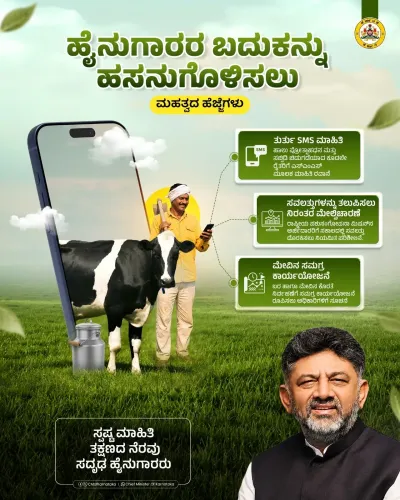
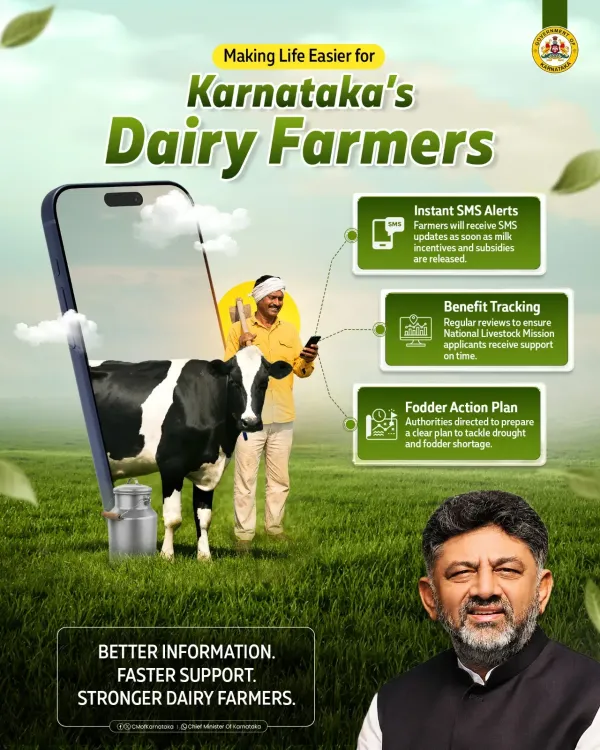
The Chief Minister's Office of Karnataka on 24 June 2026 outlined a multi-pronged push to strengthen dairy farmer support, including instant SMS alerts on subsidies, timely beneficiary assistance, and proactive drought preparedness measures aimed at improving rural livestock livelihoods.
Key Takeaways
The Chief Minister's Office of Karnataka announced a renewed commitment to animal husbandry and dairy farmer welfare on 24 June 2026 .
The government plans to deliver instant SMS alerts to farmers on available incentives and subsidies.
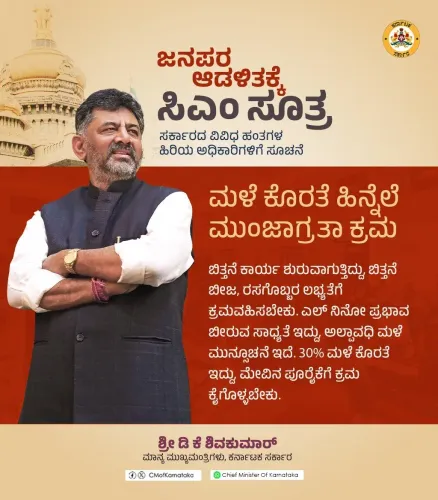
Measures include timely beneficiary support and proactive drought preparedness for livestock keepers.
The Karnataka Milk Federation (KMF) and the Department of Animal Husbandry and Veterinary Services are the key institutional pillars behind state dairy policy.
Karnataka's northern and central districts face recurring drought risk, making livestock support a critical rural income buffer for smallholder farmers.
The initiative aligns with the national Rashtriya Gokul Mission and a broader Indian trend of digitising agricultural subsidy delivery.
The Chief Minister's Office of Karnataka announced on Wednesday, 24 June 2026 that the state government remains committed to strengthening the animal husbandry sector and improving livelihoods for dairy farmers across Karnataka, outlining a multi-pronged approach covering digital alerts, beneficiary support, and drought preparedness.
Context
The announcement describes a governance push aimed at making state support more responsive to those in the dairy and livestock sector. Key elements include instant SMS alerts on incentives and subsidies, timely beneficiary assistance, and proactive measures for drought preparedness — with the stated goal of ensuring farmers receive 'the information and assistance they need, when they need it.'
The post frames the effort as a systemic improvement: 'More responsive systems. Better farmer support. Stronger dairy livelihoods.' — signalling a sustained administrative focus rather than a one-off intervention.
Policy Backdrop
Karnataka's animal husbandry sector is anchored by the Karnataka Milk Federation (KMF), the apex cooperative body that manages dairy development and the Nandini brand across the state's milk unions. The Department of Animal Husbandry and Veterinary Services, Karnataka oversees livestock health, breeding programmes, and farmer support schemes for dairy and poultry.
At the national level, the Rashtriya Gokul Mission, launched in 2014, supports indigenous cattle development and is implemented through state animal husbandry departments, including Karnataka's. State budgets since the mid-2010s have progressively expanded incentives for milk producers through KMF and district-level offices.
Karnataka has also periodically issued drought relief for livestock — including fodder subsidies and veterinary camps — during monsoon-deficient years, particularly in its northern and central districts which face recurrent rainfall stress.
Stakeholders and Impact
The primary beneficiaries are dairy farmers and livestock keepers across Karnataka, a constituency that contributes significantly to smallholder rural incomes. Livestock earnings often serve as a critical buffer for farm households during crop failures or drought seasons.
Indian states have progressively digitised subsidy and extension services in agriculture and allied sectors to reduce leakages and improve delivery timelines. Karnataka's emphasis on an SMS-based alert system for subsidies and incentives fits within this broader national pattern of using mobile technology to bridge the information gap between government schemes and rural beneficiaries.
What's Next
Attention will now turn to the operational rollout details of the SMS alert system and whether the state will announce supplementary allocations for animal husbandry in an upcoming budget or monsoon preparedness plan. The mention of drought preparedness is particularly significant given the vulnerability of Karnataka's northern and central districts to erratic monsoons.
If implemented at scale, a responsive digital subsidy-alert infrastructure could set a replicable model for other states seeking to strengthen livestock-linked rural income support.
Point of View
The emphasis on proactive drought preparedness for livestock is politically and practically significant. The SMS-alert mechanism, if operationalised at scale, would mark a meaningful step in Karnataka's digitisation of rural welfare delivery — a space where implementation gaps have historically undermined well-designed schemes. The broader arc here is a state government seeking to consolidate its rural support base by demonstrating tangible, tech-enabled responsiveness to a constituency — dairy farmers — that cuts across caste and district lines.
NationPress
24 Jun 2026
Frequently Asked Questions
What did the Karnataka government announce for dairy farmers in June 2026?
The Chief Minister's Office of Karnataka announced on 24 June 2026 that the state would provide instant SMS alerts on subsidies and incentives, timely beneficiary support, and proactive drought preparedness measures to strengthen dairy farmer livelihoods.
How will Karnataka farmers receive information about subsidies?
The Karnataka government has outlined a system of instant SMS alerts to notify dairy farmers and livestock keepers about available incentives and subsidies, aiming to reduce information delays and improve scheme uptake.
What is the Karnataka Milk Federation and its role in dairy welfare?
The Karnataka Milk Federation (KMF) is the apex cooperative body overseeing dairy development across the state and managing the Nandini brand. It works alongside the Department of Animal Husbandry to channel incentives and support to milk producers.
Is Karnataka prepared for drought impact on livestock?
Yes, the CMO's announcement specifically mentions proactive drought preparedness as a pillar of the state's animal husbandry support. Karnataka has a history of issuing fodder subsidies and veterinary relief during monsoon-deficient years, particularly in its northern and central districts.
What is the Rashtriya Gokul Mission and does it apply to Karnataka?
The Rashtriya Gokul Mission is a central government scheme launched in 2014 to support indigenous cattle development. Karnataka's Department of Animal Husbandry and Veterinary Services implements it at the state level as part of broader livestock welfare efforts.