Karnataka flags E20 over-blending: ethanol at 31% in petrol samples, state writes to Puri
Synopsis
Karnataka's own NABL-accredited tests found 11 of 14 petrol samples exceeding the E20 limit — one hitting 31.2% ethanol — prompting the state to formally write to Union Minister Hardeep Singh Puri demanding consumer-protection reforms, a compensation fund, and a rollback of Central notifications that extended fuel-dispenser verification cycles from 12 to 24 months.
Key Takeaways
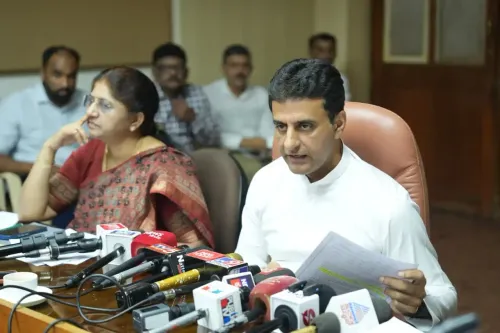
Karnataka Food and Civil Supplies Minister Rizwan Arshad wrote to Union Minister Hardeep Singh Puri on 18 November 2026 urging a review of the E20 ethanol-blending programme .
Of 14 petrol samples sent to NABL-accredited independent laboratories, 11 exceeded the 20% ethanol limit; one sample recorded 31.2% ethanol.
Oil marketing companies' lab reports for 42 of 63 inspected outlets failed to mention actual ethanol content, with OMCs citing RON as the compliance benchmark.
Karnataka's Legal Metrology survey found 2,618 of 3,071 nozzles tested showed accuracy deviations; 101 outlets were booked and fined ₹6.66 lakh .
The state has refused to implement two Central notifications extending dispenser verification from 12 to 24 months and opening verification to private centres.
Karnataka has proposed a dedicated E20 compensation fund and mandatory ethanol-content disclosure on every fuel receipt and pump.
The Karnataka government has formally urged the Centre to review its E20 ethanol-blending programme, citing independent laboratory tests that found petrol samples from across the state containing ethanol levels well above the prescribed 20 per cent limit — with one sample recording as high as 31.2 per cent. The findings were communicated in a letter to Union Minister for Petroleum and Natural Gas Hardeep Singh Puri, written by Karnataka Food and Civil Supplies Minister Rizwan Arshad on 18 November 2026.
What the Tests Found
State authorities inspected 63 petrol retail outlets across Karnataka belonging to Indian Oil Corporation Limited (IOCL), Bharat Petroleum Corporation Limited (BPCL), Hindustan Petroleum Corporation Limited (HPCL), and Mangalore Refinery and Petrochemicals Limited (MRPL) in September 2026. Of the 63 samples collected, only 42 laboratory reports were received from the oil marketing companies (OMCs) — and notably, none of those reports mentioned the actual percentage of ethanol content.
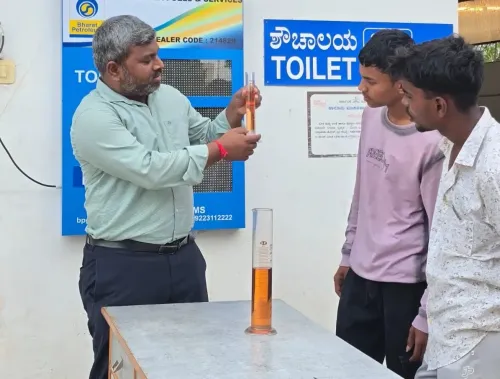
The state government subsequently sent fresh samples to independent laboratories accredited by the National Accreditation Board for Testing and Calibration Laboratories (NABL). Of the 14 samples tested, 11 were found to contain more than 20 per cent ethanol. Ethanol content across the tested batch ranged from 13.5 per cent to 31.2 per cent, indicating considerable variation in blending practices.
Minister Arshad's Concerns
Arshad was careful to frame Karnataka's position as one of oversight rather than opposition: the state, he said, was not against ethanol blending as a policy, but was alarmed by over-blending and its potential impact on consumers and vehicles. He said the government had received numerous complaints from motorists over recent months covering reduced mileage, rough engine performance, and damage to older vehicles, as well as allegations of receiving less fuel than paid for.
He pushed back against oil marketing companies' assertion that Research Octane Number (RON) was the sole compliance parameter, arguing that their own responses acknowledged that IS 17021 mandated measurement of actual ethanol content in blended petrol. Arshad also rejected claims that state officers had not followed prescribed collection procedures, maintaining that authorised inspectors had sealed counterpart samples on the spot in accordance with the Motor Spirit and High Speed Diesel (Regulation of Supply, Distribution and Prevention of Malpractices) Order, 2005.
Concerns extended to premium petrol as well, with tests reportedly finding high ethanol content in grades sold at prices ranging from ₹120 to ₹140 per litre.
Five Measures Karnataka Has Sought
Arshad urged the Petroleum Ministry to adopt five consumer-protection steps. First, every retail outlet should prominently display the actual ethanol percentage of each petrol grade. Second, every fuel purchase receipt should mention the ethanol content. Third, E10 and ethanol-free petrol should be made available alongside E20 at affordable prices until India's vehicle fleet is fully compatible with higher blends. Fourth, an independent random-testing mechanism using NABL-accredited laboratories should be introduced, with each test report explicitly stating ethanol content. Fifth, a dedicated E20 compensation fund should be created to reimburse consumers whose vehicles suffer damage from petrol exceeding the prescribed ethanol limit, settled through a simple, time-bound process based on certification from authorised service centres.
Fuel Quantity and Dispenser Verification
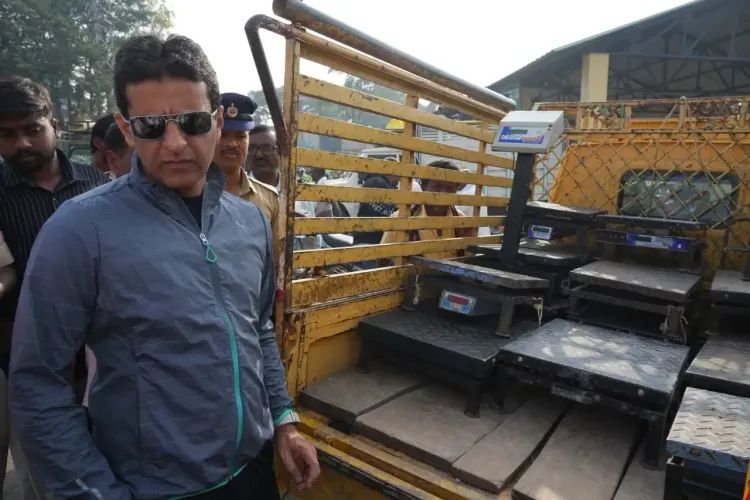
Beyond fuel quality, Arshad raised a parallel concern over quantity accuracy at retail pumps. A statewide inspection by Karnataka's Department of Legal Metrology covered 805 of the state's 5,946 retail outlets. Of the 3,071 nozzles tested, 2,618 showed deviations from rated accuracy. As many as 101 outlets were booked for dispensing fuel beyond the maximum permissible error, with fines of ₹6.66 lakh collected. The survey also found that even compliant nozzles were approaching tolerance thresholds within nine to 11 months of use.
The minister opposed two recent Central notifications on this front. Notification G.S.R. 905(E), dated 18 December 2025, extended the mandatory verification interval for petrol and diesel dispensers from 12 months to 24 months. Notification G.S.R. 346(E), dated 8 May 2026, allowed private test centres to verify fuel dispensers — a function previously reserved for government inspectors. Arshad argued that a 24-month cycle could leave consumers exposed to inaccurate dispensing for prolonged periods. Karnataka has decided not to implement either notification and will continue annual verification through government inspectors. A separate letter has also been sent to Union Minister for Consumer Affairs Pralhad Joshi seeking reconsideration.
What Happens Next
Arshad called for structured discussions between the Centre and states to restore public confidence, arguing that the transition to higher ethanol blends must be supported by infrastructure upgrades — covering dispensing units, storage, and testing facilities — and that ordinary citizens should not bear the financial burden of the rollout. The letters to both Puri and Joshi represent a formal escalation that now awaits a response from the Union government.
Point of View
And one hits 31.2%, the blending quality-control chain at the OMC level clearly has gaps. The oil companies' insistence on RON as the sole compliance metric, while IS 17021 explicitly mandates ethanol-content measurement, looks like a regulatory arbitrage that has gone unchallenged too long. The dispenser-verification dispute adds a second front: extending the check cycle to 24 months when Karnataka's own data show nozzles drifting toward tolerance limits in under a year is a consumer-protection regression dressed up as administrative reform. The Centre's response — or silence — will signal how seriously it treats states as accountability partners in its own energy transition.
NationPress
18 Nov 2026
Frequently Asked Questions
What did Karnataka's tests find about E20 petrol ethanol content?
Independent NABL-accredited laboratory tests commissioned by the Karnataka government found that 11 of 14 petrol samples exceeded the prescribed 20% ethanol limit. Ethanol content across samples ranged from 13.5% to 31.2%, with the highest reading more than 50% above the mandated ceiling.
Why is Karnataka writing to Union Minister Hardeep Singh Puri?
Karnataka Food and Civil Supplies Minister Rizwan Arshad has written to Puri to urge a review of the E20 programme's implementation, citing over-blending, consumer complaints about vehicle damage and mileage loss, and the failure of oil marketing companies to disclose actual ethanol percentages in their compliance reports.
What five consumer-protection measures has Karnataka proposed?
Karnataka has sought: mandatory display of ethanol percentage at every pump; ethanol content on every fuel receipt; availability of E10 and ethanol-free petrol alongside E20 at affordable prices; independent NABL-based random testing with ethanol content stated in every report; and a dedicated E20 compensation fund for consumers whose vehicles are damaged by over-blended fuel.
Why is Karnataka refusing to implement the two Central notifications on fuel dispensers?
Karnataka says notification G.S.R. 905(E) of 18 December 2025, which extended mandatory dispenser verification from 12 to 24 months, poses a consumer risk — the state's own survey found nozzles approaching tolerance limits within nine to 11 months. It also opposes G.S.R. 346(E) of 8 May 2026, which allows private centres to conduct verifications previously handled by government inspectors. The state will continue annual verification through its own inspectors.
How significant is the fuel dispenser inaccuracy problem found in Karnataka?
Karnataka's Department of Legal Metrology tested 3,071 nozzles across 805 retail outlets and found 2,618 showed deviations from rated accuracy. Of those, 101 outlets were dispensing fuel beyond the maximum permissible error and were booked; fines of ₹6.66 lakh were collected. Officials say the data underscore the case against extending the verification cycle to 24 months.