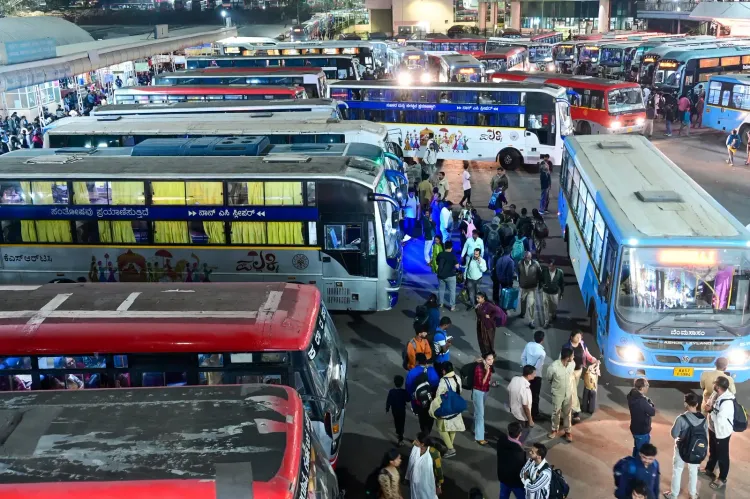
Karnataka hikes RTC bus fares by ₹9–₹68 ahead of Diwali, effective midnight
Synopsis
Karnataka has hiked bus fares across all four state RTCs — BMTC, KSRTC, NWKRTC, and KKRTC — just days before Diwali, with increases ranging from ₹9 to ₹68. The revision, the first in a decade, comes as the corporations bleed ₹2,000 crore annually and carry ₹9,912 crore in total government liabilities — a fiscal reckoning that free schemes like Shakti have significantly deepened.
Key Takeaways
Karnataka Transport Minister Byrathi Suresh announced a bus fare hike across BMTC, KSRTC, NWKRTC, and KKRTC on 4 November 2026 , effective from midnight.
Fare increases range from ₹9 to ₹68 for general transport services; BMTC minimum fare rises from ₹6 to ₹10 .
The combined outstanding liabilities of the four corporations stand at ₹7,719 crore ; total government liabilities are ₹9,912 crore .
The corporations post an annual deficit of approximately ₹2,000 crore , spending ₹16,000 crore against revenue of ₹14,000 crore .
The Shakti scheme for free women's travel costs the government around ₹5,000 crore per year .
Even after the hike, none of the four RTCs will turn profitable — losses are expected to reduce by only about 25 per cent .
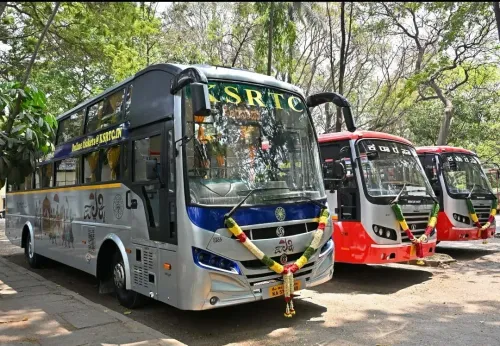
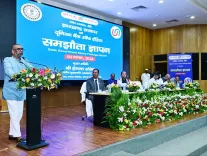
Karnataka Transport Minister Byrathi Suresh on Wednesday, 4 November 2026, announced a fare revision across all four state-run road transport corporations — the Bengaluru Metropolitan Transport Corporation (BMTC), the Karnataka State Road Transport Corporation (KSRTC), the North West Karnataka Road Transport Corporation (NWKRTC), and the Kalyana Karnataka Road Transport Corporation (KKRTC) — with the revised fares taking effect from midnight. The increase, ranging from ₹9 to ₹68 depending on distance and service category, comes just ahead of the Diwali festival, when inter-city and intra-city passenger movement is expected to surge across the state.
Fare Changes by Service Category
For BMTC city buses, the minimum fare rises from ₹6 to ₹10, while the maximum fare increases from ₹35 to ₹45. Passengers travelling up to two kilometres will pay ₹4 more; those covering two to four kilometres face an additional ₹6; and the ceiling increase for longer distances is capped at ₹12.
On Vayu Vajra airport services, fares go up by ₹5 to ₹15 based on distance — ₹5 more for journeys up to six kilometres, ₹10 for the six-to-18 kilometre band, and a maximum of ₹15 beyond that. For air-conditioned buses, the minimum fare increase is fixed between ₹10 and ₹15, with the maximum fare for a 60-kilometre journey moving from ₹75 to ₹90. The fare for luxury buses between Majestic and Kempegowda International Airport has been revised from ₹405 to ₹425.
For general transport services — which carry the bulk of daily commuters — the increase ranges from ₹9 to ₹68 for longer routes. Vega Doota services see a maximum increase of ₹18 for 10 stages. The KSRTC network operates around 150 fare stages in total.
Financial Crisis Driving the Revision
Minister Suresh cited mounting financial liabilities as the primary driver. The combined outstanding liabilities of the four corporations stand at ₹7,719 crore, including loans of ₹2,192 crore, while the state government's total liabilities towards the four corporations amount to ₹9,912 crore. Together, the corporations spend approximately ₹16,000 crore annually but generate only around ₹14,000 crore in revenue — an annual deficit of roughly ₹2,000 crore that has forced them to borrow to meet day-to-day expenditure.
The four corporations collectively employ around 1,03,600 staff members. The government has recently increased employee salaries, while costs for tyres, fuel, and maintenance have also risen sharply. Suresh noted that fares had been revised only once in the past decade, even as fuel prices escalated multiple times. Around 80 per cent of revenue generated by the transport corporations currently goes toward diesel costs and salaries alone.
Shakti Scheme and Free Travel Burden
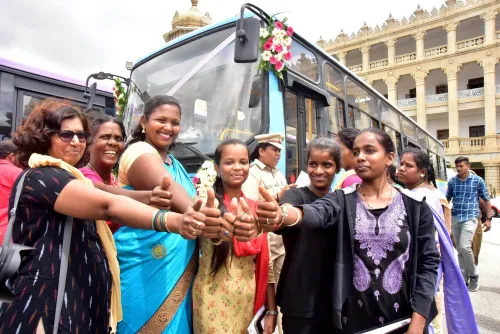
A significant pressure point on the corporations' finances is the state government's flagship Shakti scheme, which provides free bus travel to women in all state-run transport buses. Suresh stated that the government is required to provide approximately ₹5,000 crore annually to fund the scheme — a commitment that has deepened the structural deficit even as ridership numbers have grown.
Government's Defence and Political Context
Suresh said that both he and Chief Minister D.K. Shivakumar had disagreed with the higher rates initially recommended by an expert committee, and that the government had taken four days to arrive at a more moderate revision aimed at minimising passenger burden. He drew comparisons with neighbouring states, noting that bus fares have been revised in Tamil Nadu, Maharashtra, and Telangana as well. He maintained that even after the hike, none of the four RTCs would turn profitable — the increase would only reduce collective losses by about 25 per cent.
Notably, when questioned about the airport fare hike, the Minister remarked that people travelling to the airport were 'generally affluent' — a comment that drew attention amid broader public debate over the timing of the revision. The fare hike is the first across all four corporations in a decade, and comes at a politically sensitive moment ahead of a major festival.
What Commuters and Corporations Face Next
The revised fares apply to ordinary, express, luxury, and air-conditioned services across all four corporations from midnight on 4 November 2026. With passenger volumes set to spike during Diwali, the revised fares will immediately affect millions of commuters — particularly those dependent on the KSRTC and BMTC for intercity and intra-city travel. The government's appeal for public cooperation signals it expects pushback, and the coming days will test whether the revised rates hold politically.
Point of View
When millions rely on state buses for festival travel — will draw political fire, but the financial case is hard to dispute: a ₹2,000 crore annual deficit, only one fare revision in a decade, and an ever-expanding free-travel mandate under the Shakti scheme. The real tension is structural: Karnataka cannot simultaneously run a welfare-led free-travel scheme at ₹5,000 crore a year, resist fare hikes for a decade, and expect solvent public transport. The Minister's remark that airport travellers are 'generally affluent' — offered to deflect criticism on that specific segment — is a political misstep that will overshadow the broader fiscal argument. The harder question the government has not answered is whether a one-time hike, estimated to cut losses by only 25 per cent, defers the reckoning rather than resolves it.
NationPress
4 Nov 2026
Frequently Asked Questions
By how much have Karnataka bus fares been increased?
Karnataka has increased bus fares by ₹9 to ₹68 for general transport services, depending on distance. BMTC city bus minimum fares rise from ₹6 to ₹10, while luxury airport buses go from ₹405 to ₹425. The revision covers all four state RTCs — BMTC, KSRTC, NWKRTC, and KKRTC.
When do the revised Karnataka bus fares come into effect?
The revised fares came into effect from midnight on 4 November 2026. They apply to ordinary, express, luxury, and air-conditioned services across all four state transport corporations.
Why did Karnataka hike bus fares?
The fare hike was driven by mounting financial deficits — the four corporations spend ₹16,000 crore annually but earn only ₹14,000 crore, posting a ₹2,000 crore annual loss. Rising fuel, tyre, and salary costs, combined with the ₹5,000 crore annual outgo for the Shakti free-travel scheme for women, have forced the corporations to borrow to meet expenses.
What is the financial condition of Karnataka's transport corporations?
The four corporations — BMTC, KSRTC, NWKRTC, and KKRTC — carry combined outstanding liabilities of ₹7,719 crore, including loans of ₹2,192 crore, while total government liabilities towards them stand at ₹9,912 crore. They employ approximately 1,03,600 staff, and 80 per cent of revenue goes toward diesel and salaries.
Will the Karnataka bus fare hike make the RTCs profitable?
No — Transport Minister Byrathi Suresh explicitly stated that even after the revision, none of the four RTCs will turn profitable. The hike is expected to reduce collective losses by only about 25 per cent, providing partial relief rather than a full turnaround.