Karnataka's Gram Panchayat Tax Collection Reaches Historic ₹1,560 Crore, Says Minister Priyank Kharge
Synopsis
Karnataka's gram panchayats hit a record tax collection of ₹1,560.76 crore, showcasing a remarkable growth trend. Minister Priyank Kharge attributes this success to efficient governance and robust tax drives, promising reinvestment in rural development.
Key Takeaways
Karnataka gram panchayats collected ₹1,560.76 crore in taxes.
5,943 gram panchayats contributed to the record collection.
Tax collection increased from ₹1,272.54 crore in 2024-25 to ₹1,382.57 crore in 2025-26.
11 districts surpassed 100% of their tax collection targets.
Funds will be reinvested into rural development and public services.
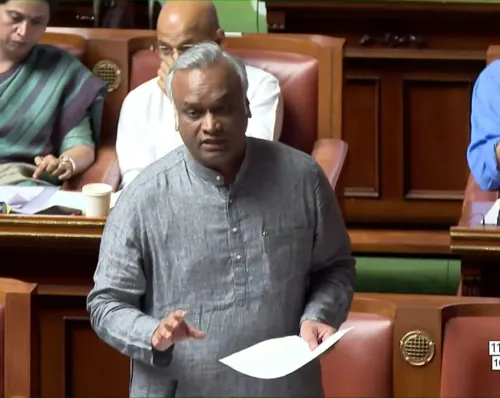
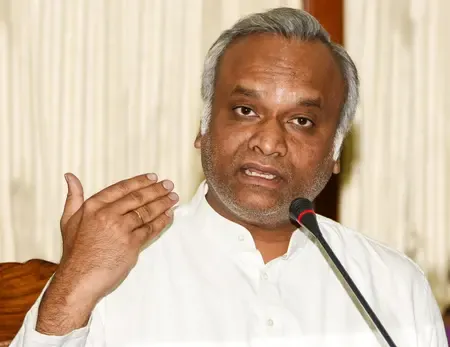
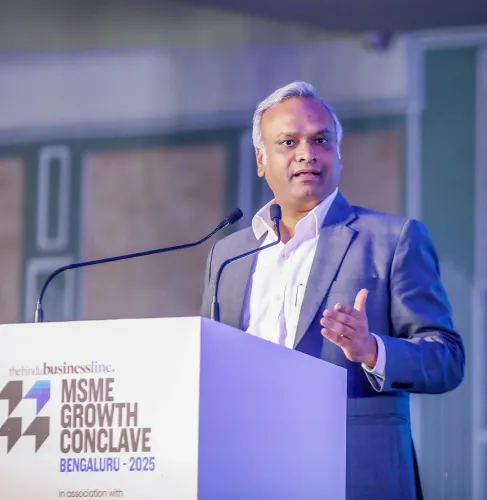
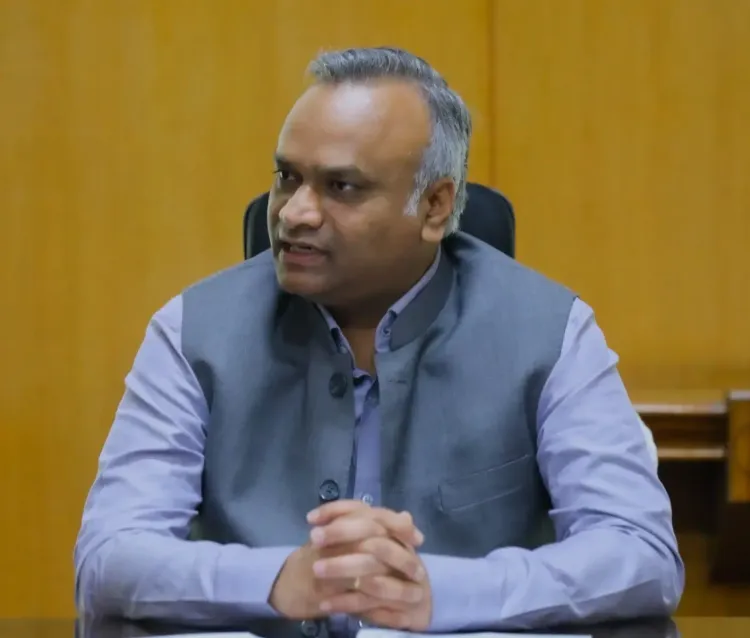
Bengaluru, April 2 (NationPress) The tax revenue collected by gram panchayats in Karnataka has reached a remarkable total of Rs 1,560.76 crore, as reported by Priyank Kharge, the Minister for Rural Development, Panchayat Raj, and Information Technology and Biotechnology. This significant achievement reflects a steady increase in collections over time.
During a press briefing in Bengaluru, Kharge highlighted that the Rural Development and Panchayat Raj Department has established itself as a leading force in tax collection and revenue generation, operating through 5,943 gram panchayats across the state and exceeding last year's figures.
Last year, Karnataka earned the distinction of being the top-performing state nationally in terms of tax collection and revenue mobilization. Kharge expressed his contentment with the ongoing year-on-year growth in tax collection, attributing it to effective governance, rigorous rule enforcement, and enhancements to the tax collection framework.
Detailing further, Kharge mentioned that in the fiscal year 2024–25, gram panchayats achieved a historic milestone by collecting Rs 1,272.54 crore in taxes, fulfilling 80 percent of the current demand and marking a record. The following year, 2025–26, tax collection rose to Rs 1,382.57 crore, which is Rs 110.04 crore more than the previous year, achieving 89 percent of the current demand—another record milestone.
He attributed this success to comprehensive awareness initiatives, tax campaigns, and ongoing efforts aimed at improving collection practices. Kharge commended the commitment of all officials, from local bill collectors to senior authorities, for their contributions to these achievements.
Since the current administration took office, tax collection has consistently increased over the past three years. He emphasized that every rupee collected is being reinvested into rural areas, facilitating public works, enhancing services, and fostering local development, which is vital for rural advancement.
Notably, Raichur district excelled by collecting 129 percent of its tax target, while 11 districts in the state surpassed the 100 percent mark in tax collection.
Point of View
The recent achievement in Karnataka's gram panchayat tax collection highlights the state's commitment to improving rural governance and fiscal responsibility. This success not only reflects effective leadership but also indicates a significant reinvestment into local communities, which is crucial for overall progress.
NationPress
27 Sept 2026
Frequently Asked Questions
What is the total tax collection by gram panchayats in Karnataka?
The total tax collection by gram panchayats in Karnataka has reached ₹1,560.76 crore.
Who is the Minister responsible for Rural Development in Karnataka?
The Minister for Rural Development, Panchayat Raj, and Information Technology and Biotechnology in Karnataka is Priyank Kharge.
How many gram panchayats are there in Karnataka?
There are 5,943 gram panchayats across Karnataka.
What percentage of tax demand was achieved in the fiscal year 2025-26?
In the fiscal year 2025-26, Karnataka gram panchayats achieved 89 percent of the current year's tax demand.
Which district in Karnataka exceeded its tax target significantly?
Raichur district recorded a remarkable collection of 129 percent of its tax target.