Kejriwal distances AAP from Tahir Hussain after 2020 Delhi riots conviction
Synopsis
A Delhi court's conviction of former AAP councillor Tahir Hussain for the murder of IB officer Ankit Sharma during the 2020 riots has reignited one of the most politically charged cases in Delhi's recent history. Kejriwal's one-line X post distancing himself from Hussain has done little to blunt a BJP offensive that frames the verdict as an indictment of AAP's politics.
Key Takeaways
Arvind Kejriwal posted on X on 14 July that Tahir Hussain was expelled from AAP 'long long back.' A Delhi court convicted Hussain and four others on Monday for the murder of IB officer Ankit Sharma during the 2020 Delhi riots .
AAP suspended Hussain from primary membership in 2020 after an FIR was registered against him.
BJP national spokesperson Pradeep Bhandari alleged AAP leaders defended Hussain 'to the hilt for vote-bank politics.' Shehzad Poonawalla called the verdict 'an indictment of the entire AAP-Congress ecosystem.' Ankit Sharma's body was recovered from a drain near Chand Bagh during the North-East Delhi communal violence.
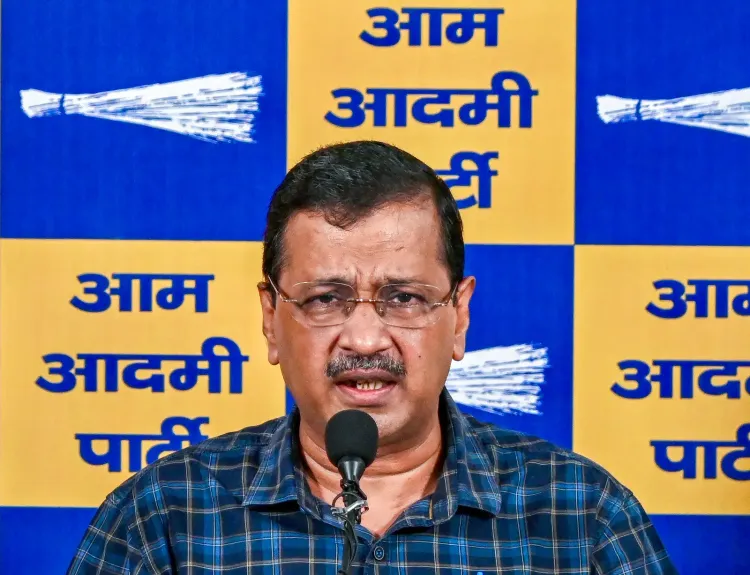
Arvind Kejriwal, national convenor of the Aam Aadmi Party (AAP), on Tuesday, 14 July moved to distance his party from former councillor Tahir Hussain, hours after a Delhi court convicted Hussain for the murder of Intelligence Bureau (IB) officer Ankit Sharma during the 2020 Delhi riots. Kejriwal posted on X that Hussain had been expelled from AAP 'long long back', as the Bharatiya Janata Party (BJP) mounted sharp attacks on the party's silence.
Kejriwal's Response
Posting on his X account, Kejriwal wrote: 'We expelled him from AAP long long back. Didn't he join one of chanda chor party's sister organization?' The terse post was his first public statement after the conviction, which came roughly six years after the communal violence that shook North-East Delhi.
AAP had earlier stated on Monday that Hussain bore no association with the party following his suspension from primary membership in 2020, which came immediately after an FIR was registered against him.
The Conviction
A city court on Monday found Tahir Hussain and four others guilty on charges including promoting enmity, rioting, assault, criminal force, and murder in connection with the killing of IB officer Ankit Sharma. Sharma had gone missing during the communal violence in North-East Delhi; his body was subsequently recovered from a drain near the Chand Bagh area. The verdict arrives more than half a decade after one of the deadliest episodes of urban communal violence in recent Delhi history.
BJP Escalates Attack
Delhi Law Minister Kapil Mishra was among the first to question AAP's silence, asking at a press conference: 'Why are Arvind Kejriwal, Manish Sisodia and Sanjay Singh silent after the conviction? Why have they not come forward and said anything on the matter?'
BJP national spokesperson Pradeep Bhandari alleged that AAP leaders, including Sanjay Singh and Kejriwal, had 'defended Tahir Hussain to the hilt for their vote-bank politics.' He added: 'The nation would not forget that the AAP had chosen to stand with a murderer and rioter for electoral gains.'
BJP leader Shehzad Poonawalla called the conviction 'an indictment of AAP and Congress,' alleging in a video statement: 'Hussain has been convicted. Satyamev Jayate. It is the conviction of the entire AAP-Congress ecosystem, which was behind these anti-Hindu riots.' The BJP's central leadership further described the convicted ex-councillor as a 'blue-eyed boy' of Kejriwal.
Background and Context
The February 2020 Delhi riots claimed over 50 lives and injured hundreds, making them among the worst communal clashes in the capital in decades. Hussain, who was then serving as an AAP councillor from Mustafabad, was arrested in the aftermath and has remained in custody since. His case has been politically charged from the outset, with the BJP consistently citing it to question AAP's stance on communal violence.
This is the latest in a series of legal proceedings stemming from the 2020 riots, and the conviction of a former elected representative is expected to keep the issue alive in Delhi's political discourse ahead of future electoral cycles.
Point of View
Not accountability. The conviction of a sitting councillor — however swiftly he was later expelled — revives uncomfortable questions about the vetting of candidates AAP fielded in a constituency with known communal fault lines. The BJP's framing is predictably maximalist, but the underlying political liability is real: AAP spent years positioning itself above caste and communal politics, and a murder conviction tied to the 2020 riots cuts directly against that brand. The more telling silence may not be Kejriwal's but the absence of any institutional AAP statement on what the verdict means for the victims and their families.
NationPress
12 Oct 2026
Frequently Asked Questions
Who is Tahir Hussain and why was he convicted?
Tahir Hussain is a former AAP councillor from Mustafabad who was convicted by a Delhi court for the murder of Intelligence Bureau officer Ankit Sharma during the February 2020 Delhi riots. He and four others were found guilty on charges including murder, rioting, promoting enmity, and criminal force.
What did Arvind Kejriwal say about the conviction?
Kejriwal posted on X that Hussain had been expelled from AAP 'long long back,' and implied Hussain had since joined an organisation linked to a rival party. It was his first public statement after the verdict.
When was Tahir Hussain expelled from AAP?
AAP suspended Hussain from primary membership in 2020, immediately after an FIR was registered against him in connection with the Delhi riots. The party maintains he has had no association with AAP since then.
How did the BJP respond to the conviction?
The BJP escalated attacks on AAP, with Delhi Law Minister Kapil Mishra questioning why Kejriwal, Manish Sisodia, and Sanjay Singh were silent. BJP national spokesperson Pradeep Bhandari alleged AAP leaders had defended Hussain for vote-bank politics, while Shehzad Poonawalla called the verdict an indictment of the 'AAP-Congress ecosystem.'
Who was IB officer Ankit Sharma?
Ankit Sharma was an Intelligence Bureau officer who went missing during the communal violence in North-East Delhi in February 2020. His body was later recovered from a drain near the Chand Bagh area, and his murder became one of the most high-profile cases arising from the 2020 Delhi riots.