Kejriwal calls Abhijeet's arrest 'outright dictatorship'
Synopsis
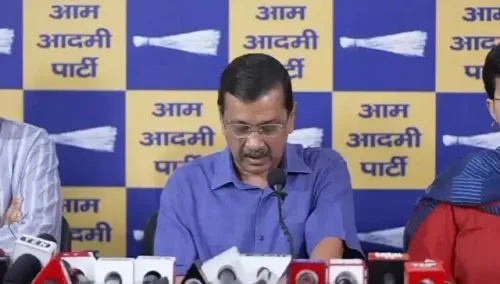
AAP convenor Arvind Kejriwal on 16 October 2026 condemned the arrest of activist Abhijeet, calling it 'outright dictatorship' and asking whether hoisting the national flag had become a crime, directly accusing PM Modi's government of fearing opposition.
Key Takeaways
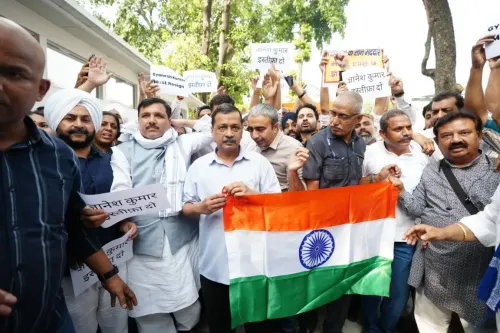
Arvind Kejriwal posted on 16 October 2026 condemning the arrest of a person named Abhijeet at what appears to be a protest event.
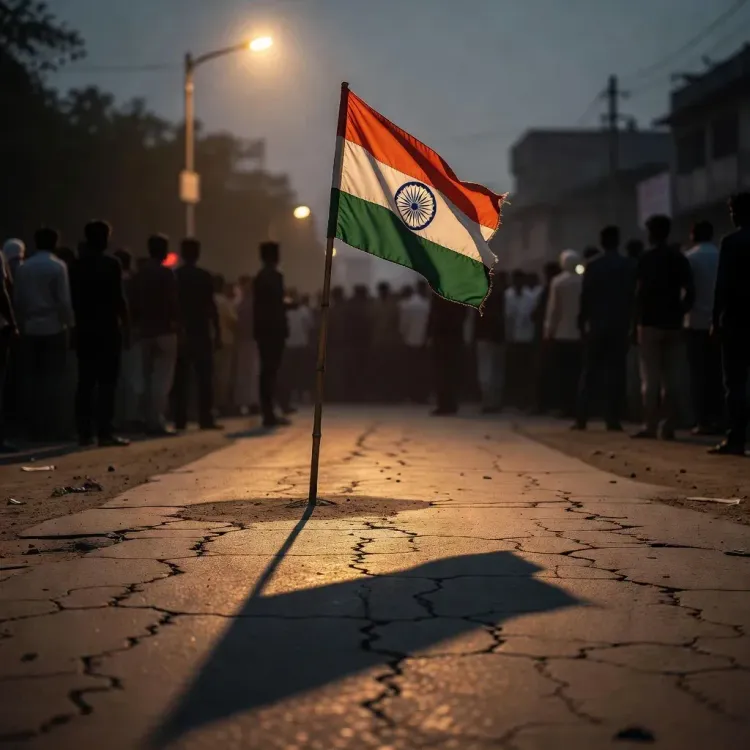
Kejriwal called the arrest 'outright dictatorship' ( सरासर तानाशाही ) and questioned whether hoisting the tricolour is a crime.
He directly named PM Narendra Modi , arguing the arrest reveals how much the ruling establishment fears the opposition.
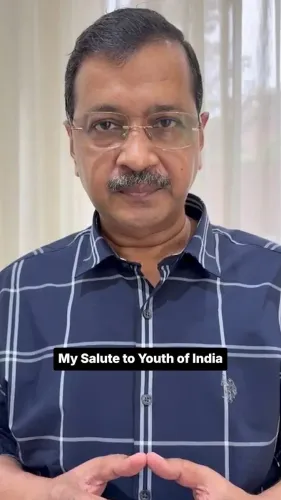
The post was accompanied by a video , which Kejriwal cited as evidence for his claims.
The Flag Code of India governs tricolour display and has been subject to differing legal interpretations at public gatherings.
Specific charges against Abhijeet and the precise circumstances of the arrest remain officially unconfirmed.
Waving the national flag at a protest has landed a young activist in a police cell — and AAP convenor Arvind Kejriwal is calling it nothing less than dictatorship. On Friday, 16 October 2026, Kejriwal posted a sharp political broadside on X, condemning the arrest of a person named Abhijeet and framing it as evidence that Prime Minister Narendra Modi fears the opposition's street presence.
Kejriwal's post — in Hindi — asked pointedly: 'क्या तिरंगा लहराना जुर्म है?' ('Is hoisting the tricolour a crime?'). He declared the arrest 'outright dictatorship' and argued it revealed how deeply the ruling establishment fears political challengers. The post was accompanied by a video, the contents of which are central to the claim.
The tricolour as flashpoint
The Indian national flag has periodically become a contested symbol during protest politics. The Flag Code of India governs the display of the tricolour and has been subject to varying legal interpretations at public gatherings, creating space for authorities and protesters to argue its use from opposite positions. Opposition groups have on several occasions used flag-hoisting as an act of political assertion, knowing it carries a certain moral and constitutional weight that is difficult to argue against openly.
Arrests at protest sites framed around flag or symbolic displays have a recurring pattern in Indian political history — and each time they occur, the opposition finds a ready-made narrative: the state is afraid of the very symbols it claims to champion.
Kejriwal's 'fear' argument and its political logic
The Aam Aadmi Party, founded in 2012 and currently governing Delhi and Punjab, has positioned itself consistently as a check on what it describes as high-handed central authority. Kejriwal — himself a former detainee in a high-profile case — is not a neutral voice on the question of politically motivated arrests. But that biography also gives the charge a resonance beyond routine party rhetoric.
By invoking Modi's name directly and using the word 'डरते हैं' ('they fear'), Kejriwal is doing something specific: he is arguing that repression signals weakness, not strength. It is a framing designed to embolden supporters and put the ruling party on the defensive without requiring a detailed legal argument. Whether Abhijeet's arrest holds up in court — or collapses — will determine how long that narrative sustains itself.
The details of the arrest, the precise location, and the formal charges against Abhijeet remain unconfirmed. What is confirmed is that a senior opposition leader has staked political capital on the claim, attached a video as evidence, and broadcast it to millions. Courts, not social media, will deliver the next chapter — but politics rarely waits for verdicts.
Point of View
And use the national flag as moral armour. What gives this iteration some edge is the personal subtext — Kejriwal himself has faced detention, lending the 'dictatorship' charge a first-person credibility beyond mere rhetoric. The AAP's dual-state governing footprint in Delhi and Punjab means these political confrontations with the Centre now carry institutional weight, not just street-level noise. Whether Abhijeet's case becomes a sustained protest trigger or fades quickly depends almost entirely on what the courts and official record reveal about the actual charges filed.
NationPress
16 Oct 2026
Frequently Asked Questions
Who is Abhijeet and why was he arrested?
According to AAP convenor Arvind Kejriwal's post of 16 October 2026, a person named Abhijeet was arrested in connection with what Kejriwal describes as flag-hoisting at a protest. The specific charges and official circumstances of the arrest have not been independently confirmed.
What did Kejriwal say about the arrest?
Kejriwal called the arrest 'outright dictatorship,' questioned whether hoisting the tricolour is a crime, and argued that the action reveals how much PM Narendra Modi's government fears the opposition.
Is it illegal to hoist the national flag in India?
No. The Flag Code of India regulates the display of the tricolour but does not prohibit citizens from hoisting it. However, the code's provisions have been subject to differing legal interpretations at public events and protests.
What is AAP's position on protest crackdowns?
The Aam Aadmi Party has consistently accused the central government of using police action to suppress political demonstrations. Party convenor Kejriwal, who has himself faced arrest in a separate high-profile case, frequently frames such actions as authoritarian overreach.
What happens next after Kejriwal's accusation?
Any formal court proceedings related to Abhijeet's arrest and official government responses will be the key developments to watch. Political pressure from opposition parties is likely to intensify if the charges are seen as legally weak.