Kejriwal accuses BJP of exploiting Sanatan Dharma for power
Synopsis
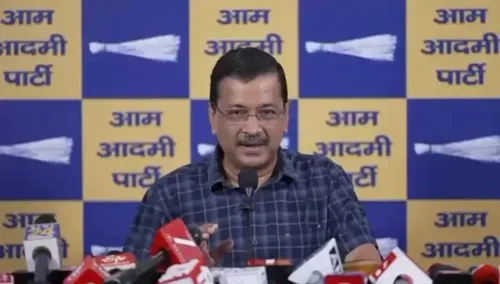
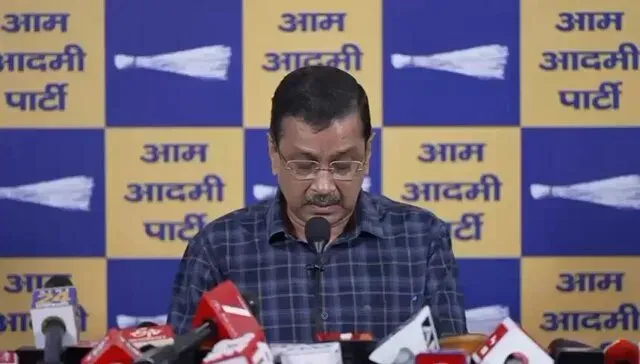
AAP convenor Arvind Kejriwal on 1 July 2026 accused the BJP of exploiting Sanatan Dharma solely for power and money, asserting that only AAP works for Sanatan with genuine intent — a sharp salvo ahead of state assembly elections expected in late 2026.
Key Takeaways
Arvind Kejriwal posted on 1 July 2026 accusing the BJP of using Sanatan Dharma only for power and money.
AAP claims to be the only party working for Sanatan with 'true feeling', a rhetorical framing aimed at Hindu voters.
The post included a video , indicating a planned social-media amplification campaign.
The BJP's ideological identity is rooted in Hindutva , with the 2024 Ayodhya temple inauguration as its most prominent recent cultural milestone.
State assembly elections expected after mid-2026 provide the immediate electoral context for the messaging.
Competition over authentic custodianship of Hindu traditions has been a recurring feature of Indian politics since the 1990s .
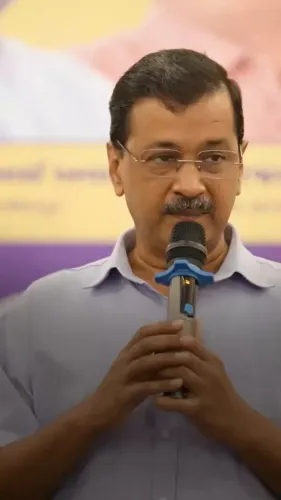
AAP convenor Arvind Kejriwal on Wednesday, 1 July 2026, charged that the Bharatiya Janata Party has used Sanatan Dharma purely as a tool to gain power and money, while asserting that only the Aam Aadmi Party works for Sanatan with genuine feeling. The remarks came in a Hindi post on X that has drawn attention ahead of a string of state assembly elections expected in the second half of 2026.
Context
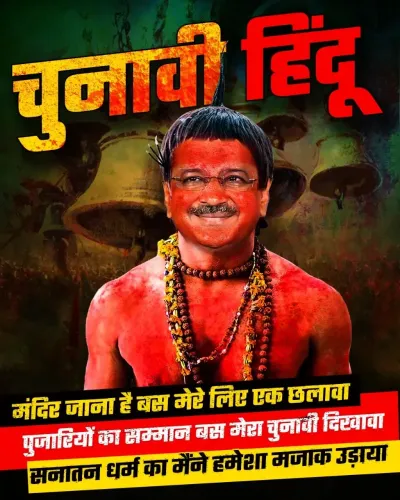
Kejriwal's post, in Hindi, states: 'BJP ne Sanatan ka keval satta aur paise ke liye istemal kiya hai' ('The BJP has used Sanatan only for power and money'). He adds that today only the Aam Aadmi Party is working for Sanatan with true feeling. The charge is direct and unusually sharp, naming the rival party explicitly rather than making a general critique of the political class.
The post carries a video attachment, suggesting the party intends to amplify the message through social media campaigns. AAP has increasingly deployed religious outreach alongside its signature welfare-oriented messaging in recent electoral cycles.
Policy Backdrop
The BJP, whose ideological roots draw on Hindutva, has made the restoration of Sanatan heritage a centrepiece of its political identity. The culmination of the Ram Janmabhoomi movement — the inauguration of the Ayodhya temple in January 2024 — was framed by the party as the fulfilment of a civilisational promise to Hindu voters across the country.
AAP's counter-positioning is not new. Since its emergence as a national force, the party has sought to distinguish itself from the BJP's Hindutva emphasis by stressing what it calls sincerity of intent over electoral utility. Kejriwal has publicly identified as Hindu and has previously undertaken televised recitation of the Hanuman Chalisa and visits to prominent temples, moves read by analysts as efforts to neutralise the BJP's cultural advantage.
Stakeholders and Impact
Hindu voters and religious organisations constitute the primary audience for this messaging. In a competitive landscape where multiple parties contest ownership of Hindu identity, Kejriwal's framing attempts to recast the debate: not who supports Sanatan, but who does so authentically versus instrumentally.
The accusation that the BJP uses religion 'only for power and money' is a rhetorical charge that the party is likely to contest. Such exchanges have been a recurring feature of Indian electoral politics since the 1990s, when Hindutva first became a decisive mobilising force at the national level. For AAP, which governs Delhi and Punjab, the stakes are high in any state where Hindu identity politics shapes voter calculus.
What's Next
With state assembly elections scheduled after mid-2026, the timing of Kejriwal's post signals that AAP intends to contest the BJP on cultural terrain rather than cede it. Analysts will watch for follow-up announcements — on pilgrimages, temple administration, or religious education schemes — that could give policy substance to the party's claim of 'true feeling' for Sanatan. The BJP's response, and whether it escalates the exchange into a broader debate on religious sincerity in politics, will shape how this narrative develops in the weeks ahead.
Point of View
AAP seeks to occupy a space of 'sincere' religiosity that is harder for opponents to attack head-on. The move fits a broader pattern in Indian politics where secular or welfare-oriented parties increasingly feel compelled to signal religious authenticity to remain competitive. Whether the charge gains traction will depend on whether AAP can back the rhetoric with visible, on-the-ground religious outreach in the months ahead.
NationPress
1 Jul 2026
Frequently Asked Questions
What did Arvind Kejriwal say about BJP and Sanatan Dharma?
On 1 July 2026, Kejriwal posted on X that the BJP has used Sanatan Dharma only for power and money, and that only AAP works for Sanatan with genuine feeling.
Why is AAP talking about Sanatan Dharma?
AAP is contesting the BJP's cultural dominance ahead of state assembly elections expected in late 2026, seeking to position itself as a sincere rather than opportunistic champion of Hindu traditions.
What is Sanatan Dharma in Indian politics?
Sanatan Dharma refers broadly to the eternal principles of Hinduism; in politics, it has become a rallying concept for parties seeking to appeal to Hindu identity, most prominently the BJP through its Hindutva ideology.
Has Kejriwal made religious statements before?
Yes. Kejriwal has publicly identified as Hindu and has previously recited the Hanuman Chalisa on television and visited prominent temples, part of AAP's effort to neutralise the BJP's advantage on religious identity.
What elections are coming up that make this statement significant?
State assembly elections are scheduled after mid-2026, giving Kejriwal's charge immediate electoral relevance as parties compete for Hindu voter support.