Timeline of the Excise Policy Case: From Accusations to Acquittal of Kejriwal and Sisodia
Synopsis
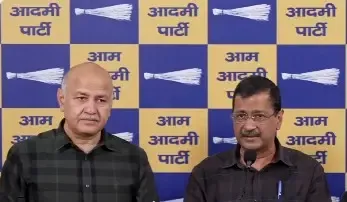
A Delhi court has acquitted all 23 accused, including AAP leader Arvind Kejriwal and former Deputy Chief Minister Manish Sisodia, in the excise policy case. This article explores the timeline of events leading to their discharge and the implications of the ruling.
Key Takeaways
All 23 accused acquitted in the excise policy case, including Kejriwal and Sisodia.
The prosecution failed to establish a prima facie case.
The CBI's investigation was deemed inadequate by the court.
The case originated from allegations surrounding the Delhi Excise Policy 2021–22.
This ruling could have significant political implications moving forward.
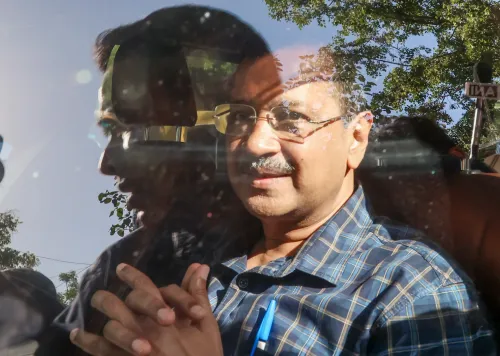
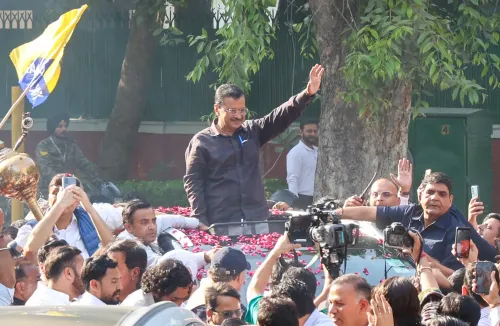
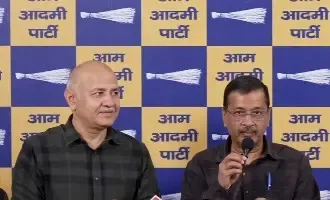
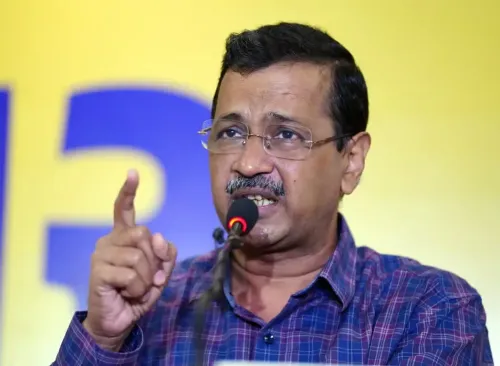
New Delhi, Feb 27 (NationPress) A judicial body in Delhi has acquitted all 23 individuals, including Aam Aadmi Party (AAP) leader Arvind Kejriwal and former Deputy Chief Minister Manish Sisodia, in the ongoing excise policy investigation by the Central Bureau of Investigation (CBI). The court remarked that the prosecution could not even establish a prima facie case nor present a "grave suspicion" that warranted charges.
In a comprehensive order exceeding 1,100 paragraphs, Special Judge Jitendra Singh, presiding over the Rouse Avenue Court, stated that the CBI's case was "entirely discredited" and could not withstand judicial examination.
The judge emphasized that forcing the accused into a comprehensive trial without legally viable evidence would constitute a "manifest miscarriage of justice", leading to the discharge of all defendants linked to the Delhi excise policy case.
This case revolves around the Delhi Excise Policy 2021–22, which was introduced by the AAP-led state government in November 2021 and was ultimately revoked in 2022 amidst corruption and kickback allegations.
According to federal investigative agencies, Kejriwal and other AAP officials allegedly accepted bribes from the "South Group" cartel, which supposedly received undue advantages under the excise policy.
The agencies claimed that the policy was tailored to benefit select liquor licensees in return for significant upfront payments intended for electoral activities, including the 2022 Goa Assembly elections.
A report from the Comptroller and Auditor General (CAG) indicated that discrepancies in the policy's formulation and execution led to an alleged loss surpassing Rs 2,026 crore.
The report also highlighted that taxpayers incurred losses of approximately Rs 890 crore due to the AAP government's decision against re-tendering surrendered retail liquor licenses, with an added Rs 941 crore loss attributed to exemptions given to zonal licensees.
The audit findings raised concerns about a lack of transparency in pricing, breaches in license issuance and renewal, failure to penalize offenders, and the absence of required approvals from Delhi's Lieutenant Governor V.K. Saxena, Cabinet, or Legislative Assembly at crucial stages.
The Ministerial Group led by Sisodia faced accusations of ignoring expert panel recommendations and permitting allegedly disqualified parties to participate in bidding.
Both Kejriwal and Sisodia have repeatedly refuted the claims, labeling the case as "politically motivated" and accusing the Bharatiya Janata Party of weaponizing federal agencies.
After reviewing extensive records and nearly 300 prosecution witnesses, the trial court determined that the "theory of an overarching conspiracy" was "completely dismantled", and the prosecution failed to present adequate material even at the threshold level.
In response, the CBI has approached the Delhi High Court to contest the trial court's discharge decision, arguing that significant aspects of the investigation were overlooked or insufficiently addressed by the lower court.
The following is a detailed timeline of the excise policy case and the legal struggles involving Arvind Kejriwal and Manish Sisodia: February 26, 2023: Manish Sisodia was apprehended by the CBI in relation to the excise policy case, six months after an FIR was lodged against him and 14 others by the agency in August 2022.
March 9, 2023: The Enforcement Directorate (ED) arrested Sisodia while he was in judicial custody following his prior CBI arrest.
March 21, 2024: The ED detained Arvind Kejriwal after the Delhi High Court declined his plea for protection against "coercive action".
May 10, 2024: Ahead of the 2024 Lok Sabha elections, the Supreme Court granted interim bail to Kejriwal in the money laundering case until June 1, instructing him to surrender on June 2.
June 26, 2024: Kejriwal was officially arrested by the CBI in the corruption case following his earlier detention by the ED.
July 12, 2024: The Supreme Court granted interim bail to him in the ED case while referring his arrest challenge to a larger bench; however, he remained incarcerated due to the CBI arrest.
August 9, 2024: The Supreme Court granted bail to Sisodia in both ED and CBI cases, stating he could not be held indefinitely pending trial.
August 23, 2024: The CBI informed the Rouse Avenue Court that it received the necessary sanction under the Prevention of Corruption Act to prosecute Arvind Kejriwal in the excise policy corruption case.
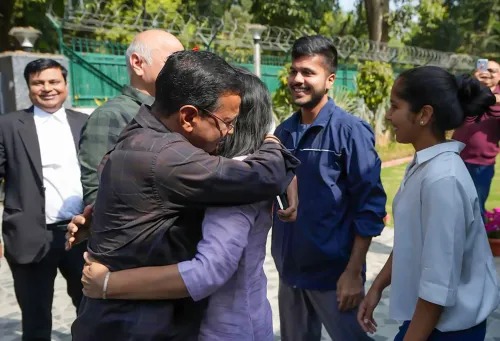
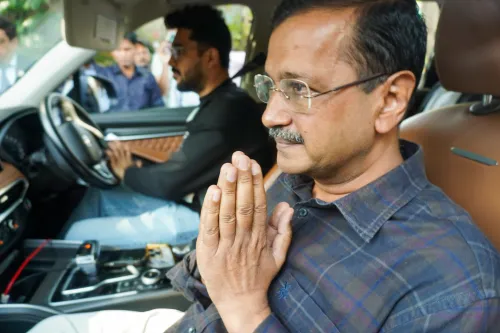
September 13, 2024: The Supreme Court granted bail to Kejriwal in the CBI corruption case but did not annul his arrest, resulting in his release after several months in custody.
January 15, 2025: The Centre permitted the ED to prosecute Kejriwal and Sisodia under the Prevention of Money Laundering Act (PMLA), following the recommendation of Delhi Lieutenant Governor V.K. Saxena.
February 27, 2026: The Rouse Avenue Court discharged all 23 accused, including Kejriwal and Sisodia, asserting that the prosecution did not substantiate even a prima facie case and that the foundational predicate offense was untenable.
With the CBI having filed a revision petition before the Delhi High Court, this high-profile case, which previously dominated national political discourse, appears poised to commence its next legal chapter.
Point of View
The acquittal of Kejriwal and Sisodia reflects significant judicial scrutiny and raises questions about the effectiveness of the CBI's investigation. The ongoing legal battle also highlights the intersection of politics and law in India's complex governance landscape.
NationPress
1 Oct 2026
Frequently Asked Questions
What was the excise policy case about?
The excise policy case involved allegations of corruption and kickbacks related to the Delhi Excise Policy 2021–22, introduced by the AAP-led government.
Who were the main accused in the case?
The main accused include Arvind Kejriwal, the AAP leader, and former Deputy Chief Minister Manish Sisodia, among others.
What did the court conclude about the prosecution's case?
The court concluded that the prosecution failed to establish a prima facie case, stating that the allegations were discredited and could not withstand judicial scrutiny.
What are the next steps in the legal proceedings?
The CBI has filed a revision petition before the Delhi High Court to contest the trial court's discharge order.
How did the case impact the political landscape?
The case has been viewed as politically motivated by some, influencing public perception and the political dynamics in Delhi.