Delhi Court Discharges Kejriwal and Sisodia in Liquor Policy Case
Synopsis
A Delhi court has discharged all 23 accused in the liquor policy case, including key political figures Arvind Kejriwal and Manish Sisodia, citing a lack of sufficient evidence from the prosecution. This ruling raises questions about the integrity of the investigation and the future of the case.
Key Takeaways
Delhi court discharges all 23 accused in the liquor policy case.
The prosecution's case was deemed insufficient to proceed.
Criticism of the CBI's investigative methods was highlighted.
The ruling raises questions about political accountability.
Future legal battles are anticipated as the CBI plans to appeal.
New Delhi, Feb 27 (NationPress) A Delhi court has officially discharged all 23 individuals accused in the excise policy investigation, which includes AAP national convenor Arvind Kejriwal and former Deputy Chief Minister Manish Sisodia. The ruling was made on the grounds that the prosecution was unable to present even a prima facie case or raise a "grave suspicion" justifying the charges.
In a comprehensive order exceeding 1,100 paragraphs, Special Judge (PC Act) Jitendra Singh of the Rouse Avenue Court stated that the case presented by the CBI was “entirely incapable of withstanding judicial examination” and was “entirely discredited.”
“Following an extensive review of the complete record, which took more than two months and included a wealth of documentary evidence along with testimonies from almost three hundred prosecution witnesses, and after providing all parties a full hearing, this Court is convinced that the prosecution case does not meet even the basic threshold of a prima facie suspicion, let alone the 'grave suspicion' required by established criminal jurisprudence for further action,” the court ruled.
The Special Judge noted that forcing the accused into a full trial without legally admissible evidence would result in a “manifest miscarriage of justice and an abuse of the criminal process.”
The case revolved around the Delhi Excise Policy 2021–22, initiated by the AAP-led government in November 2021 and later retracted in 2022 due to allegations of corruption, kickbacks, and manipulation of the policy.
The CBI had claimed that the policy was designed to favor specific private liquor entities, including the “South Group,” in return for alleged upfront bribes purportedly connected to electoral activities, including the Goa Assembly elections.
However, the court, after a thorough examination of the considerable evidence and testimonies from nearly 300 witnesses, determined that the “theory of a grand conspiracy” had been “entirely dismantled” when scrutinized against the evidentiary record.
“The prosecution has not presented any material which, even at a prima facie level, indicates that the DEP-21/22 was manipulated or engineered to provide any undue or illegal advantage,” the court stated, further noting that the existing records show the policy was a result of a “consultative and deliberative process” involving stakeholder engagement and compliance with legal procedures.
“Once it is shown that the policy formulation stemmed from deliberation, institutional oversight, and procedural adherence, any subsequent attempts to ascribe criminality to its execution become utterly untenable,” the ruling emphasized.
The court also dismissed allegations regarding the payment and recovery of “upfront money,” asserting that the alleged payment chain primarily relied on “so-called pauti entries of Angadia firms, documents that are inadmissible in law, and on uncorroborated statements from approvers.”
“These flaws are not peripheral; they fundamentally undermine the prosecution's case and render it unsustainable even at this initial stage,” the ruling explained.
“The investigation seems to have followed a predetermined path, implicating nearly everyone involved in the policy’s formulation or implementation to create an illusion of depth and credibility for an otherwise fragile narrative,” it added.
The Special Judge expressed significant concerns over the investigative methods, particularly regarding the repeated recording of statements from an approver after a pardon was granted. It noted that such practices risk transforming the extraordinary mechanism of pardon into “a tool for constructing narratives rather than discovering truth.”
“If not addressed, such actions could distort the unique mechanism of pardon into a means of narrative construction rather than truth-seeking, causing serious harm to the accused and eroding trust in the criminal justice system,” the court stated.
The court also criticized the frequent use of the term “South Group” in the charge sheets, stating that identity or region-based labeling “serves no legitimate investigative or prosecutorial purpose” and risks creating a prejudicial impression.
This terminology, it argued, “has no legal basis” and is “entirely alien to the statutory framework governing criminal liability,” constituting a constitutional flaw that could compromise the fairness of the proceedings.
“Region-based labels carry unnecessary implications and can create a prejudicial perception,” the order mentioned, asserting that criminal trials “should focus on the actions of the defendant, not the identity of the defendant.”
The order also raised broader constitutional issues concerning prosecutions conducted by the Enforcement Directorate (ED), highlighting that money laundering offenses are inherently tied to the survival of the underlying predicate offense.
Referencing the Supreme Court's decision in the Vijay Madanlal Choudhary v. Union of India case, the court reiterated that if the scheduled offense fails to stand, the Prevention of Money Laundering Act (PMLA) proceedings cannot continue independently.
“The crime under the PMLA is not standalone but intricately linked to the presence of a legally sustainable scheduled offense. The foundational offense forms the basis upon which the allegations of money laundering rest; if that foundation collapses, the entire structure must inevitably fall,” the ruling asserted.
The court cautioned that prolonged pre-trial detention based on unverified and provisional allegations risks transforming the legal process into a form of punishment, contrary to the stipulations of Article 21 of the Constitution.
“Once liberty is curtailed, it cannot be effectively restored through a subsequent acquittal, nor can the passage of time compensate for the harm caused by unwarranted pre-trial detention,” it stated.
“Consequently, all accused, A-1 to A-23, are discharged from all charges in this case,” the order concluded.
This discharge ruling has provided significant relief to the Aam Aadmi Party (AAP), as both Kejriwal and Sisodia were previously arrested in connection with the liquor policy investigation but were granted bail by the Supreme Court in 2024.
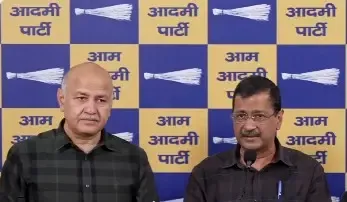
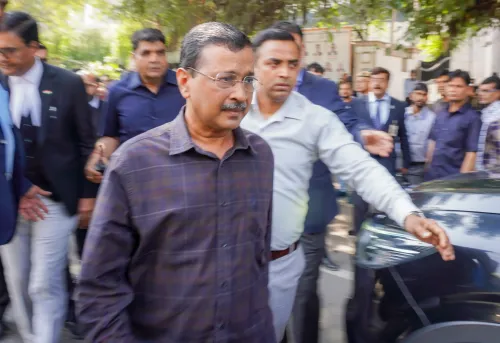
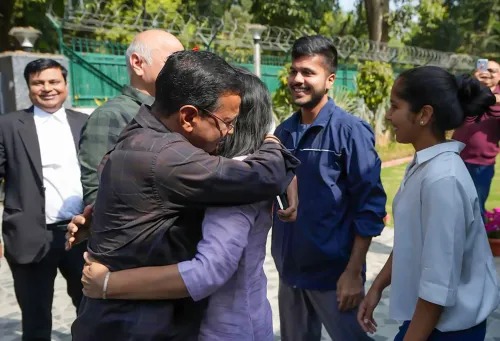
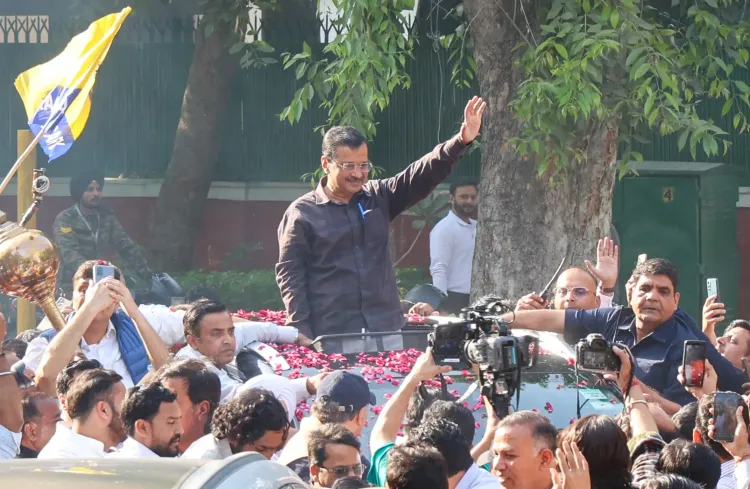
Following the ruling, Kejriwal expressed, "Satyamev Jayate," reaffirming his confidence in the judicial system. Overcome with emotion, he reflected on his time in custody and asserted that the case was “false and fabricated.”
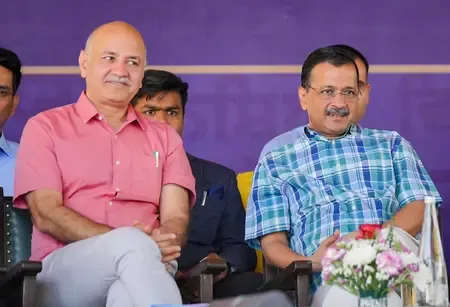
Sisodia, seen beside him, offered comfort to the AAP leader as supporters gathered outside. Nonetheless, the legal struggles are far from over.
The CBI announced its intention to contest the discharge ruling before the Delhi High Court, claiming that numerous aspects of the investigation were overlooked or insufficiently examined by the trial court.
As the CBI prepares to file a revision petition, this high-profile case, which once overshadowed national political discussions, is poised to enter its next significant legal phase.
Point of View
This ruling highlights the complexities of legal battles involving high-profile political figures. The court's decision underscores the necessity for rigorous evidence in criminal cases, while also raising concerns about the investigative practices of agencies like the CBI. The implications of this case extend beyond the courtroom, potentially affecting public trust in the justice system.
NationPress
21 Sept 2026
Frequently Asked Questions
What was the main reason for the court's discharge of the accused?
The court found that the prosecution failed to establish even a prima facie case against the accused, indicating a lack of sufficient evidence.
Who are the key figures involved in the case?
The key figures include Arvind Kejriwal, the AAP national convenor, and Manish Sisodia, the former Deputy Chief Minister of Delhi.
What allegations were made against the accused in the liquor policy case?
The allegations included corruption, kickbacks, and the manipulation of the Delhi Excise Policy 2021–22 to benefit certain private liquor entities.
What is the next step for the CBI following the court's ruling?
The CBI plans to challenge the discharge order in the Delhi High Court, arguing that important aspects of the investigation were not adequately considered.
How does this ruling impact public perception of the justice system?
The ruling raises concerns about the integrity of the investigative process and the ability of legal systems to deliver justice, especially in politically sensitive cases.