Kejriwal contrasts China's artificial sun with FIRs on children
Synopsis
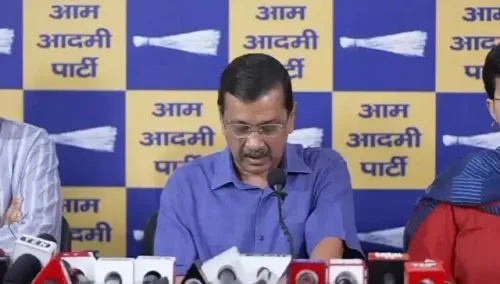
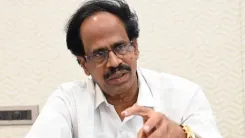
AAP convenor Arvind Kejriwal on 30 July 2026 posted a sharp contrast on X: China building a nuclear fusion 'Artificial Sun' versus PM Modi allegedly filing FIRs against small children, framing it as a question of where India's political energy is going.
Key Takeaways
Arvind Kejriwal posted on 30 July 2026 contrasting China's fusion energy programme with alleged FIRs against children in India.
China's EAST tokamak — dubbed the 'Artificial Sun' — has achieved record plasma temperature milestones and represents a major state investment in fusion energy.
Kejriwal directly named Prime Minister Narendra Modi as responsible for the FIR actions, framing it as a failure of national priorities.
The specific FIR incident referenced in the post has not been independently verified from available records.
The post follows a well-established opposition tactic of juxtaposing foreign technological milestones with domestic law-enforcement controversies.
No government response to the post's claims had been issued at the time of publication.
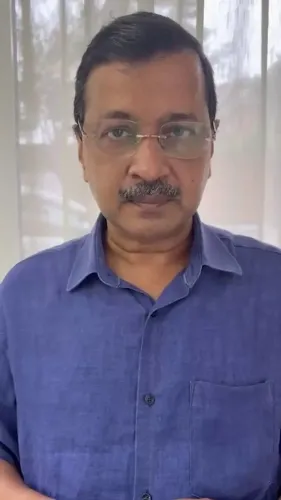
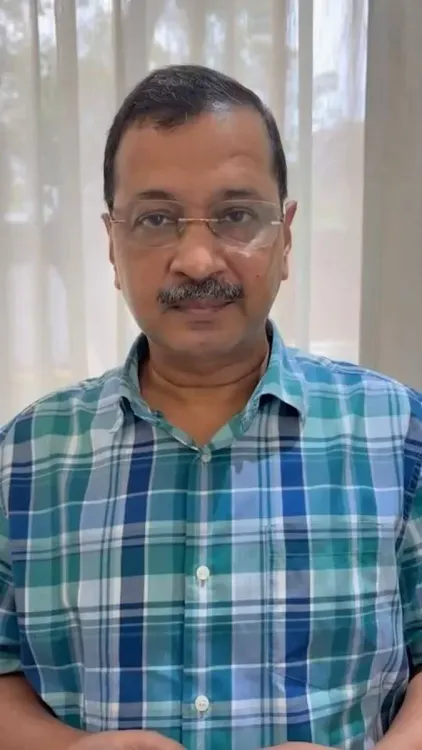
While China chases the stars with nuclear fusion technology, AAP convenor Arvind Kejriwal asked on Thursday, 30 July 2026, why India's attention is trained on filing police cases against small children. The pointed contrast landed on X with a video attached, cutting straight to a question about national priorities.
Kejriwal's post, written in Hindi, reads: 'Ek taraf China Artificial Sun bana raha hai, aur doosri taraf hamare Pradhanmantri chhote-chhote bacchon par FIR karvane mein vyast hain.' — 'On one side, China is building an Artificial Sun; on the other, our Prime Minister is busy getting FIRs registered against small children.'
What China's 'Artificial Sun' actually is
The reference is to China's EAST tokamak — the Experimental Advanced Superconducting Tokamak — a nuclear fusion reactor that has achieved record-breaking plasma temperature milestones in successive experiments. The device mimics the thermonuclear process that powers the sun, confining superheated plasma using powerful magnetic fields. China has poured sustained state investment into this programme, positioning it as a flagship of long-term energy self-sufficiency.
Fusion energy, if commercially viable, would offer virtually limitless clean power with minimal radioactive waste — a generational leap beyond any existing energy source. That ambition is what Kejriwal is holding up as the benchmark.
The FIR claim and its political charge
The second half of Kejriwal's post — FIRs against 'small children' — is a direct political charge against Prime Minister Narendra Modi. The specific incident referenced in the post could not be independently confirmed from available records; the post itself does not name a location, a case number, or the children involved.
The rhetorical structure, however, is deliberate and recognisable. Indian opposition leaders have repeatedly used social media to juxtapose foreign technological achievements with domestic law-enforcement actions — particularly those perceived to target students, minors, or protesters — to argue that the government's priorities are misaligned. Kejriwal has been among the most consistent practitioners of this format.
A familiar opposition playbook, a sharper edge
What gives this post its particular bite is the scale of the contrast: not a rival nation's GDP or a trade statistic, but a civilisational-scale science project versus police complaints against children. The implicit argument is that India is spending political bandwidth on suppression while competitors invest in the future.
The government has not, as of this post, issued any response to the specific FIR allegation or to the comparison with China's fusion programme. Whether the FIR incident gains traction will depend on corroboration and official reaction in the hours ahead.
For now, Kejriwal has framed the question with maximum contrast — and left it hanging in the air for the Prime Minister's office to answer.
Point of View
Unverified as it is, does the emotional heavy lifting, while the science reference gives the attack an aspirational register beyond routine political sparring. This fits a broader AAP strategy of positioning itself as the party asking 'why isn't India keeping up?' — a line that resonates particularly with urban, educated voters who track global technology news. The real test is whether the underlying FIR incident surfaces with enough specificity to sustain the news cycle or fades as an unsubstantiated claim.
NationPress
13 Sept 2026
Frequently Asked Questions
What is China's Artificial Sun that Kejriwal mentioned?
China's 'Artificial Sun' refers to the EAST tokamak (Experimental Advanced Superconducting Tokamak), a nuclear fusion reactor that replicates the sun's thermonuclear process using superheated plasma. It has set multiple plasma temperature records and is part of China's long-term clean energy programme.
What FIRs against children is Kejriwal talking about?
Kejriwal's post alleges that PM Modi is having FIRs registered against small children, but does not name a specific case, location, or date. The specific incident could not be independently verified from available records at the time of publication.
Why did Kejriwal compare India to China in this post?
Kejriwal used the contrast to argue that India's political leadership is focused on suppressing dissent — even among children — while rival nations like China invest in transformative science. It is a rhetorical device the opposition frequently uses to question the government's national priorities.
Has the Modi government responded to Kejriwal's post?
As of the time this article was published, no official response from the government or PM Modi's office had been issued regarding either the FIR allegation or the comparison with China's fusion energy programme.
Is India doing any work in nuclear fusion research?
India participates in the international ITER fusion project based in France and has domestic fusion research programmes under the Institute for Plasma Research in Gandhinagar, though these operate at a significantly smaller scale than China's EAST tokamak programme.