Kejriwal Demands Rs 10 Lakh Health Cover for Every Goan Family
Synopsis
AAP convenor Arvind Kejriwal on 4 July 2026 demanded Rs 10 lakh per-family health insurance for every Goan household, calling for replication of a similar scheme already in place in Punjab under AAP governance.
Key Takeaways
AAP convenor Arvind Kejriwal demanded Rs 10 lakh per-family health insurance for every household in Goa .
The demand was made on 4 July 2026 during a live press conference streamed on X.
Kejriwal cited Punjab , governed by AAP since 2022 , as the model for the proposed scheme.
AAP has a track record of advocating replication of Delhi and Punjab welfare schemes in other states.
The proposal puts pressure on the incumbent Goa government to publicly state its position on household health coverage.
AAP contested the 2022 Goa assembly elections , and health policy is emerging as a key plank in its continued state-level outreach.
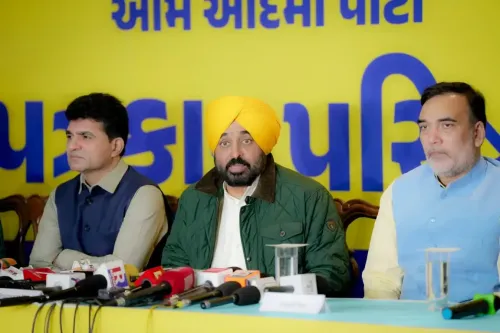
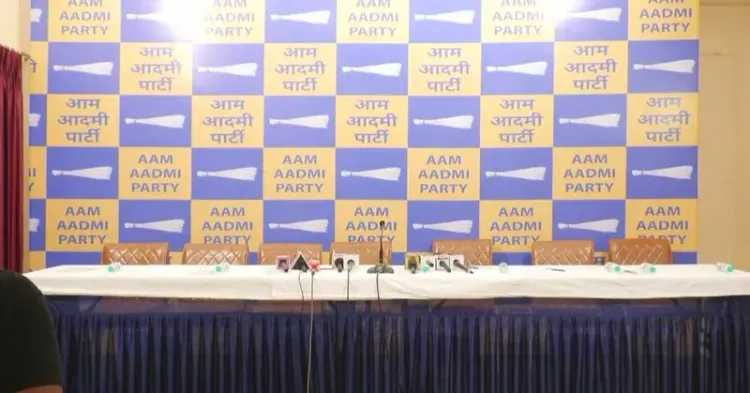
AAP convenor Arvind Kejriwal on Saturday, 4 July 2026, called for extending Rs 10 lakh per-family health insurance to every household in Goa, drawing a direct parallel with a similar scheme already in place in Punjab, where the Aam Aadmi Party has been in government since 2022. The demand came during a live press conference streamed from the party.
Context
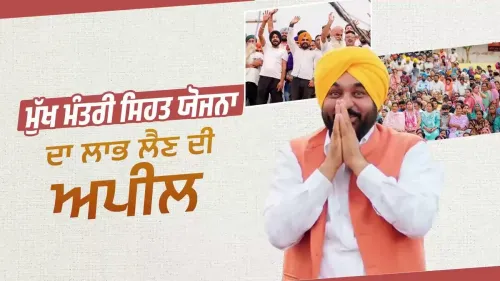
Kejriwal's statement, posted on X, read: 'Every Goan family shud also be given Rs 10 lakh health insurance on the lines of Punjab.' The call positions Goa as the next state where AAP wants to replicate its health security model, framing the Punjab scheme as a proven template for direct family-level welfare. The press conference was broadcast live, signalling the party's intent to build public pressure around the proposal.
AAP has consistently used welfare benchmarks set in Delhi and Punjab to campaign in other states. Health insurance at the household level is central to this playbook, alongside free electricity, water, and the Mohalla Clinic network that the party launched in Delhi as far back as 2015.
Policy Backdrop
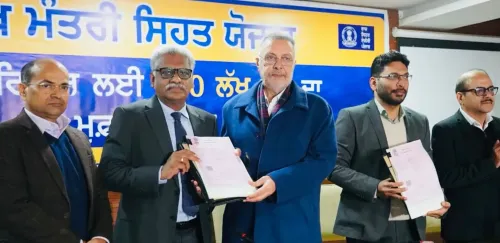
The AAP government in Punjab included commitments to enhanced family health protection in its 2022 election manifesto and has since moved to implement household-level coverage. The party argues that a Rs 10 lakh insurance ceiling per family provides a meaningful safety net against catastrophic medical expenditure, which remains a leading cause of household debt across Indian states.
In Delhi, the Mohalla Clinic model focused on primary care access rather than insurance, but AAP's pivot toward insurance-linked coverage in Punjab represents an evolution of its health policy architecture. Kejriwal has positioned himself as the architect of both approaches, making health a signature electoral issue for the party nationally.
Stakeholders and Impact
If implemented, a Rs 10 lakh per-family health insurance scheme in Goa would directly benefit Goan households, particularly those in coastal fishing communities, the tourism-services workforce, and the state's sizeable migrant labour population — groups that typically lack formal employer-linked health cover. Punjab households under the existing scheme serve as the reference point for what such coverage could mean in practice.
The proposal also puts pressure on the incumbent Goa government and opposition parties to respond publicly on health insurance policy, potentially reshaping the terms of debate ahead of future state elections. AAP has been working to expand its footprint in Goa after contesting the 2022 Goa assembly elections.
What's Next
The immediate question is whether the Goa government or opposition parties will respond to Kejriwal's demand, and whether AAP plans to table a formal proposal in the state assembly or follow up with a ground campaign. Observers will also watch for concrete data on the Punjab scheme's coverage numbers and implementation status, which AAP is likely to deploy as evidence in making its case to Goan voters.
If AAP moves from advocacy to a structured campaign on health insurance in Goa, the proposal could become a defining plank in the party's strategy to consolidate support in the state — mirroring the pattern it used successfully in Delhi and Punjab by anchoring electoral identity to tangible welfare commitments.
Point of View
Brand it as a replicable model, and use it to campaign in states where it seeks to grow. The health insurance pitch follows the same arc as Mohalla Clinics and free utilities — converting governance outputs into electoral assets. For Goa, where AAP is still building a base, the proposal serves as both a policy position and a contrast message against the ruling establishment. Whether it gains traction will depend on how credibly the party can demonstrate the Punjab scheme's real-world outcomes to Goan voters.
NationPress
4 Jul 2026
Frequently Asked Questions
What did Kejriwal announce for Goa on 4 July 2026?
Kejriwal demanded that every Goan family be given Rs 10 lakh health insurance, on the lines of a similar scheme in Punjab under AAP governance, during a live press conference on 4 July 2026.
What is the Punjab health insurance scheme AAP is citing?
AAP's Punjab government committed to enhanced per-family health insurance coverage as part of its 2022 manifesto. Kejriwal has held it up as a model for other states, though exact scheme parameters and current coverage numbers are subject to ongoing implementation.
Does AAP govern Goa?
No. AAP contested the 2022 Goa assembly elections but does not currently govern the state. The party has been working to build its presence in Goa and is using welfare proposals like health insurance to strengthen its outreach.
How does the Rs 10 lakh figure compare to existing central health schemes?
The central government's Ayushman Bharat scheme offers up to Rs 5 lakh per family per year for secondary and tertiary hospitalisation. Kejriwal's proposed Rs 10 lakh figure is double that ceiling, positioning AAP's model as more expansive than the national baseline.
What is AAP's broader health policy record?
AAP launched Mohalla Clinics in Delhi from 2015 to expand primary care access. In Punjab, the party shifted toward insurance-linked household coverage after winning the 2022 state elections. Health has been a consistent signature issue for the party across its governments.