Kejriwal Questions Modi Govt on US Ethanol Imports and Blending Policy
Synopsis
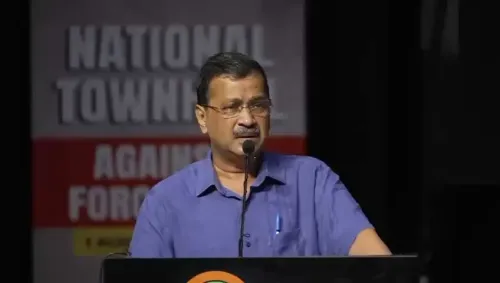
AAP convenor Arvind Kejriwal on 7 August 2026 alleged the Modi government is using US ethanol imports for non-blending purposes to free up domestic supply for blending targets, and claimed the Trump administration is pressuring India to begin blending American imports directly — charges the government has not yet addressed.
Key Takeaways
Arvind Kejriwal on 7 August 2026 publicly challenged the Modi government over its ethanol import and blending strategy.
He alleged India uses US ethanol imports for non-blending purposes to divert domestic production toward blending targets — calling it a substitution workaround.
Kejriwal further claimed Donald Trump is pressuring PM Modi to begin directly blending American ethanol imports; this allegation is unverified .
India's Ethanol Blended Petrol Programme (launched 2003 ) and the National Policy on Biofuels (2018) were built around domestic sugarcane supply and energy security goals.
US-India trade negotiations have repeatedly featured American demands for greater access for agricultural exports including ethanol.
The Modi government had not publicly responded to the specific allegations at the time of publication.
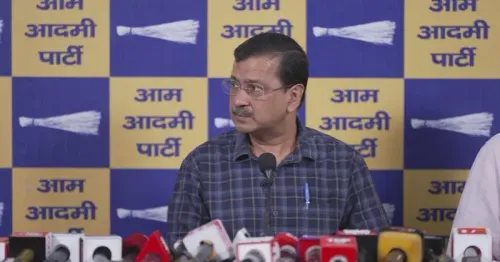
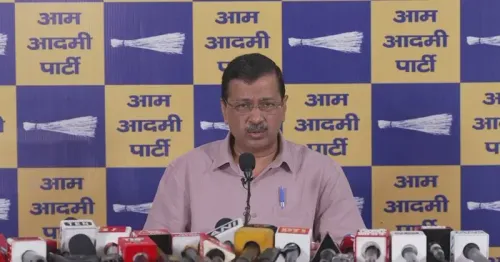
A pointed challenge to the Modi government's ethanol sourcing strategy landed on Friday, 7 August 2026, as AAP convenor Arvind Kejriwal fired a volley of questions alleging that India is quietly redirecting domestic ethanol production toward blending by routing US imports into non-blending uses — and that US President Donald Trump is now pressing Prime Minister Narendra Modi to go further and use American imports directly for blending.
The Accusation: A Substitution Game in Ethanol Sourcing
Kejriwal's core charge is structural. He argues that the government is not importing American ethanol for blending — it is using US imports to fulfil non-blending industrial demand, thereby freeing up domestically produced ethanol to meet blending targets. 'Isn't it true that you are using whole of US imports for non-blending purposes so that you can divert local production for blending purposes? Isn't it the same thing?' he wrote, framing the arrangement as a semantic sleight of hand that achieves the same result as directly blending foreign ethanol.
The implication is significant: if true, American ethanol is already indirectly subsidising India's blending programme, even if no import is formally labelled as blended fuel. The government has not responded to the specific claim.
The Trump Pressure Allegation
Kejriwal goes a step further, alleging that with US ethanol exports to India set to rise substantially in 2026, the Trump administration is pressing New Delhi to drop the indirect arrangement and start blending imported American ethanol directly. 'Isn't it true that Trump is pressuring Modiji to start directly using imports for blending? Isn't it true that Modi govt is planning to do that?' he asked. These specific claims — the scale of the import surge, the existence of direct US pressure, and any government plan to revise blending rules — are unverified and have not been confirmed by official sources.
Why India's Ethanol Blending Programme Is Politically Sensitive
India's Ethanol Blended Petrol (EBP) Programme, launched in 2003 and accelerated by the National Policy on Biofuels in 2018, was built on two domestic pillars: reducing crude oil import dependence and supporting sugarcane farmers by creating a reliable offtake market. Allowing foreign ethanol — even indirectly — into that equation cuts against both pillars. It potentially undercuts the income support rationale for millions of farmers while handing a market to US corn-ethanol exporters.
American demands for agricultural market access, including ethanol, have been a recurring friction point in US-India trade negotiations. Any revision to sourcing rules would be watched closely by oil marketing companies, the farm lobby, and trade negotiators on both sides.
Whether the government addresses Kejriwal's specific allegations — or lets them hang in the political air — will itself be a signal about how exposed the ethanol policy has become to external trade pressure.
Point of View
He is trying to collapse the government's deniability. The timing matters — if US-India trade talks are at a sensitive juncture, a public debate on ethanol sourcing rules could complicate New Delhi's negotiating room. The opposition has found a technical but politically potent line of attack that sits at the intersection of farm income, energy security, and foreign policy.
NationPress
7 Aug 2026
Frequently Asked Questions
What is Kejriwal alleging about India's ethanol imports from the US?
Kejriwal alleges the government channels US ethanol imports into non-blending industrial uses, which frees up domestically produced ethanol to meet blending targets — effectively making foreign supply part of the blending equation without formally labelling it so.
What is India's Ethanol Blended Petrol Programme?
India's Ethanol Blended Petrol Programme, launched in 2003 and reinforced by the National Policy on Biofuels in 2018, mandates mixing ethanol with petrol to cut crude oil imports and support domestic sugarcane farmers.
Is it confirmed that Trump is pressuring Modi on ethanol blending?
No. Kejriwal's claim that the Trump administration is pressing India to directly blend US ethanol imports is unverified and has not been confirmed by official Indian or American government sources.
Why does it matter if India blends imported US ethanol?
India's blending programme was designed to support domestic sugarcane farmers and reduce crude import dependence. Allowing foreign ethanol into the blend — directly or indirectly — could undercut farmer income support and benefit US corn-ethanol exporters instead.
What should I watch for next on India's ethanol blending policy?
Watch for any announcement from the petroleum ministry revising ethanol sourcing rules or blending targets, and for outcomes of ongoing US-India trade negotiations where American agricultural market access is on the agenda.