Kejriwal to Write Auto Firms, PM Modi Over E20 Fuel Liability
Synopsis
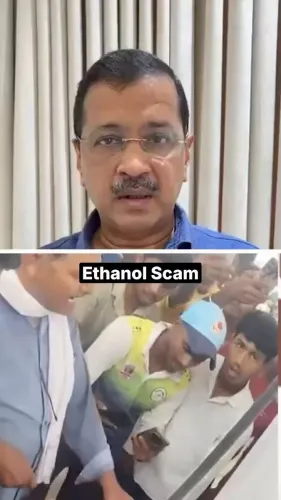
AAP convenor Arvind Kejriwal has announced he will write to automobile companies demanding written guarantees to compensate customers for mileage drops above 10 per cent and free part replacement for damage caused by E20 fuel, and will ask PM Modi next week who bears liability.
Key Takeaways
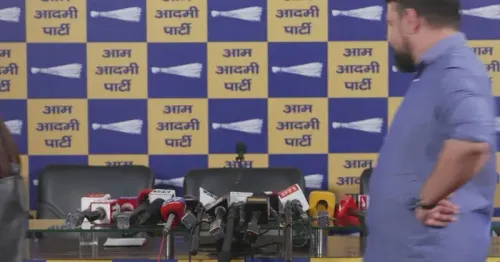
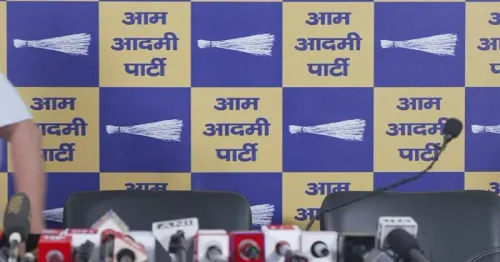
Kejriwal will write to all auto companies present at a recent government press conference on E20 fuel .
He demands companies give written assurances to customers that mileage drops exceeding 10 per cent due to E20 will be compensated.
Companies must also commit to free replacement of any part damaged by E20 use.
He will write to Prime Minister Narendra Modi within the next week asking who pays compensation — the government or the manufacturer.
India's National Policy on Biofuels 2018 advanced the E20 blending target from 2030 to 2025 , but consumer liability for fuel-related damage remains unresolved.
The move puts pressure on both the automobile industry and the central government to publicly define their responsibility to vehicle owners.
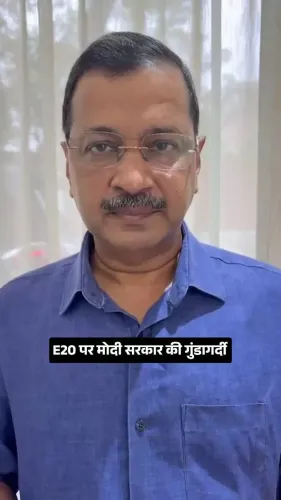
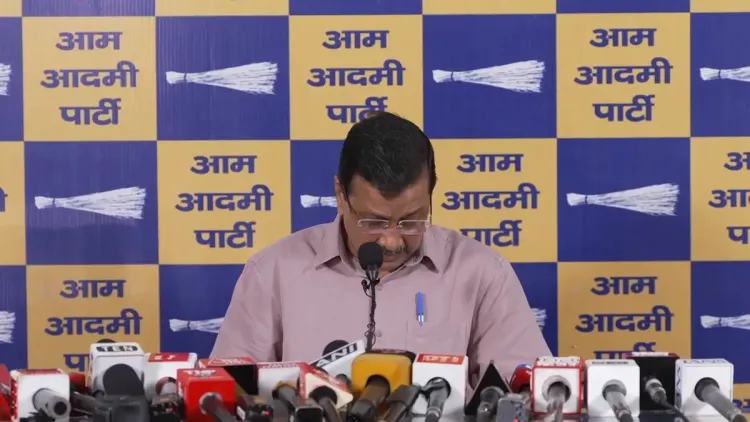
AAP convenor Arvind Kejriwal on Tuesday, 7 July 2026, announced he will write to all automobile companies that attended a recent government press conference, demanding written assurances to customers on two counts: that any mileage drop exceeding 10 per cent due to E20 fuel will be compensated by the company, and that any part damaged by E20 use will be replaced free of charge. He also said he will write to Prime Minister Narendra Modi next week, asking who bears liability — the government or the manufacturer — if a vehicle is harmed by the mandated fuel blend.
Context
Kejriwal posted in Hindi, stating: 'मैं सरकारी प्रेस कॉन्फ्रेंस में आईं सभी ऑटो कंपनियों को चिट्ठी लिखूँगा' ('I will write to all auto companies that came to the government press conference'), outlining two specific consumer protection demands. He added that next week he will ask the Prime Minister: 'अगर किसी की गाड़ी में कोई भी दिक्कत आती है, तो उसका हरजाना आप देंगे या कंपनी देगी?' ('If anyone's vehicle faces any problem, will you pay the compensation or will the company?'). The post frames the issue squarely as a question of accountability between the central government and industry.
Policy Backdrop
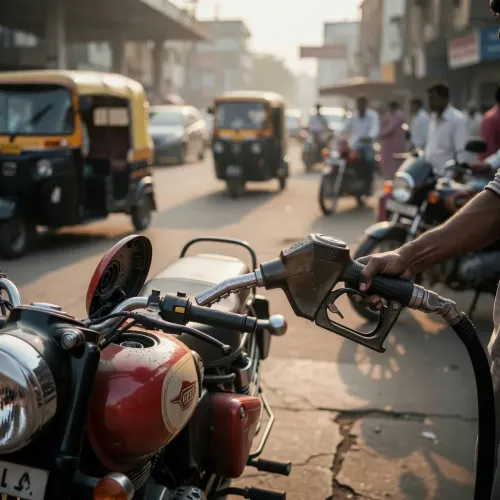
The E20 programme — a blend of 20 per cent ethanol with petrol — is a central pillar of India's National Policy on Biofuels, 2018, which was subsequently amended to advance the blending target from 2030 to 2025. The policy is designed to reduce dependence on imported crude oil, lower vehicular emissions, and provide a stable procurement channel for sugarcane and grain farmers. Prime Minister Narendra Modi has championed the programme as part of India's energy security agenda.
However, vehicle compatibility has been a persistent concern. Automakers including Maruti Suzuki, Hyundai, and Tata Motors have participated in government consultations on the E20 rollout, with industry bodies raising questions about warranty obligations and the readiness of older vehicle fleets not engineered for higher ethanol concentrations. The question of who bears consumer liability in case of fuel-related damage has not been formally resolved in public policy documents.
Stakeholders and Impact
The most directly affected group is India's vast base of vehicle owners, many of whom drive older models that were not designed or warranted for E20-grade fuel. If mileage losses or mechanical damage occur, consumers currently have no clear statutory recourse against either oil marketing companies or auto manufacturers. Kejriwal's proposed letters seek to force that clarity before E20 becomes more widely dispensed at fuel stations.
Automobile manufacturers face the prospect of formal written demands to extend warranty-equivalent protections specifically for E20-related damage — a commitment the industry has so far not made publicly. Oil marketing companies, which blend and dispense the fuel under government mandate, are another stakeholder whose liability exposure remains undefined in the current regulatory framework.
What's Next
Kejriwal has set a concrete near-term timeline: letters to auto companies imminently and a letter to Prime Minister Modi within the next week. The formal responses from automobile manufacturers — particularly on warranty implications for E20 use — and any clarification from the central government on consumer liability will be closely watched. The Society of Indian Automobile Manufacturers has not yet issued a public position on the warranty question as it relates to mandated ethanol blending. If the government or industry fails to respond, the issue is likely to become a political flashpoint ahead of any wider E20 rollout.
Point of View
He converts a technocratic fuel-policy question into a concrete consumer-rights issue with a clear accountability gap at its centre. The move follows a well-worn AAP playbook of positioning itself as a watchdog on central government schemes that affect everyday household costs. With E20 rollout accelerating toward the 2025 target, the absence of any formal liability framework for vehicle damage or mileage loss is a genuine regulatory blind spot that the government has not yet addressed publicly. How the auto industry and the Prime Minister's Office respond — or choose not to — will determine whether this becomes a durable political liability for the ruling dispensation.
NationPress
6 Oct 2026
Frequently Asked Questions
What is E20 fuel and why is it controversial?
E20 is a blend of 20 per cent ethanol mixed with petrol, mandated under India's National Policy on Biofuels 2018 to cut crude oil imports and support farmers. It is controversial because many older vehicles were not engineered for such high ethanol concentrations, raising concerns about reduced mileage and potential engine or component damage.
What exactly is Kejriwal demanding from auto companies?
Kejriwal is demanding that auto companies provide written assurances to their customers on two points: first, that if E20 fuel causes a mileage drop of more than 10 per cent, the company will compensate the customer; and second, that if any vehicle part is damaged due to E20 use, the company will replace it free of charge.
Why is Kejriwal writing to PM Modi about E20?
Kejriwal says he will ask Prime Minister Modi to clarify who is responsible for compensating vehicle owners if their cars are harmed by E20 fuel — whether it is the central government, which mandated the fuel blend, or the automobile manufacturer.
Are auto companies legally required to cover E20 fuel damage under current warranties?
No clear statutory or regulatory framework currently compels auto companies to cover damage specifically caused by E20 fuel. Standard vehicle warranties in India typically exclude damage from non-recommended fuel grades, and the industry has not publicly committed to E20-specific protections.
What is India's target for ethanol blending in petrol?
India advanced its target for 20 per cent ethanol blending in petrol from 2030 to 2025 following a 2021 government decision. The programme is part of a broader energy security and farm income strategy under the National Policy on Biofuels 2018.